
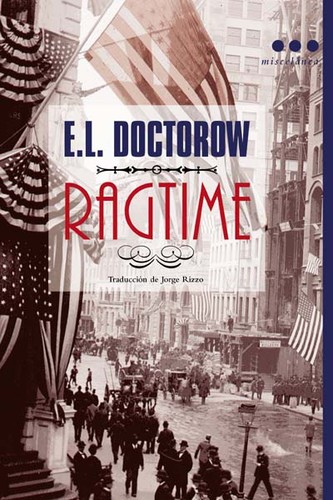
Ragtime
E. L. Doctorow · 1931–2015 · United States
Why it matters
Houdini, J. P. Morgan, and Emma Goldman mingle with invented characters in a turn-of-the-century American mosaic. Historical fiction reimagined as postmodern collage of race, class, and reinvention.
At a glance
Dense historical collage interweaving real and fictional figures.
Deep dive
Why Doctorow keeps handing real historical figures invented private lives, and what that collision is arguing about who America lets write its own story.
Written for readers who have finished the book. No plot recap, and nothing here is safe to read first.
Themes & symbolism
Doctorow's collage method — Houdini bantering with Henry Ford, J.P. Morgan lecturing Ford on reincarnation, Emma Goldman massaging Evelyn Nesbit — isn't novelty for its own sake; it's a demonstration that history and fiction are made of the same material, personal invention laid over a documentary record that was always selective about whose stories it preserved. The nameless family at the book's center, identified only as Father, Mother, Mother's Younger Brother, stands for a comfortable white American narrative that the novel deliberately treats as replaceable and unindividuated, while Coalhouse Walker Jr., the ragtime pianist whose fight for basic justice becomes the novel's spine, is given a full name, a fully realized interior life, and a tragedy the invented white family never has to earn.
Ragtime music itself, syncopated and improvisatory, models the novel's structure: short scenes interrupt and overlay each other the way a ragtime melody displaces its beat against a steady bass line, and the era's obsession with mechanical reproduction — Ford's assembly line, Houdini's escapes, early film — becomes a metaphor for a country remaking itself, and its people, into interchangeable, marketable units. Tateh's rise from Jewish immigrant peddler to movie mogul, reinventing himself under a new name, tracks the American mythology of self-invention that the novel simultaneously admires and undercuts by showing exactly whom that mythology excludes.
Real Figures, Invented Lives
Doctorow's most audacious device is giving documented people counterfactual private moments — Morgan's obsession with Egyptian mysticism, Freud and Jung sharing a nauseated boat ride through Coney Island's tunnel of love — none of which happened, all of which are plausible enough within each figure's known public persona to feel like they might have. The technique drew charges of irresponsibility from some historians and delight from most critics, but its real function is to argue that the official record and invented fiction are equally constructed narratives, and that the novel's job is to notice which people history bothered to individualize and which — like Coalhouse, like the immigrant multitudes Tateh emerges from — it flattened into background.
The last seal: what actually happens, and why it lands the way it does.
The ending, explained
After his Model T is vandalized by a volunteer fire company and the law refuses him any recourse, and after his fiancée Sarah is beaten to death by police while trying to appeal to the vice-presidential candidate on his behalf, Coalhouse Walker turns to armed insurrection, seizing J.P. Morgan's library and threatening to destroy it unless the firemen are punished and his car restored exactly as it was. Booker T. Washington is brought in to persuade him toward surrender, and Coalhouse ultimately negotiates a deal: his men go free, the car is returned, and he alone submits to the authorities unarmed. He is shot dead on the library steps immediately after surrendering, an act of bad faith that confirms the novel's bleakest point — that even a successful, disciplined protest against American racial violence still ends in the state killing the man who staged it, with no accounting owed. The fictional family reconstitutes itself around Tateh and Mother in the aftermath, adopting Coalhouse's orphaned son alongside their own children, and the narrative closes gesturing toward the First World War, ragtime itself fading as a form the way the whole gaudy, unequal era it soundtracked is already fading into history by the novel's last page.
Where to go next
 E. L. Doctorow · 1985World's FairLvl 3Medium pace
 E. L. Doctorow · 1989Billy BathgateLvl 5Fast paced
 Susan Sontag · 2000In AmericaLvl 6Slow burn
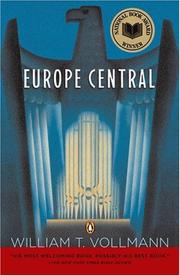 William T. Vollmann · 2005Europe CentralLvl 9Slow burn
 Thomas Pynchon · 1966The Crying of Lot 49Lvl 8Medium pace
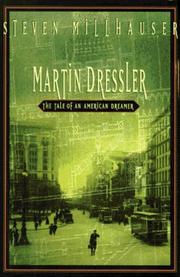 Steven Millhauser · 1996Martin Dressler: The Tale of an American DreamerLvl 5Medium pace