

Henryk Sienkiewicz
Poland
Full-blooded and cinematic, spectacle and sentiment laid on with a broad, confident brush, built to sweep a reader along rather than to make them linger.
Born in 1846 to an impoverished noble family in Russian-partitioned Poland, Sienkiewicz studied at Warsaw's Main School before working as a journalist and correspondent, traveling to the United States in the 1870s, where he lived for a time among Polish immigrants in California and filed travel letters that became a minor sensation back home.
He turned to historical fiction as a deliberate act of morale-building for a stateless nation: his Trilogy of novels set amid seventeenth-century Cossack and Swedish wars, written explicitly to lift Polish hearts, made him the country's most beloved writer, and Quo Vadis, set in Nero's Rome, became a worldwide bestseller translated into dozens of languages and helped win him the Nobel Prize in 1905.
He devoted his final years and considerable fortune to relief work for Polish civilians displaced by the First World War, chairing a Swiss-based relief committee, and died in exile in Vevey, Switzerland, in 1916, two years before the Poland he had spent his career imagining regained independence.
Their books in the atlas
- 1884
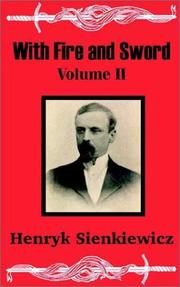 With Fire and SwordLvl 6historical fiction
 - 1896
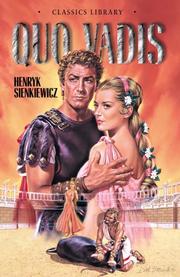 Quo VadisLvl 3historical fiction
Meanwhile, elsewhere
 1840–1928Thomas HardyEnglandWestern Europe · England
 1844–1924Anatole FranceFranceWestern Europe · France
 1840–1922Giovanni VergaItalyWestern Europe · Italy
 1843–1920Benito Pérez GaldósSpainWestern Europe · Spain
 1843–1916Henry JamesUSA / EnglandNorth America · USA / England
 1830–1914Paul HeyseGermanyWestern Europe · Germany
If you like Sienkiewicz, try
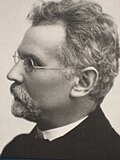 1847–1912Bolesław PrusPolandkindred genres: historical fiction, romance · both write in Polish · same region & era
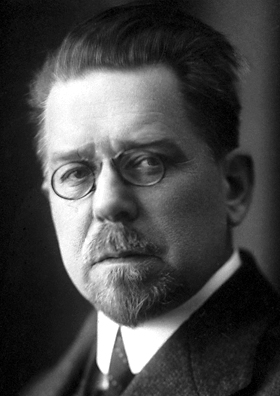 1867–1925Władysław ReymontPolandkindred genres: epic · both write in Polish · same region & era
 1890–1960Boris PasternakRussiakindred genres: historical fiction, romance · same region & era
 1905–1964Vasily GrossmanUkraine / Russiakindred genres: historical fiction, epic · same region & era
 1892–1975Ivo AndrićYugoslavia / Bosniakindred genres: historical fiction, epic · same region & era
 1838–1894Bankim Chandra ChattopadhyayIndia (Bengal)kindred genres: historical fiction, romance