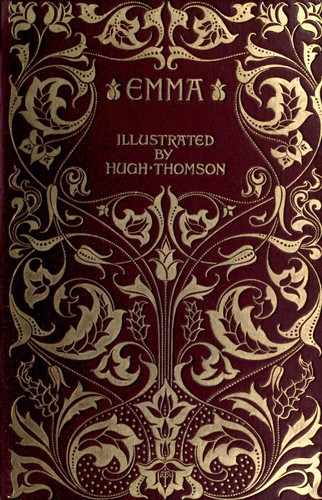
Emma
Jane Austen · 1775–1817 · England
Why it matters
Austen's technical summit: a heroine 'no one but myself will much like' whose every misperception the reader is seduced into sharing. Free indirect style reaches maturity here; the modern novel of consciousness starts closer to Emma than to anything else.
At a glance
Pioneering free indirect discourse means the narration itself is often unreliable.
Deep dive
Nearly every judgment the novel's cleverest character makes about the people around her turns out wrong, and Austen builds the whole comedy out of how long it takes both Emma and the reader to notice.
Written for readers who have finished the book. No plot recap, and nothing here is safe to read first.
Themes & symbolism
Austen's free indirect style, narrating events filtered so closely through Emma's own perceptions that her opinions and the narrator's voice become almost indistinguishable, is the novel's real formal achievement: readers aren't told Emma is wrong about Mr. Elton's affections for Harriet Smith, they simply share Emma's confident misreading in real time and discover the error exactly when Emma does. That technique makes Emma's serial matchmaking failures, not just Elton and Harriet but her slower, more consequential blindness to Frank Churchill's real attachments, into a comedy of narrative perspective as much as a comedy of manners, since the reader's own confidence in Emma's judgment has been quietly enlisted in her mistake.
The secret engagement between Jane Fairfax and Frank Churchill, concealed from every character including Emma for most of the novel, retroactively reorganizes nearly every earlier scene once it's disclosed, since Frank's flirtation with Emma turns out to have been cover for an attachment he couldn't yet acknowledge, at real cost to Jane's reputation and peace of mind. Austen's sharpest moral scene arrives earlier and smaller than any of the marriage plots: at the Box Hill picnic, Emma, showing off for Frank's approval, mocks the poor, garrulous Miss Bates to her face, and Mr. Knightley's quiet, furious rebuke afterward, that Emma has humiliated a woman who has every reason to look up to her and none to be treated with contempt, is the moment the novel identifies as Emma's real education, well ahead of any romantic resolution.
A Heroine Nobody Would Like But Austen
Austen reportedly told her family before publication that she was taking a heroine whom no one but herself would much like, and the remark reads less as modesty than as an accurate description of the risk she was taking: Emma is rich, vain, meddling, and repeatedly, confidently wrong, with none of the poverty or persecution that makes earlier Austen heroines easy to root for. The novel's comedy depends on that risk paying off, on readers staying with a protagonist whose privilege insulates her from consequences other characters, Jane Fairfax especially, can't afford, and Austen uses Emma's cushioned position specifically to make her blindness a moral failing rather than a forgivable accident of circumstance.
The last seal: what actually happens, and why it lands the way it does.
The ending, explained
Once Frank Churchill's engagement to Jane Fairfax becomes public, Emma briefly assumes Harriet's affections, which she'd steered away from the farmer Robert Martin and toward first Elton then Frank, have now settled on Mr. Knightley himself, and the shock of that possibility is what finally reveals to Emma her own feelings for him, arriving well after the reader has likely worked it out. Knightley, who has loved Emma for years while functioning as her most consistent moral critic, proposes once he learns she doesn't return Harriet's supposed interest, and Austen resolves the whole matchmaking plot by having every pairing settle into the one the meddling heroine never orchestrated: Harriet ends up happily married to Robert Martin, the match Emma had actively suppressed early in the novel as beneath her friend. Emma's marriage to Knightley closes the book on the same ironic note it opened with, the cleverest person in Highbury finally admitting how much she'd misjudged, right down to her own heart.