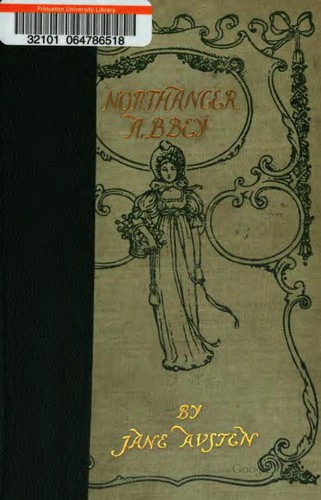
Northanger Abbey
Jane Austen · 1775–1817 · England
Why it matters
Catherine Morland, a besotted reader of gothic novels, imagines murder in a country house and gets a much smaller, funnier lesson in the gap between fiction and life instead. Austen's earliest-written novel is also her most playful: a coming-of-age story that doubles as a satire of the gothic craze itself.
At a glance
Her shortest and most straightforwardly comic novel, aimed partly at teenage readers of gothic fiction.
Deep dive
A besotted reader of gothic novels goes looking for a vanished wife's dark secret behind the walls of a real country house, finds nothing of the kind, and gets handed a much smaller, funnier lesson about where actual cruelty tends to hide instead.
Written for readers who have finished the book. No plot recap, and nothing here is safe to read first.
Themes & symbolism
Catherine Morland arrives at Northanger Abbey primed by Ann Radcliffe's gothic fiction to expect secret passages, forbidden chambers, and a general's guilty conscience about a wife he's murdered or imprisoned, and Austen lets her indulge that fantasy just long enough to be humiliated by it: Catherine sneaks around the house hunting for evidence of General Tilney's crimes and finds nothing but ordinary domestic clutter, a delusion Henry Tilney corrects with a speech reminding her they live in an England of voluntary spies, neighbors, servants, and newspapers, where a murdered wife simply couldn't stay hidden the way gothic convention requires.
The joke has a second half Austen springs only after the first has landed: General Tilney turns out to be genuinely cruel after all, just not in any register the gothic novel prepared Catherine to recognize. On learning, from a gossip who'd previously and wrongly inflated her prospects, that Catherine's family is considerably less wealthy than he'd assumed, he expels her from his house abruptly and without a chaperone, a real, ordinary breach of hospitality and propriety dressed in nothing more sinister than bad manners. Austen's point lands precisely because it's an anticlimax: the villainy Catherine was trained by fiction to look for was never going to be the villainy actually available in a Regency drawing room.
Austen's Direct Defense of the Novel as a Form
Partway through the book Austen interrupts her own narrative to defend novels against the era's common dismissal of them as frivolous, arguing that a genre capable of displaying the greatest powers of the mind deserves better than the reflexive apology writers of her own moment kept offering for producing one. It's a rare direct authorial intrusion in her work, and it matters here specifically because Northanger Abbey is simultaneously satirizing novel-reading's excesses and insisting, in its own voice, that the form itself is worth taking seriously, a doubled argument that only a writer confident in exactly what fiction could do would risk making inside the fiction itself.
The last seal: what actually happens, and why it lands the way it does.
The ending, explained
Sent home alone and unchaperoned after General Tilney learns the truth about her modest fortune, Catherine survives the humiliation largely intact, and Henry, appalled once he learns what his father has done, follows her to apologize and propose despite his father's continued objections. General Tilney's resistance dissolves only once he learns, from the same unreliable gossip source who'd first inflated Catherine's prospects and then deflated them, that her family is in fact perfectly respectable, if never as rich as he'd originally been led to believe, a reversal Austen plays for maximum irony: his blessing arrives for reasons just as shallow as his earlier cruelty. Catherine gets her marriage and her happy ending, but Austen never lets the reader forget it was secured by the same kind of unreliable social gossip that caused all the trouble in the first place, rather than by anyone's improved judgment.