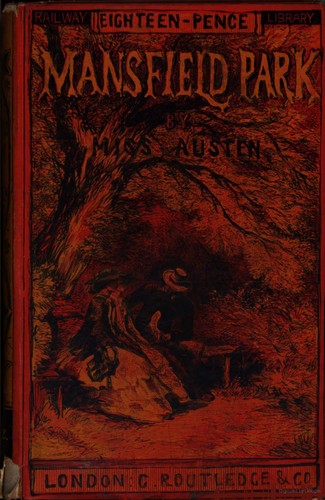
Mansfield Park
Jane Austen · 1775–1817 · England
Why it matters
Fanny Price, a poor relation raised in her wealthy cousins' household, watches the family's moral order come apart while she alone holds to it. Austen's most morally serious and most argued-over novel: a heroine readers have never agreed how to feel about, its comfortable world shadowed by the slave-worked Antigua estate that funds it.
At a glance
A passive, reticent heroine and sustained ethical scrutiny make this her most demanding novel.
Deep dive
A poor relation raised alongside her wealthy cousins refuses to join their most exciting scheme, and Austen builds an entire novel around daring the reader to find her right for it rather than simply priggish.
Written for readers who have finished the book. No plot recap, and nothing here is safe to read first.
Themes & symbolism
Fanny Price arrives at Mansfield Park as a poor relation absorbed into her uncle's household on sufferance, tormented by her Aunt Norris's petty cruelty and treated by everyone but Edmund as a permanent second-class member of the family, and Austen builds the novel's whole moral architecture around Fanny's steady refusal to let that treatment reshape her judgment. When the young people, energized by the glamorous outsiders Henry and Mary Crawford, decide to stage the risqué play Lovers' Vows while Sir Thomas is away, Fanny alone won't participate, not out of priggishness so much as a clear-eyed sense that the theatricals are giving several already-compromised flirtations, especially between her married cousin Maria and Henry Crawford, a socially sanctioned cover to intensify.
Sir Thomas's fortune, and by extension Mansfield Park's whole comfortable order, is financed by his slave-worked estate in Antigua, a fact Austen keeps almost entirely offstage, mentioned rather than dramatized, which is itself the point critics from Edward Said onward have pressed hardest on: the novel's most sustained ethical seriousness plays out inside a household whose stability depends on an economic system it never has to look at directly. Fanny's own moral clarity operates on a smaller, domestic scale, but Austen keeps drawing an implicit line between the two kinds of blindness, a family that can't see what funds its comfort and a family that initially can't see the one relation among them actually paying attention.
A Heroine Readers Have Never Agreed How to Feel About
Fanny's passivity and her refusal to soften her judgments to keep the peace have made her, across two centuries of criticism, Austen's most argued-over protagonist: readers drawn to Elizabeth Bennet's wit often find Fanny's watchfulness cold or self-righteous, while others read that same watchfulness as the novel's actual argument, that moral seriousness in a corrupt environment looks a great deal like priggishness to people who've adjusted themselves to that corruption. Austen gives the debate no easy resolution, since Fanny is proven right about nearly everyone's judgment by the novel's end without ever becoming more likable in the process, a heroine whose vindication and whose charm point in different directions.
The last seal: what actually happens, and why it lands the way it does.
The ending, explained
Henry Crawford, having genuinely pursued Fanny with a proposal she keeps refusing despite significant family pressure to accept, proves her judgment of him correct in the worst possible way by eloping with her married cousin Maria, now Mrs. Rushworth, a scandal that destroys Maria's marriage and standing while barely touching Henry's own social position at all. Edmund's long infatuation with the witty, worldly Mary Crawford finally collapses once her response to her brother's scandal reveals she's troubled far more by its exposure than by the betrayal itself, and he turns, at last, toward the cousin who has quietly loved him the entire novel. Austen grants Fanny the marriage the book has been withholding, but the tone stays understated rather than triumphant, a vindication delivered without any of the outward drama that made Henry and Maria's ruin so visible to everyone else at Mansfield Park.