
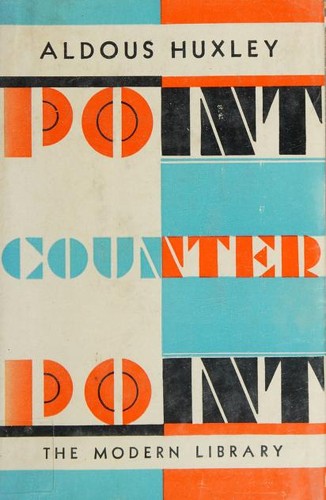
Point Counter Point
Aldous Huxley · 1894–1963 · England
Why it matters
A sprawling roman-à-clef sets a dozen quarreling London intellectuals, artists, and cranks, several drawn from Huxley's own Bloomsbury-adjacent circle, against one another like instruments in a fugue. His most ambitious satire before the turn to dystopia, ideas performed as counterpoint rather than argued.
At a glance
A large ensemble cast and essayistic digressions on ideas slow the narrative's momentum.
Deep dive
A novelist inside the novel explains, in his own notebook, exactly how the book around him is built, and then Huxley lets one character's nihilism follow that logic to a genuinely lethal conclusion.
Written for readers who have finished the book. No plot recap, and nothing here is safe to read first.
Themes & symbolism
Philip Quarles, Huxley's clearest self-portrait among the cast, keeps a notebook that describes "the musicalization of fiction": multiple plotlines run in parallel like counterpointed melodic lines, contrasting couples and philosophies set against each other rather than resolved into a single argument, and the novel we're reading follows that exact blueprint, cutting between Quarles's own strained marriage to Elinor, the Bidlakes, the life-affirming Rampions, and half a dozen other households without ever privileging one thread as the real story. Mark Rampion, modeled closely on D. H. Lawrence down to his working-class origins and his painter's eye, argues throughout for instinct and the body against the bloodless intellectualism the Quarles marriage represents, giving the novel's counterpoint structure an actual philosophical stake rather than a merely formal one, since the technique itself is an argument about how many valid ways there are to be alive.
Maurice Spandrell's nihilism doesn't stay theoretical; he murders the fascist leader Everard Webley, luring him to his flat under a false pretext, and then anonymously arranges for Webley's own paramilitary followers to discover and kill him there, treating the tip-off as a kind of self-administered execution. Walter Bidlake's parallel pursuit of the amoral, sexually indifferent Lucy Tantamount, who treats him as a diversion rather than a partner, gives Huxley a second, quieter register for the same argument, that intelligence supplies no defense at all against wanting the wrong person for the wrong reasons. Huxley uses Spandrell to argue that ideas debated at dinner parties throughout the book aren't harmless: taken seriously enough, and acted on consistently enough, they get people killed, including, in the end, the person holding them.
Little Phil and the Failure of Rational Parenting
Philip and Elinor Quarles raise their young son on carefully modern, rationalist principles, confident that intelligence and good method can substitute for instinct and ordinary affection, and the boy dies suddenly of meningitis despite it, a death Huxley narrates with a directness that punctures the novel's prevailing irony and essayistic distance. Philip's own inability to feel adequately even at his son's bedside, noted and half despised by his own wife, becomes the book's harshest verdict on the intellectualized detachment its central character has spent the whole novel quietly defending as a superior way to live.
The last seal: what actually happens, and why it lands the way it does.
The ending, explained
Spandrell, having engineered his own death, is found by the fascist Brotherhood at his flat, Beethoven's Heilige Dankgesang, the late quartet's hymn of thanksgiving from a convalescent to God, playing on the gramophone as they arrive, a piece he has chosen deliberately for the moment of his own killing. Huxley cuts away to unrelated, ordinary conversation elsewhere in London even as the killing happens, the counterpoint structure denying Spandrell's death any special narrative weight in a book that has spent hundreds of pages insisting no single voice gets to dominate the others, not even a man arranging the terms of his own dying.
Where to go next
 Aldous Huxley · 1932Brave New WorldLvl 4Medium pace
 Aldous Huxley · 1936Eyeless in GazaLvl 7Slow burn
 Aldous Huxley · 1962IslandLvl 5Slow burn
 George Orwell · 1949Nineteen Eighty-FourLvl 4Fast paced
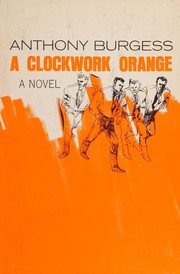 Anthony Burgess · 1962A Clockwork OrangeLvl 7Fast paced
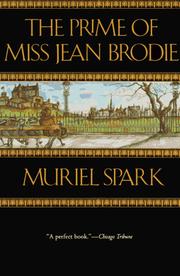 Muriel Spark · 1961The Prime of Miss Jean BrodieLvl 4Fast paced