
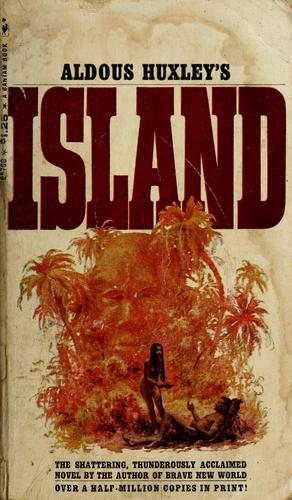
Island
Aldous Huxley · 1894–1963 · England
Why it matters
A shipwrecked journalist stumbles onto Pala, a Pacific utopia where psychedelic ritual, Eastern philosophy, and rational education have built the good life Brave New World warned against. Huxley's final novel, an old dystopian's last, hopeful counter-argument.
At a glance
Long philosophical dialogues carry the plot, demanding patience with exposition over incident.
Deep dive
What Huxley's last novel offers as its answer to Brave New World, and why an oil company's interest in a Pacific island puts a clock on all of it.
Written for readers who have finished the book. No plot recap, and nothing here is safe to read first.
Themes & symbolism
Will Farnaby washes up shipwrecked on Pala, a Pacific island utopia Huxley built as the deliberate photographic negative of his own Brave New World: instead of engineered conformity, Pala practices controlled psychedelic ritual (moksha-medicine), Eastern-inflected education, and a system of shared child-rearing called Mutual Adoption Clubs meant to spare children the trauma of a nuclear family's failures. What Huxley denied his 1932 dystopia, genuine spiritual attention paired with real material comfort, he grants Pala in full, testing whether a rationally engineered good society is any more plausible than the engineered bad one he'd already written.
Farnaby is not a neutral visitor: he has been sent by the oil magnate Joe Aldehyde specifically to soften Pala's ruling family toward a drilling concession, and his own colonial errand, extracting value from a place he's simultaneously being asked to admire, becomes the novel's central irony. Huxley makes Farnaby's guilt over his mission and his growing conviction that Pala's methods actually work run on parallel tracks that never fully resolve into each other, a man capable of being changed by what he's also there to help destroy.
Death is treated on Pala with a directness Huxley clearly means as instructive: an elder dies at home, consciously, supported by ritual and the moksha-medicine, in a scene explicitly staged against the sanitized, deferred deaths of the industrialized West. It's the novel's least subtle argument, and Huxley knows it, choosing didacticism over plot deliberately, because Pala exists to be a working demonstration, not a story that has to earn its ideas through incident alone.
The Mynah Birds Trained to Say 'Attention'
Pala's mynah birds are deliberately trained, released across the island, to squawk single words, 'Attention,' 'Here and now,' at random intervals throughout the day, a low-tech mindfulness intervention built directly into the island's soundscape. Huxley uses the birds as a running gag that is also entirely sincere: enlightenment on Pala isn't reserved for ritual occasions or the moksha ceremonies, it's engineered into the ambient noise of daily life, a society that has industrialized reminder the same way the West industrialized distraction.
The last seal: what actually happens, and why it lands the way it does.
The ending, explained
Murugan, the young heir to Pala's throne, and his mother the Rani have been secretly negotiating with the neighboring dictator Colonel Dipa and with Aldehyde's oil interests throughout the novel, and their coup arrives in its final pages as tanks cross the border while Farnaby, mid-moksha-medicine ceremony with Susila, experiences one of the book's most transcendent passages just as Pala's independence ends outside the window. Huxley refuses Farnaby, and the reader, the rescue a utopia narrative usually promises: the good society is invaded and absorbed by the oil-and-arms economy it spent the whole book rebuking, its ideas surviving only in Farnaby's own transformed consciousness rather than in any political outcome. It was Huxley's own last word on the subject, published a year before his death, and he chose to spend that word on hope rather than on another warning.
Where to go next
 Aldous Huxley · 1928Point Counter PointLvl 6Slow burn
 Aldous Huxley · 1932Brave New WorldLvl 4Medium pace
 Aldous Huxley · 1936Eyeless in GazaLvl 7Slow burn
 George Orwell · 1949Nineteen Eighty-FourLvl 4Fast paced
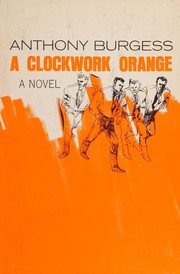 Anthony Burgess · 1962A Clockwork OrangeLvl 7Fast paced
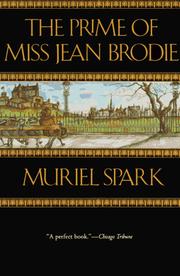 Muriel Spark · 1961The Prime of Miss Jean BrodieLvl 4Fast paced