
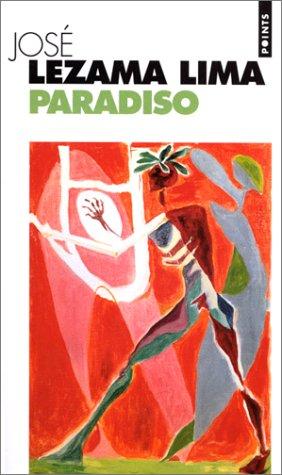
Paradiso
José Lezama Lima · 1910–1976 · Cuba
Originally Paradiso (Spanish) · translated by Gregory Rabassa
Why it matters
A sickly boy's sensory and intellectual awakening unfolds in prose so densely metaphorical that Cuban censors nearly suppressed it for its homoeroticism. Cuban letters' most extravagantly baroque novel.
At a glance
Extravagantly baroque, digression-heavy prose is considered among the hardest in Spanish letters.
Deep dive
Cuba's most extravagantly ornate novel follows one boy's illness, awakening, and friendships toward an ending that reframes everything difficult about the prose as the fulfillment of a promise made to a dead father.
Written for readers who have finished the book. No plot recap, and nothing here is safe to read first.
Themes & symbolism
José Cemí's childhood asthma attacks, which open the novel in near-suffocating physical detail, aren't an obstacle to his development so much as its engine: Lezama Lima treats the fragile, endangered body as the site where sensory and metaphysical perception first break open, so that illness becomes a kind of initiation rather than a setback. The prose itself performs the same logic at the sentence level — instead of moving the reader efficiently from cause to effect, it accumulates metaphor on metaphor, digression folded into digression, treating the image itself as a form of knowledge rather than decoration on top of a plot. That density isn't showing off; it's Lezama's argument that Cuban and Caribbean experience, layered from Spanish, African, and indigenous sources, demands a baroque form adequate to its own abundance.
Cemí's friendships with Fronesis and Foción, which dominate the novel's second half, stage two opposed responses to desire — Fronesis's watchful restraint against Foción's escalating, self-destructive openness — through which Cemí works out his own relationship to eros and to his emerging vocation as a poet. The novel's frank treatment of homosexual desire, most explicitly in its notorious eighth chapter, was radical for its context and cost Lezama Lima dearly: Cuban authorities effectively suppressed the book's circulation on grounds of obscenity shortly after publication, a fact that makes the novel's insistence on treating eros — including queer eros — as generative rather than shameful into a genuinely dangerous position, not just a literary one.
Lezama Lima, Orígenes, and a Censorship the Revolution Made Worse
Lezama Lima spent decades as the quiet center of Cuban letters, editing the influential journal Orígenes from Havana without ever leaving the island, building an idiosyncratic personal aesthetic he called his 'sistema poético' — a belief that the image, not logic, is literature's real instrument of knowledge, which is why Paradiso reads less like a story being told than like a mind thinking in pure metaphor. Paradiso's 1966 publication briefly made him an international name, with admirers like Julio Cortázar defending the book loudly against the moralistic backlash it received at home. But that backlash mattered: Cuban cultural authorities, in a broader campaign against homosexuality that intensified through the early 1970s, pulled the novel from circulation and increasingly marginalized Lezama Lima himself, denying him the ability to publish or travel until his death in 1976 — a Cuban master effectively silenced by the same revolution his prose never directly opposed.
The last seal: what actually happens, and why it lands the way it does.
The ending, explained
The novel doesn't resolve toward an ordinary climax; instead it closes with the ghost of Cemí's father, Colonel José Eugenio Cemí, who died when Cemí was a small child, appearing to him and urging him toward 'resistance' — Lezama's own recurring term for a kind of spiritual and artistic endurance against dissolution. That visitation retroactively reframes the entire, dense, digressive novel we've just read: it isn't simply a memoir of childhood and awakening but the fulfillment of a paternal charge, with Cemí's vocation as a writer presented as the way a dead father's presence gets carried forward. The baroque difficulty of the prose stops being an obstacle at this point and becomes the point itself — proof that Cemí (and behind him, Lezama Lima) answered the charge in the only currency available, language pushed to its most extravagant limit.
Where to go next
 Juan Rulfo · 1955Pedro PáramoLvl 7Slow burn
 Augusto Roa Bastos · 1974I, the SupremeLvl 9Slow burn
 José Donoso · 1970The Obscene Bird of NightLvl 9Slow burn
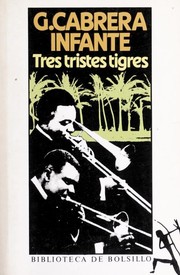 Guillermo Cabrera Infante · 1967Three Trapped TigersLvl 9Slow burn
 Ricardo Güiraldes · 1926Don Segundo SombraLvl 5Medium pace
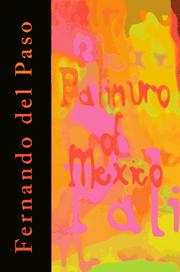 Fernando del Paso · 1977Palinuro of MexicoLvl 9Slow burn