
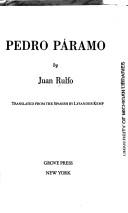
Pedro Páramo
Juan Rulfo · 1917–1986 · Mexico
Originally Pedro Páramo (Spanish)
Why it matters
A man travels to Comala looking for the father he never knew, and finds a town of whispers, murmurs, and inhabitants who feel more like memories than people. One slim novel that García Márquez knew by heart: magical realism's true headwater, and Mexico's most haunted masterpiece.
At a glance
Fragmented, non-chronological narration blends living and dead voices without any markers.
Deep dive
On the single heartbreak that emptied an entire town, and how a hundred-some pages of fragments rewired an entire generation of Latin American fiction that came after it.
Written for readers who have finished the book. No plot recap, and nothing here is safe to read first.
Themes & symbolism
Comala's defining formal move is to never tell you which voices belong to the living and which to the dead, because by the time Juan Preciado arrives almost no one in the town is alive at all — including, eventually, Juan himself, who dies partway through, overwhelmed by the town's ceaseless whispering, and simply continues narrating from a shared grave with the woman Dorotea, a fact the novel lets you piece together rather than announcing. Rulfo's fragments jump between decades and speakers without transition because Comala has no working clock left; for a place where the past killed everyone still standing in the present, non-chronological, overlapping murmur is the only accurate register. It's the innovation that made the book foundational to magical realism before the term existed — not fantastical events dropped into a realist world, but the dead granted full, unremarkable narrative presence, speaking with exactly the same weight as the living.
Pedro Páramo's decades of calculated marriages, land seizures, and violence are all in service of one unresolved obsession: Susana San Juan, the one person his wealth and cruelty could never actually acquire, who returns to Comala already broken by something the novel keeps ambiguous and dies without ever meeting his devotion halfway. Her death doesn't soften him into grief so much as curdle him into a final, total act of vindictiveness — he withdraws every resource that has kept Comala alive, and lets the whole town starve and empty out simply because he no longer has a reason to let it live. The ghost town Juan wanders is therefore not an abstract metaphor but a direct causal result: one powerful man's heartbreak, converted into policy, was enough to kill an entire place, which is the novel's bleakest statement about what unchecked patriarchal power actually does when it stops getting what it wants.
The Book Rulfo Wrote Only Once
Rulfo published almost nothing else of consequence in his lifetime — a story collection and this one slim novel — and both the scarcity and the novel's density are part of its legend: García Márquez has said he had it essentially memorized before writing One Hundred Years of Solitude, and its fingerprints are all over the Latin American Boom that followed, from the casual presence of the dead among the living to the willingness to let chronology dissolve entirely rather than serve as scaffolding. Pedro Páramo did the harder, riskier version first, with none of the genre label yet available to justify it, and needed only a hundred-some pages to do it in — brevity as much as innovation is part of why the book still reads as a headwater rather than an early draft of what came after.
The last seal: what actually happens, and why it lands the way it does.
The ending, explained
The novel's closing pages return, after all the fragmented back-and-forth, to Pedro Páramo himself: withdrawn from the ruin he's caused, sitting outside his house, he is killed almost accidentally by Abundio, his own illegitimate son, who doesn't recognize him and attacks him in a drunken dispute over money rather than in any act of reckoning or revenge. Pedro's death is written as strictly physical and anticlimactic — his body simply gives way "like a heap of stones" — denying the man who authored the whole novel's tragedy any final grandeur or insight. It's a fittingly loose close for a book that was never building toward a single resolving event: Comala's dead keep murmuring regardless, on their own overlapping clock, whether or not the man who emptied the town out is finally, unceremoniously gone.
Where to go next
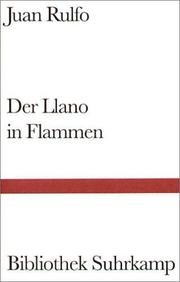 Juan Rulfo · 1953The Burning PlainLvl 6Fast paced
 Gabriel García Márquez · 1967One Hundred Years of SolitudeLvl 6Medium pace
 Elena Garro · 1963Recollections of Things to ComeLvl 7Slow burn
 William Faulkner · 1930As I Lay DyingLvl 9Medium pace
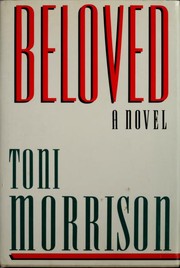 Toni Morrison · 1987BelovedLvl 8Slow burn
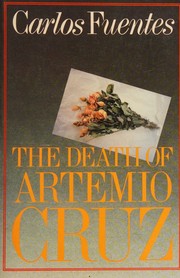 Carlos Fuentes · 1962The Death of Artemio CruzLvl 8Slow burn