
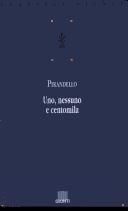
One, No One and One Hundred Thousand
Luigi Pirandello · 1867–1936 · Italy
Originally Uno, nessuno e centomila (Italian)
Why it matters
A man's wife casually mentions his nose is crooked, and the observation unravels his entire sense of self. Pirandello's last novel pushes his obsession with the multiplicity of identity to its most radical, dissolving conclusion.
At a glance
Obsessive, spiraling interior argument with little conventional plot to anchor it.
Deep dive
A wealthy idler's wife makes one throwaway remark about his nose, and Pirandello uses it to unravel every certainty he has ever held about being a coherent person at all.
Written for readers who have finished the book. No plot recap, and nothing here is safe to read first.
Themes & symbolism
Vitangelo Moscarda's crisis begins with an almost comically small trigger, his wife Dida mentioning that his nose leans slightly to the right, but Pirandello builds an entire philosophical demolition out of that single sentence: if Vitangelo has spent twenty-eight years unaware of a fact about his own face that everyone around him has always seen, what else has he been wrong about, and how many other 'Vitangelos' exist, one for every person who has ever formed an image of him, none of which match the self he privately imagines himself to be? The novel takes this literally rather than metaphorically, cataloguing the discrete, contradictory Moscardas held in the minds of his wife, his creditor's widow, his business partner, and the general public, each one real to its holder and none of them the 'real' Vitangelo, because no such single, stable person exists to be found.
Pirandello, already famous for staging the instability of identity and social role in his plays, uses the novel's first-person confessional form to push the idea further than theater allows: since Vitangelo cannot act his way out of other people's fixed images of him the way a character can exit a stage, he instead tries to sabotage each image directly, evicting a tenant to disprove his reputation as a heartless usurer's son, provoking scandal to break the respectable persona his social circle has assigned him. Every attempt backfires by generating a new fixed image rather than dissolving the old one, since other people simply reinterpret his sabotage as further evidence of whatever story about him they already preferred.
The novel's philosophical ambition sits inside genuinely absurd comic material, Vitangelo's slapstick campaigns against his own reputation, his wife's exasperation, a scandal involving a debtor named Marco di Dio whose literal name, Mark of God, lets Pirandello needle at the human hunger for fixed, godlike certainty even as the plot dismantles it. That comic register keeps the book from collapsing into pure treatise: Vitangelo's suffering is real, but Pirandello never lets readers forget that a man destroying his own life over other people's opinions of his nose is also, from another angle, ridiculous.
The Novel Pirandello Called His Most Personal
Pirandello worked on the novel intermittently for over fifteen years, finishing it in 1925 and 1926 while simultaneously the most celebrated dramatist in Europe on the strength of Six Characters in Search of an Author, and he described it as the summation of everything his plays had been circling: the argument that personality is a social fiction imposed from outside rather than a fixed inner truth. Where the plays dramatize that instability through actors literally displaced by characters demanding their own reality, the novel internalizes the same argument entirely inside one increasingly unmoored consciousness, a harder trick to sustain across a full-length book than across ninety minutes on a stage, and one that helped cement the case for the Nobel Prize in Literature he received in 1934.
The last seal: what actually happens, and why it lands the way it does.
The ending, explained
Having failed to demolish any of the fixed images others hold of him and having given away his fortune in the process, Vitangelo is declared legally unfit and effectively institutionalized in a hospice he himself endowed, a fate the community reads as madness but that Pirandello frames as the only logical response available: unable to be any single, stable 'Vitangelo Moscarda,' he chooses instead to become genuinely no one, refusing to hold still long enough to be captured by any name at all. In the novel's closing pages he describes living entirely in the present moment, dying and being reborn from instant to instant, each perception a fresh, momentary self rather than a continuous identity accumulating a biography. It reads less as breakdown than as Pirandello's proposed exit from the whole trap the novel has spent three hundred pages diagnosing: if a coherent, permanent self was always an illusion imposed by other people's need to categorize you, the only honest freedom is to stop insisting on being anyone in particular.
Where to go next
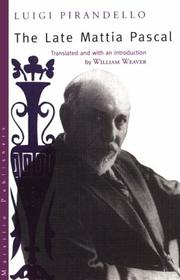 Luigi Pirandello · 1904The Late Mattia PascalLvl 5Medium pace
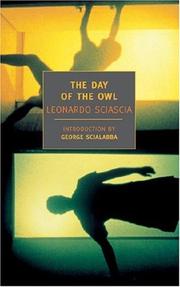 Leonardo Sciascia · 1961The Day of the OwlLvl 4Fast paced
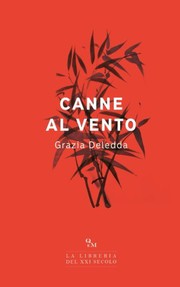 Grazia Deledda · 1913Reeds in the WindLvl 4Medium pace
 Giovanni Verga · 1881The House by the Medlar TreeLvl 6Slow burn
 Alessandro Manzoni · 1827The BetrothedLvl 5Medium pace
 Italo Svevo · 1923Zeno's ConscienceLvl 6Medium pace