

The House by the Medlar Tree
Giovanni Verga · 1840–1922 · Italy
Originally I Malavoglia (Italian)
Why it matters
A Sicilian fishing family's attempt to improve their lot ends in ruin, narrated with an almost documentary refusal to moralize. The founding novel of Italian verismo, and a direct model for neorealist cinema decades later.
At a glance
Dense Sicilian dialect rhythms and a deliberately flat, choral narration.
Deep dive
The novel's coldest trick is its narrator: a village voice that gossips, moralizes in proverbs, and never once tells you what to feel about a family being ground down to nothing.
Written for readers who have finished the book. No plot recap, and nothing here is safe to read first.
Themes & symbolism
Verga's verismo is built on a single formal refusal: no authorial voice ever steps forward to explain, judge, or console. Instead the Malavoglia's ruin is filtered through the chorus of Aci Trezza itself — neighbors, rivals, and gossips who narrate in proverbs and received wisdom, so that the reader gets the village's collective common sense rather than a novelist's sympathy. This impersonality is itself the argument: tragedy here has no villain to indict, only the impersonal mechanics of debt, weather, and bad luck, and a narrative method that mimics how a real community actually processes catastrophe — through rumor, judgment, and the slow leveling of memory rather than through dramatic confrontation.
The house and its medlar tree carry the entire weight of what the family is trying to protect: not wealth, which they never really have, but continuity — a fixed point where generations are supposed to gather regardless of what the sea and the market do to them. Losing the house to debt is a harder blow than any single death because it severs the family from its own idea of itself as a lineage rather than a scattering of individuals. Read as an origin point for later social-realist fiction and film, the novel matters less for what happens to the Malavoglia than for insisting that what happens to poor people rarely resolves into plot — it just accumulates, indifferently, until there's a family left instead of a family history.
The choral narrator
Verga strips out interiority almost entirely — we rarely sit inside a character's private thought for long, because the village's spoken judgment is doing the narrating instead. This is why the prose can feel oddly flat even at its most devastating moments: a death gets the same proverb-inflected treatment as a bad catch of fish. That flatness is deliberate anthropology. Verga wanted a document of how a fishing community actually metabolizes disaster — through talk, not through the sculpted grief of a conventional tragic novel — and the discipline it takes to sustain that register for an entire book is the novel's real technical achievement.
From Aci Trezza to neorealist cinema
The line from this novel to Luchino Visconti's 1948 film La Terra Trema is direct rather than merely thematic — Visconti adapted the Malavoglia's story almost scene for scene, casting actual Sicilian fishermen rather than professional actors and shooting on location in a village a short distance from Verga's setting. What Visconti recognized was that Verga's impersonal method was already cinematic: a camera, like Verga's chorus, can record a family's collapse without narrating what to feel about it. The novel effectively pre-invented the aesthetic vocabulary — nonprofessional faces, documentary patience, refusal of melodrama — that Italian neorealism would claim as a postwar innovation decades later.
The last seal: what actually happens, and why it lands the way it does.
The ending, explained
By the final chapters nearly everyone who defined the family at the novel's opening is dead, disgraced, or gone — Bastianazzo lost with the boat, Luca killed in a naval battle, 'Ntoni's arrest and embittered return, the old patriarch's death. What's left is the grandson, young 'Ntoni, who spends years in grinding, humiliating labor to finally buy back the house by the medlar tree. It reads as recovery only in the narrowest sense: the physical house returns to the family, but the family that once filled it doesn't. Young 'Ntoni himself can't settle inside the restored house — he leaves the village entirely, disillusioned by everything the reclamation cost. Verga refuses the satisfaction of a full circle; the ending is a monument to loss dressed as a homecoming.
Where to go next
 Giovanni Verga · 1880Cavalleria RusticanaLvl 5Fast paced
 Grazia Deledda · 1913Reeds in the WindLvl 4Medium pace
 Émile Zola · 1885GerminalLvl 5Medium pace
 Italo Svevo · 1923Zeno's ConscienceLvl 6Medium pace
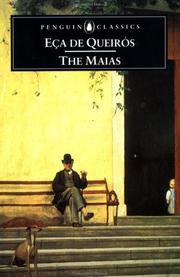 Eça de Queirós · 1888The MaiasLvl 6Medium pace
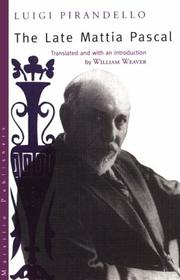 Luigi Pirandello · 1904The Late Mattia PascalLvl 5Medium pace