

Of Love and Other Demons
Gabriel García Márquez · 1927–2014 · Colombia
Originally Del amor y otros demonios (Spanish) · translated by Edith Grossman
Why it matters
In colonial Cartagena, a girl bitten by a rabid dog is pronounced demon-possessed, and the priest sent to exorcise her falls forbiddenly in love with her instead. García Márquez's late, incense-heavy return to the marvelous and the Inquisition's cruelty.
At a glance
Straightforward chronological narration, though period detail and church Latin add texture.
Deep dive
A twelve-year-old girl bitten by a dog is delivered to a convent to be exorcised of a possession no one can actually confirm, and the priest assigned to save her soul discovers that what's happening between them has very little to do with demons.
Written for readers who have finished the book. No plot recap, and nothing here is safe to read first.
Themes & symbolism
Set in an eighteenth-century Caribbean port city under Spanish colonial and church authority, the novel centers on Sierva María, daughter of a decaying noble family, after a possibly rabid dog bites her, an injury her family and the church both choose to interpret as demonic possession rather than pursue as a medical question, since possession offers the church jurisdiction and her father an excuse to be rid of a daughter he's never known how to parent. García Márquez keeps the actual medical truth of her condition permanently unresolved, and that refusal is the point: colonial authority doesn't need certainty to act, only a diagnosis that lets it seize control of a body it has already decided is a problem.
Father Cayetano Delaura, sent by the bishop to prepare Sierva María's exorcism, falls in love with her instead of finding the demons he's been dispatched to expel, and García Márquez treats that love with total seriousness rather than as scandal for its own sake, framing it as the one form of real attention Sierva María receives from any adult in the entire novel. Everyone around her, her negligent parents, the terrified nuns, the exorcists eager to perform a dramatic rite, is interested in her as a symbol or a problem to be solved. Delaura is the only one interested in her as a person, and that distinction, more than the question of possession, is what the church around them cannot tolerate.
A Real Marquis's Tomb and a Legend Made Literal
García Márquez frames the novel as growing out of a documented event from his own reporting years, the 1949 opening of a colonial crypt in Cartagena that turned up the remains of a young girl with a full twenty-two feet of copper-colored hair still attached to her skull, matching a local legend about a girl whose hair grew after death because of the sanctity, or the curse, associated with her life. That grounding in an actual archaeological find gives the novel's colonial Cartagena a documentary weight underneath its more fantastical elements, and lets García Márquez use magical realism sparingly rather than as constant texture, reserving it for a handful of images, Sierva María's uncut hair chief among them, that carry the novel's argument about a life whose meaning kept growing long after the institutions around her had finished deciding what she was.
The last seal: what actually happens, and why it lands the way it does.
The ending, explained
The church's exorcism proceeds despite Delaura's objections, and the increasingly brutal rites performed on Sierva María, restraint, isolation, ritual violence disguised as spiritual treatment, do more damage to her than the dog bite or any possession ever could. She dies during the exorcism itself, still a child, having received real love only from the one man the institution punishes for offering it: Delaura is stripped of his position and consigned to a leper colony for his transgression. García Márquez closes on the discovery, generations later, of her uncut hair still growing in her tomb, the detail that inspired the novel in the first place, a final image insisting that whatever the church failed to see or protect in her endured anyway, long after its own authority over her case had ended.
Where to go next
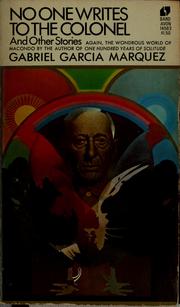 Gabriel García Márquez · 1961No One Writes to the ColonelLvl 3Medium pace
 Gabriel García Márquez · 1967One Hundred Years of SolitudeLvl 6Medium pace
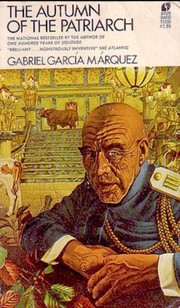 Gabriel García Márquez · 1975The Autumn of the PatriarchLvl 9Slow burn
 Gabriel García Márquez · 1981Chronicle of a Death ForetoldLvl 5Fast paced
 Gabriel García Márquez · 1985Love in the Time of CholeraLvl 4Medium pace
 Juan Rulfo · 1955Pedro PáramoLvl 7Slow burn