
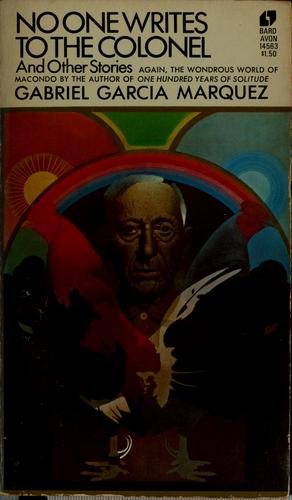
No One Writes to the Colonel
Gabriel García Márquez · 1927–2014 · Colombia
Originally El coronel no tiene quien le escriba (Spanish) · translated by J.S. Bernstein
Why it matters
A retired colonel waits fifteen years for a pension that never comes, feeding his last asset, a fighting cock, while his wife starves beside him. García Márquez's leanest, Hemingway-honed book: dignity rationed out one page at a time.
At a glance
Spare, restrained realist prose carries almost no stylistic difficulty of its own.
Deep dive
An old man and his asthmatic wife are down to their last coins, waiting on a pension letter that has not come in over fifteen years, and on a rooster they can't quite afford to keep or sell.
Written for readers who have finished the book. No plot recap, and nothing here is safe to read first.
Themes & symbolism
The colonel's fifteen years of walking to the dock every Friday to meet the mail boat, only to walk home again without the veterans' pension he was promised for his service in Colombia's Thousand Days War, gives García Márquez his purest study of dignity maintained entirely on credit: credit from the tailor, credit from the doctor, credit from a government that has never once made good on its half of the arrangement. The novella's genius is refusing to let that dignity read as either delusion or heroism cleanly. The colonel's insistence that the letter is coming functions simultaneously as the only thing keeping him upright and as a form of self-harm he and his wife can no longer afford.
The rooster, inherited from the couple's son Agustín, killed nine months earlier for distributing clandestine political pamphlets, occupies the space between asset and relic that the whole novella turns on: sell it and solve the family's immediate hunger, or keep it for the cockfighting season and honor what it meant to Agustín, a wager on a future the colonel has no material grounds to expect. García Márquez lets the town's own investment in the rooster's fighting prospects, and their obvious poverty, mirror the colonel's own arithmetic back at him. Everyone in this novella is betting scarce resources on outcomes they can't control, and calling it hope rather than what it more plainly resembles.
La Violencia Offstage
The novella never names the political killing that took Agustín or the broader conflict, Colombia's La Violencia, the undeclared civil war between Liberals and Conservatives that killed an estimated two hundred thousand people from the late 1940s into the 1950s, but every detail of the colonel's town, curfews, informers, a doctor who burns his own patient records rather than risk them being read as evidence, assumes the reader understands exactly what's suppressing open discussion of it. García Márquez, writing from Paris in 1958 while the conflict was still recent and dangerous to discuss openly in Colombia, builds the entire novella's tension out of what its characters can't say aloud, making the silence itself the clearest possible index of how thoroughly the violence has reorganized ordinary life.
The last seal: what actually happens, and why it lands the way it does.
The ending, explained
Pressed to the absolute end of their resources, with no food in the house and no pension in sight, the colonel's wife demands to know what they'll eat, and the novella closes on his answer: a single word, delivered after nearly fifteen years of exactly this kind of question, that refuses to concede anything to their circumstances. He tells her they'll eat shit, a vulgarity that lands as total defiance rather than despair, the colonel choosing, in the novella's last line, to keep the rooster and his son's unfinished cause over any remaining pretense of practicality. García Márquez doesn't resolve whether that defiance is admirable or reckless. He ends precisely on the point where those two readings become impossible to separate.
Where to go next
 Gabriel García Márquez · 1967One Hundred Years of SolitudeLvl 6Medium pace
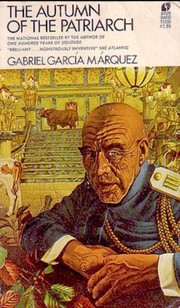 Gabriel García Márquez · 1975The Autumn of the PatriarchLvl 9Slow burn
 Gabriel García Márquez · 1981Chronicle of a Death ForetoldLvl 5Fast paced
 Gabriel García Márquez · 1985Love in the Time of CholeraLvl 4Medium pace
 Gabriel García Márquez · 1994Of Love and Other DemonsLvl 5Medium pace
 Juan Rulfo · 1955Pedro PáramoLvl 7Slow burn