
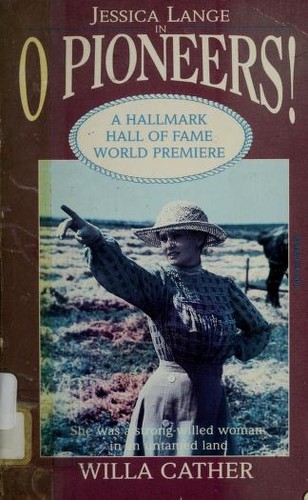
O Pioneers!
Willa Cather · 1873–1947 · United States
Why it matters
A Swedish immigrant woman defies convention to run her own Nebraska farm and make the prairie bloom. Cather's breakthrough novel, and the first to give the frontier's women their own epic scale.
At a glance
Clear, plain prose in Cather's characteristically unadorned style.
Deep dive
What Alexandra Bergson builds out of Nebraska prairie land her own brothers wanted to sell cheap, and what her decision costs the people closest to her once the wheat finally comes in.
Written for readers who have finished the book. No plot recap, and nothing here is safe to read first.
Themes & symbolism
When old John Bergson dies leaving his Nebraska farm to his three children, his sons Oscar and Lou want to cut losses and sell the unproven land, and Alexandra, the eldest, overrules them and mortgages the family's cattle to buy more of it instead, a bet on soil nobody else in the county believes in yet. Cather structures the novel around the sixteen years it takes for that bet to pay off, Alexandra's brothers growing prosperous and small-minded on land she chose for them, while she alone keeps something of the original hunger that made the gamble possible.
Cather writes Alexandra's bond to the prairie in frankly romantic terms, the land itself standing in for the marriage plot the novel otherwise declines to give her: she loves the earth the way other heroines love men, reads its moods, waits out its refusals, and is rewarded for patience most of her neighbors couldn't sustain. The book's title, borrowed from Whitman, casts Alexandra's plainly agricultural triumph as frontier epic, and Cather earns the elevation by keeping the prose as unadorned as the life it describes.
Marie Shabata, married young and unhappily to the volatile Frank Shabata, becomes the novel's other version of desire, one Alexandra's own patient devotion to land was quietly built to avoid: Marie's love for Alexandra's younger brother Emil is immediate, mutual, and entirely unsanctioned, and Cather lets the two women's stories run in parallel long enough that the reader starts to sense which kind of wanting the novel is going to let survive.
Carl Linstrum's Return, and What Alexandra Actually Wants From It
Carl, the childhood neighbor who left for the city years earlier, comes back to a landscape he no longer recognizes and a friend who has become, without him, one of the most successful farmers in the county, and their eventual marriage at the book's close reads less like romantic rescue than like Alexandra finally taking, on her own schedule, the one thing her single-minded labor never got around to.
Emil and Marie Under the Mulberry Tree
Frank Shabata's jealousy has been building through the whole second half of the novel, and it detonates in a single afternoon: he finds Emil and Marie together beneath a mulberry tree on his own land and shoots them both. Cather stages the killing almost entirely offstage, filtered through Alexandra's shock rather than shown directly, which keeps the scene from curdling into melodrama and instead makes Alexandra's response, forgiving Frank enough to visit him in prison, the novel's real climax.
The last seal: what actually happens, and why it lands the way it does.
The ending, explained
After the killings, Alexandra's grief for Emil doesn't turn into anger at Frank so much as a kind of exhausted clarity: she visits him in prison and tells him she doesn't hate him, a mercy that costs her more than punishing him would have. The novel closes on her marriage to Carl, a quiet, companionable match built on decades of friendship rather than passion, which Cather positions as the reward the earlier tragedy makes possible rather than erases: Alexandra gets the ordinary domestic happiness the book denied Marie, but only after paying for it with her favorite brother's life.
Where to go next
 Willa Cather · 1918My ÁntoniaLvl 3Medium pace
 Willa Cather · 1922One of OursLvl 4Medium pace
 Henry James · 1881The Portrait of a LadyLvl 6Slow burn
 Edith Wharton · 1905The House of MirthLvl 5Medium pace
 Mark Twain · 1884Adventures of Huckleberry FinnLvl 5Fast paced
 James Baldwin · 1956Giovanni's RoomLvl 5Medium pace