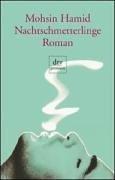
Moth Smoke
Mohsin Hamid · b. 1971 · Pakistan
Why it matters
A fired Lahore banker spirals into drugs, obsession with his best friend's wife, and a murder trial framed as a mock Mughal court case. Hamid's debut, sharp and unsentimental about Pakistan's moneyed class years before The Reluctant Fundamentalist.
At a glance
Rotating first-person narrators, including an unreliable one, complicate an otherwise brisk plot.
Deep dive
A banker fired for one bad afternoon spends a blackout-summer in Lahore falling for his best friend's wife, dealing hash, and finding out exactly how much a city's elite will forgive itself compared to what it forgives him.
Written for readers who have finished the book. No plot recap, and nothing here is safe to read first.
Themes & symbolism
Daru Shezad's decline after losing his banking job unfolds against a summer of rolling power cuts across Lahore, and Hamid uses the blackouts as a diagnostic rather than mere atmosphere: Ozi's family runs a generator without noticing the cost, while Daru sits in the dark doing the arithmetic of what he can no longer afford, a shared discomfort meant to read as universal instead exposing exactly how unevenly Pakistan's elite and its almost-elite absorb the same infrastructure failure.
The affair with Mumtaz, Ozi's restless wife and, unknown to Daru for most of the novel, a journalist writing under a male pseudonym about precisely the corruption and hypocrisy his own social circle depends on, gives the betrayal plot a second layer: Daru isn't just sleeping with his best friend's wife, he's the last person in the story to see what she's actually doing with her own double life.
Hamid's Lahore keeps close to a real, specific city, the old quarter versus the new development schemes, the traffic and status economy of who owns an air conditioner and who doesn't, and Daru's fall from cell-phone-owning banker to drug-dealing has-been tracks exactly how thin the membrane is between Pakistan's elite and the class just beneath it that keeps its lifestyle running.
Lahore's Blackouts as a Class X-Ray
Setting the entire novel during a summer of scheduled and unscheduled power cuts lets Hamid stage the same discomfort across every social level and then watch it resolve completely differently depending on who can afford a generator, turning an infrastructure failure everyone technically shares into the sharpest available measure of who actually has money in Lahore.
The State v. Daru Shezad
The trial framing that structures the novel's back half, interspersed chapters that address the reader directly and invite a verdict, borrows the form of a courtroom without ever supplying a courtroom's certainty: Hamid never lets the reader confirm exactly what happened the day a child died on a Lahore street, only that Daru's decline has made him legible as guilty regardless of the facts.
The last seal: what actually happens, and why it lands the way it does.
The ending, explained
Daru's spiral, drug dealing, the affair with Mumtaz, a botched robbery with his partner Murad Badshah, converges on a hit-and-run: a child is killed by a car on a Lahore street, and the circumstantial case assembles itself around Daru rather than around Ozi, who was actually driving. Hamid stages the back half of the novel as a courtroom transcript interspersed with direct-address chapters daring the reader to render a verdict, and refuses to supply the one piece of evidence that would settle it, declining to confirm from the inside whether Daru committed the specific crime he's convicted of, only that he is guilty, unmistakably, of everything else his year of freefall involved. The trial ends in a conviction. Hamid's real subject was never whodunit: it's how completely Pakistan's class system had already decided, before any verdict, which of the two friends could survive being blamed.