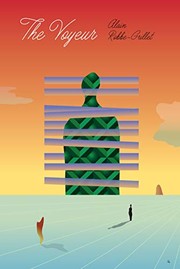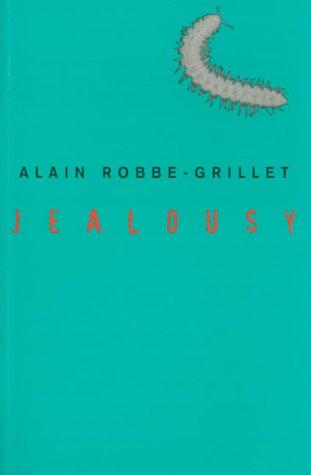
Jealousy
Alain Robbe-Grillet · 1922–2008 · France
Originally La Jalousie (French)
Why it matters
A banana plantation, a possible adultery, and a narrator who is only a watching absence: the same scenes measured obsessively, out of order. The nouveau roman's purest experiment: geometry as anguish.
At a glance
Obsessive, repetitive description from an unidentified narrator with no clear plot.
Deep dive
Why the husband narrating this book never appears in it — no name, no body, not even a first-person pronoun — and what that grammatical vanishing act does to the question of whether the affair ever happened.
Written for readers who have finished the book. No plot recap, and nothing here is safe to read first.
Themes & symbolism
The narrator exists only as a fixed vantage point: a third place setting nobody sits in, a chair pulled slightly back on the veranda, the exact count of banana trees visible from a given angle at a given hour. He is never named, never touches anything, never uses 'I' — jealousy rendered not as a feeling reported but as a geometry silently generated, position and shadow standing in for a consciousness the text refuses to grant a body.
Scenes recur with tiny variants — a hair out of place, a stain reshaped, a sentence of dialogue shifted half a page — in an order that refuses chronology, so the same evening with A... and Franck gets measured and remeasured like a crime scene nobody can stop revisiting. This isn't confusion, it's compulsion formalized: the repetitions are what jealous rumination actually feels like from inside, minus any inside to feel it from.
A Novel Without Psychology
Robbe-Grillet's own essays for the nouveau roman argued against what he called the 'encumbered' novel of inherited interiority — Balzac's omniscient access to what characters feel. Jealousy enacts the argument rather than stating it: we get furniture, insect sounds, the precise curl of a woman's hair, and nothing named as emotion. The reader is forced to build 'jealousy' themselves out of what gets noticed and renoticed, which is the more damning indictment of the psychological novel than any manifesto could manage.
The Centipede: One Moment of Certainty
Amid all the flattened, repeated description sits one unusually vivid, violent passage: a centipede on the wall, A...'s strangled cry, Franck crushing it. It recurs in the narrator's memory more insistently than anything else in the book, as though it's the single event he can be certain actually happened and actually involved contact between his wife and her neighbor — sexual anxiety displaced onto an insect because the actual object of suspicion can never be looked at directly. Even the novel's French title, La Jalousie, doubles as the word for a slatted window blind, so the very act of watching through gaps is built into the word for the feeling itself.