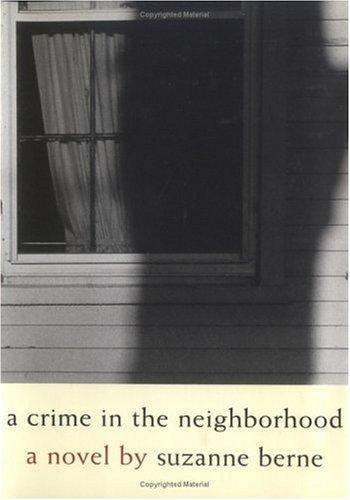
A Crime in the Neighborhood
Suzanne Berne · b. 1961 · United States
Why it matters
A ten-year-old girl becomes wrongly convinced her odd neighbor murdered a local boy, during the Washington-suburb summer that Watergate dominated the news. A quietly devastating debut about a child's certainty and the real damage it does.
At a glance
Plain, retrospective child's-eye narration is easy to follow despite its unsettling implications.
Deep dive
What a ten-year-old's summer-long campaign to prove her quiet neighbor is a murderer costs everyone involved, set against the summer Watergate taught an entire country the same appetite for suspicion.
Written for readers who have finished the book. No plot recap, and nothing here is safe to read first.
Themes & symbolism
Berne sets the novel in a Washington-area suburb in the summer of 1972, the same months the Watergate break-in is unspooling on television, and lets ten-year-old Marsha's home life supply its own private scandal: her father has left the family for her mother's sister, an unremarked domestic collapse the novel keeps deliberately quieter than the murder plot, which is the point. When a neighborhood boy is found dead in the woods nearby, Marsha redirects the anxious, betrayed attention she can't put anywhere else onto Mr. Green, the unmarried man across the street who has never done anything worse than notice the neighborhood children.
Berne writes Marsha's suspicion as a child's amateur detective work, notebooks, stakeouts, invented evidence, but the adult narrator looking back never lets the reader mistake it for harmless play: the accusations spread, neighbors start avoiding Mr. Green, and Marsha's fabricated case does real damage to a man whose only offense was living alone in a neighborhood suddenly desperate to name its fear. The parallel to Watergate isn't decorative. Both plots run on the same mechanism, a closed community's need to convert diffuse, unbearable uncertainty into a single guilty face, playing out at the scale of a country and at the scale of one Maryland street simultaneously.
The Year Trust Broke Nationally and Locally at Once
Berne threads real 1972 news, the break-in, the Senate hearings that follow, the slow unraveling of the Nixon administration's denials, through Marsha's summer as ambient noise the adults half-listen to over dinner, and lets the reader do the work of noticing that the country's institutions are failing the same test of good faith the neighborhood is failing on its own street. Nobody in the novel says the comparison out loud. Berne trusts the coincidence of the calendar to make the argument instead.
A Narrator Confessing Rather Than Solving
The novel is narrated by Marsha as an adult, decades removed from that summer, and Berne structures the whole book as something closer to a confession than a mystery: the actual killer is never conclusively identified, the investigation stalls, and the case that consumed the neighborhood's whole summer simply goes cold. What doesn't go cold is Marsha's guilt over the specific, concrete harm her invented certainty did to an innocent man, which the novel treats as the only crime it's actually interested in solving.