
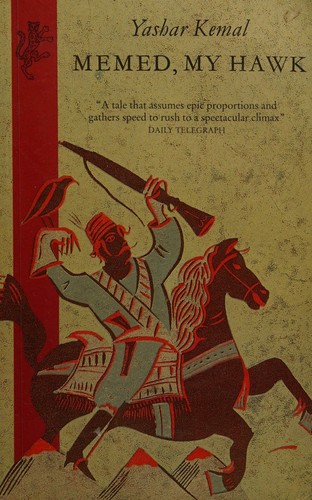
Memed, My Hawk
Yaşar Kemal · 1923–2015 · Turkey
Originally İnce Memed (Turkish) · translated by Edouard Roditi
Why it matters
A young Anatolian villager becomes a noble brigand in revolt against a cruel landlord. Kemal turns the cotton plains into folk epic: oppression and defiance that made him Turkey's great Nobel contender.
At a glance
Folk-tale cadence and clear heroic structure make this an accessible epic despite its scope.
Deep dive
A village boy fleeing a tyrannical landlord becomes, over the course of one flight into the mountains, exactly the kind of outlaw every Anatolian village already had a name and a song ready for.
Written for readers who have finished the book. No plot recap, and nothing here is safe to read first.
Themes & symbolism
Memed grows up under Abdi Agha's control over the village of Değirmenoluk, where the Agha has absorbed most of the surrounding farmland into his own holdings, leaving Memed's mother only a scrap of field so choked with thistle that stealing it was not worth his trouble. Kemal establishes feudal exploitation through this kind of specific, local detail, whose furrow of dirt belongs to whom, rather than through abstraction, so the injustice never floats free of the actual ground it is happening on.
When Abdi Agha tries to force Hatche, the young woman Memed loves, into marrying his nephew Veli, Memed and Hatche flee together into the Taurus mountains, and the flight itself is what transforms him. Kemal shows villagers embellishing Memed's exploits into legend almost as soon as they happen, songs and rumors of İnce Memed, Slim Memed, outpacing the actual, frightened young man they describe, treating the eşkiya bandit-hero tradition as a live folk process rather than a finished myth borrowed for atmosphere.
Other bandits Memed encounters in the mountains, seasoned bank robbers and casual killers among them, give the novel a way to measure what kind of outlaw he actually becomes against the type villagers might expect. Kemal is careful to keep Memed's violence tethered to specific grievances, Abdi Agha and the landlords who back him, rather than letting it curdle into banditry for its own sake, which is exactly the distinction that lets the peasantry's growing devotion to him read as moral judgment rather than simple fear of a man with a gun.
The Taurus landscape itself, its thistle fields, its migrating birds, its fires that clear ground only for new growth to follow, keeps rhyming with the human story Kemal is telling: a cycle of destruction and renewal that shelters Memed from the Agha's men in the same breath it starves and exposes him. Nature here is neither innocent backdrop nor tidy metaphor, just another force as indifferent and as formative as the feudal order Memed is running from.
The Thistle Field as First Rebellion
Long before Memed becomes an outlaw with a rifle, his first act of open defiance is setting fire to the thistle-choked field the Agha considered too worthless to steal. Kemal treats the burning as more than symbolic housecleaning: it is the moment Memed stops accepting the terms of his own poverty as fixed, using the one patch of ground the Agha never valued to announce that nothing about the current arrangement is permanent after all.
The last seal: what actually happens, and why it lands the way it does.
The ending, explained
Memed finally corners Abdi Agha and shoots him, ending the tyranny that shaped his entire childhood, then rides off into the mountains rather than returning to claim any settled place in the village he grew up in. Kemal declines to give him a domestic ending, a homecoming, or even a confirmed fate: the novel's final note is villagers repeating and elaborating the story of what happened, Memed already passing out of biography and into the kind of song that outlives whoever it is actually about.
Where to go next
 Nawal El Saadawi · 1975Woman at Point ZeroLvl 3Fast paced
 Ghassan Kanafani · 1963Men in the SunLvl 5Medium pace
 Halide Edip Adıvar · 1935The Clown and His DaughterLvl 4Medium pace
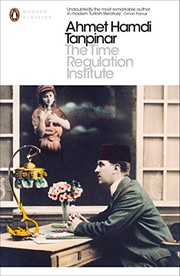 Ahmet Hamdi Tanpınar · 1961The Time Regulation InstituteLvl 7Slow burn
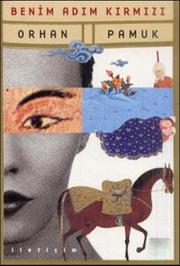 Orhan Pamuk · 1998My Name Is RedLvl 7Medium pace
 Abdul Rahman Munif · 1984Cities of SaltLvl 6Slow burn