
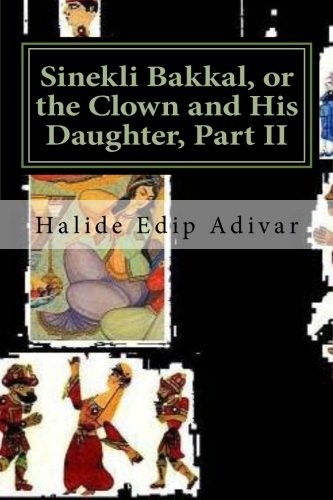
The Clown and His Daughter
Halide Edip Adıvar · 1884–1964 · Turkey
Why it matters
A traveling shadow-puppeteer and his daughter navigate late-Ottoman Istanbul's vanishing folk culture. From Turkey's first major woman novelist, a War of Independence veteran later exiled for opposing one-party rule.
At a glance
Elegiac, folkloric realism with a clear plot but dense period and cultural texture.
Deep dive
A street performer's daughter is raised inside a devout imam's house to sing responses in the mosque, and the novel spends the last years of a sultan's rule finding out what she does with a voice trained for two entirely different audiences.
Written for readers who have finished the book. No plot recap, and nothing here is safe to read first.
Themes & symbolism
Rabia grows up in the Sinekli Bakkal quarter of Istanbul under the strict religious training of her grandfather, an imam who teaches her to sing the call-and-response of the mosque, while her father Tevfik earns their living as a clown and shadow-puppeteer, performing the comic Karagöz tradition the household otherwise treats as beneath its dignity. Halide Edip builds Rabia's entire character around this split inheritance, sacred discipline from one side of the family, popular performance from the other, so that her eventual gift as a singer reads not as a talent that appeared from nowhere but as the literal synthesis of everything Sinekli Bakkal already contained.
Selim Pasha, the ruthless justice minister who polices dissent against Sultan Abdülhamid II with real cruelty, is also the man who exposes Rabia to secular love songs and a wider, more cosmopolitan sense of music than her grandfather's mosque ever offered, and Peregrini, an Italian musician and former priest living in exile in the same neighborhood, completes that education. Halide Edip refuses to let either man function as a simple villain or savior: Selim Pasha's tenderness toward Rabia coexists with the same authoritarian reflexes that exile his own son, and Peregrini's devotion to her is inseparable from the condescension of a European teaching a Turkish girl to appreciate music he assumes she could not otherwise reach. Rabia absorbs what is useful from both and answers to neither, and it is that selective, unapologetic borrowing, rather than any grand declaration about East and West, that gives the novel its patient, unhurried case for what a genuinely cosmopolitan Istanbul could still look like even under Abdülhamid's surveillance state.
Karagöz and the Mosque as Rival Grammars
Halide Edip treats Tevfik's shadow puppetry and the grandfather's Quranic recitation not as opposites but as two performance traditions doing structurally similar work, holding a neighborhood's attention, shaping its moral imagination, keeping an audience returning night after night, and lets Rabia's later singing career draw fluently on both without the novel ever forcing her to renounce one for the other. That refusal to rank sacred over popular, or East over West, is the book's real argument, made through Rabia's own practice rather than through anything a character says out loud.
The last seal: what actually happens, and why it lands the way it does.
The ending, explained
Peregrini converts to Islam, takes the name Osman, and marries Rabia, settling in the same Sinekli Bakkal house where her grandfather once ruled, so that the union the novel spends its length building toward turns out to require the outsider's transformation rather than Rabia's. Selim Pasha, who spends the second half of the book softened by exile and his own son's absence, resigns his post and lets go of the ruthlessness that once defined him. The novel closes in 1908, with the Ottoman constitution restored, Tevfik returning from his own exile, and Rabia settled with a husband and a child, so that the household's years of enforced silence under Abdülhamid's rule end at almost exactly the moment the empire's does, private and political history closing together.
Where to go next
 Halide Edip Adıvar · 1922The Shirt of FlameLvl 5Medium pace
 Lao She · 1937Rickshaw BoyLvl 3Medium pace
 Orhan Pamuk · 1998My Name Is RedLvl 7Medium pace
 Boris Pasternak · 1957Doctor ZhivagoLvl 6Slow burn
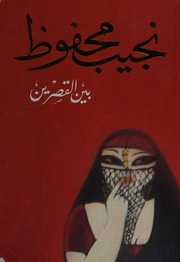 Naguib Mahfouz · 1956Palace WalkLvl 4Medium pace
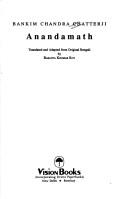 Bankim Chandra Chattopadhyay · 1882AnandamathLvl 5Medium pace