
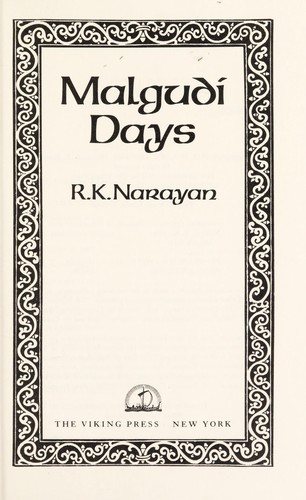
Malgudi Days
R. K. Narayan · 1906–2001 · India
Why it matters
Astrologers, postmen, and schoolboys of an invented South Indian town, each story small and complete as a coin. Narayan's gentle irony made ordinary Indian life world literature: the easiest door into his sixty-year project.
At a glance
Simple, self-contained stories in plain, accessible prose.
Deep dive
Across an invented town's astrologers, postmen, and petty thieves, why Narayan's comic irony keeps tightening into something closer to conscience than punchline.
Written for readers who have finished the book. No plot recap, and nothing here is safe to read first.
Themes & symbolism
Malgudi is invented down to its street names, Market Road, the river Sarayu, the Mempi Hills, Lawley Extension, and Narayan reuses that geography so exactingly across story after story that the town itself becomes the collection's real continuity, holding together a cast who otherwise never meet. "An Astrologer's Day" sets the pattern: a fraudulent astrologer working under a tamarind tree by lamplight is confronted, without recognizing him, by the very man he stabbed and left for dead in a drunken quarrel years earlier, the injury that first sent him fleeing his own village to invent a new trade in Malgudi. Guru Nayak wants to know if his attacker is still alive; the astrologer already knows the answer and turns real terror into a reading precise enough, because it is confession disguised as prophecy, to send the man home satisfied and vengeance abandoned.
Thanappa the postman carries the same civic authority through "The Missing Mail," though he uses it to break his job's rules rather than enforce them: a telegram announcing a relative's death would reach the Ramanathan household on the eve of their daughter's wedding, so he pockets it, lets the family's peace of mind survive the ceremony intact, and confesses the withheld telegram only months later. Narayan treats the decision as neither theft nor virtue outright, just one man's private calculation about what a town's rituals are actually for. A third recurring type is the petty criminal undone by his own attachment to what he has stolen, the pickpocket of "Trail of the Green Blazer" cannot resist the coat long enough to get clear of the crowd chasing him, and across the six decades Narayan kept returning to Malgudi, that same shape recurs: a small vanity, a mistaken identity, a withheld truth, tightened until it says something quietly serious about how the town actually governs itself, tolerantly, without a magistrate in sight.
A Town Exact Enough to Draw a Map Of
Narayan kept an actual map of Malgudi for his own reference and held its geography consistent across more than thirty books, and Malgudi Days is where that consistency turns structural rather than incidental: a reader who already knows Market Road's shops from his novels lets a story here spend its whole economy on a single afternoon there instead of re-establishing the town from scratch, the reverse of how most short-story collections have to work.
Judgment Withheld Until the Last Line
None of these stories tell the reader how to feel about the astrologer's fraud, Thanappa's withheld telegram, or the green blazer's thief. Narayan's narration stays level and mildly amused straight through, and the moral weight of each story arrives only in its closing sentence, after the plot has already resolved itself, which is exactly what makes the collection read as comic for most of its length and unexpectedly serious in retrospect.
Where to go next
 R. K. Narayan · 1958The GuideLvl 3Medium pace
 Mahasweta Devi · 1974Mother of 1084Lvl 5Medium pace
 Banu Mushtaq · 2025Heart Lamp: Selected StoriesLvl 4Fast paced
 Alan Paton · 1948Cry, the Beloved CountryLvl 4Medium pace
 Mulk Raj Anand · 1935UntouchableLvl 3Fast paced
 Ismat Chughtai · 1942The Quilt and Other StoriesLvl 4Fast paced