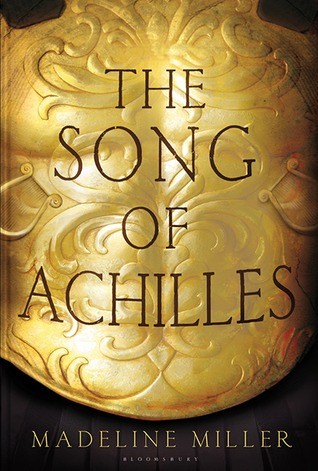
The Song of Achilles
Madeline Miller · b. 1978 · United States
Why it matters
Patroclus, the exiled prince raised alongside Achilles, narrates their friendship-turned-love affair from boyhood training through the Trojan War to its foretold, tragic end. A classicist's decade of work turns the Iliad's margins into its emotional center.
At a glance
Lyrical but clear prose carries an already-known ending at an accessible, emotionally driven pace.
Deep dive
Patroclus has spent years watching Achilles being groomed for exactly one prophecy, and Madeline Miller's retelling of the Iliad cares less about whether it comes true than about what it costs Patroclus to love someone raised for it.
Written for readers who have finished the book. No plot recap, and nothing here is safe to read first.
Themes & symbolism
Miller narrates the entire Trojan War through Patroclus, an exiled minor prince who becomes Achilles' companion as a boy and stays at his side through Chiron's tutelage, Thetis's furious disapproval, and a war neither of them starts. The choice of narrator inverts Homer's priorities completely: where the Iliad is organized around Achilles' rage, Miller's novel is organized around Patroclus's fear, the slow-building dread of loving someone whose mother is a goddess and whose fate, laid out to him almost from childhood, is a stark choice between a long anonymous life and a short glorious one.
Thetis functions throughout as the novel's clearest antagonist, not because she is cruel exactly, but because her contempt for Patroclus's ordinariness, his mortality, his lack of divine blood, is the novel's argument about what glory actually asks of the people who chase it: Achilles' pursuit of kleos, the undying fame the Greek heroic code prizes above almost everything, requires him to treat his own life, and by extension Patroclus's, as raw material for a story rather than as something worth simply living. Patroclus, trained as a healer rather than a warrior, embodies the novel's counter-argument, that tending to the wounded is its own kind of heroism, one the Greek camp barely has language for.
Briseis and the War's Other Casualties
Miller gives real weight to Briseis, the captive woman whose seizure by Agamemnon triggers Achilles' famous rage in the Iliad but who exists in Homer mostly as a plot device. Here she becomes Patroclus's friend and confidante, a reminder throughout the novel that the war's glory, the version the men keep chasing, is being paid for constantly by women who never get a vote in how the story is told.
Rewriting an Epic's Silences
Homer never states outright that Achilles and Patroclus were lovers rather than simply close companions, a question ancient commentators including Aeschylus and Plato themselves debated. Miller resolves that ambiguity decisively and builds the entire novel's emotional architecture on it, which is less a liberty taken with the source material than a choice to foreground a reading that later Greek writers already considered live.
The last seal: what actually happens, and why it lands the way it does.
The ending, explained
Achilles refuses to fight after Agamemnon insults him, and the Greek camp begins losing badly enough that Patroclus, desperate to break the stalemate, borrows Achilles' armor and leads the Myrmidons into battle himself. Hector kills him, believing he has killed Achilles, and the loss finally breaks Achilles' restraint entirely: he kills Hector in a battlefield rage, drags the body behind his chariot, and briefly abandons every shred of the honor code he had spent the novel claiming to serve. Achilles dies soon after, struck in his one vulnerable point by an arrow guided by Apollo and loosed by Paris. The novel's final chapters follow Patroclus's ghost, still lingering because his name has not yet been carved beside Achilles' on their shared tomb as promised, until Thetis, who spent the whole book despising him, finally relents and adds his name herself, the closest thing the novel offers to reconciliation.