
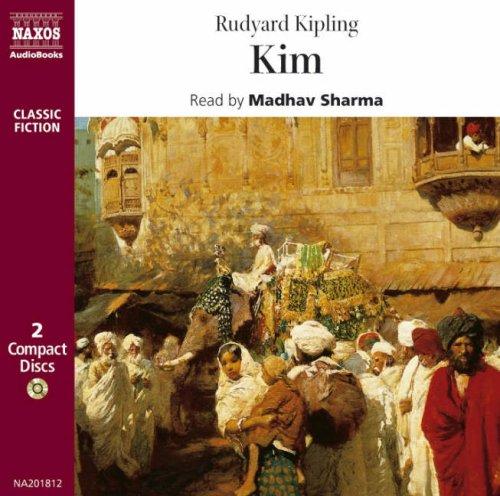
Kim
Rudyard Kipling · 1865–1936 · England
Why it matters
An orphan boy of Lahore becomes both a lama's disciple and a pawn in the Great Game of imperial espionage. Kipling's masterpiece and the most loving portrait of India in colonial fiction, which is exactly the argument it has been having ever since.
At a glance
Anglo-Indian idiom, period slang, and Great Game politics ask for occasional footnotes.
Deep dive
How a boy fluent in every register of Lahore's streets is trained to serve an empire that never quite trusts him to belong anywhere, and what his teacher's search for release has to do with the game Kim is actually playing.
Written for readers who have finished the book. No plot recap, and nothing here is safe to read first.
Themes & symbolism
Kim's dual identity is the novel's whole architecture: he can pass as a Hindu urchin, a Muslim's son, a sahib's ward, because Kipling gives him no fixed caste to betray, only a chameleon fluency the Great Game finds professionally useful. The espionage plot needs exactly the boy the bazaar produced — someone who reads faces and languages before he reads English — and the novel never asks what it costs Kim to be endlessly legible to everyone and truly known by no one. The "jewel game," Lurgan Sahib's memory drill with a tray of trinkets, is presented as simple tradecraft, but it's also a small parable for the whole book: India rendered as an inventory to be catalogued, named, and put to use.
The lama's search for the River of the Arrow runs on a track that looks parallel to Kim's spying but is actually its rebuke — he seeks release from the Wheel of Things while Kim is being fitted more tightly into an imperial machine, and Kipling lets the two quests share a road without ever forcing them to resolve into one value system. Said's famous objection is really an observation about tone: the novel's affection for India's textures, its bazaars and roads and holy men, is completely sincere, and completely unbothered by the fact that Kim will spend his gifts making that world legible to the people ruling it. The Grand Trunk Road itself, which Kim and the lama walk for much of the novel, becomes a kind of moving argument in favor of that affection — a river of castes, religions, and trades flowing past in close-observed, loving detail that no amount of retrospective political discomfort has managed to make Kipling's prose stop earning.
The Question the Novel Won't Ask
Kipling structures the book so Kim is never made to choose between the lama's road and the Colonel's, and generations of critics have argued about whether that's the novel's honesty or its evasion. Kim loves the lama without reservation and serves the Raj without complaint, and nothing in the text suggests these should feel like a contradiction to him — which is precisely why readers a century later can't stop noticing that they do.
The last seal: what actually happens, and why it lands the way it does.
The ending, explained
The espionage plot resolves almost administratively: Kim, exhausted and feverish from the mountain journey, has helped his handlers seize the Russian agents' surveying documents and maps, quietly closing out the Great Game business that has run underneath the pilgrimage all along. The real climax belongs to the lama, who collapses near death and experiences what he takes for final enlightenment — a vision of the River at last found. Having reached the threshold of release from the Wheel, he deliberately turns back rather than pass beyond it, choosing to remain for Kim's sake. Kipling ends on that renunciation rather than on Kim's future, leaving the boy recovering, loved by his teacher, and still unassigned to either the sahib's world or the road's — the choice the whole novel has organized itself around, permanently deferred.
Where to go next
 Rudyard Kipling · 1888Plain Tales from the HillsLvl 5Fast paced
 Rudyard Kipling · 1894The Jungle BookLvl 3Fast paced
 Rudyard Kipling · 1897Captains CourageousLvl 4Fast paced
 Rudyard Kipling · 1902Just So StoriesLvl 2Fast paced
 Jack London · 1903The Call of the WildLvl 2Fast paced
 Thomas Hardy · 1891Tess of the d'UrbervillesLvl 4Medium pace