
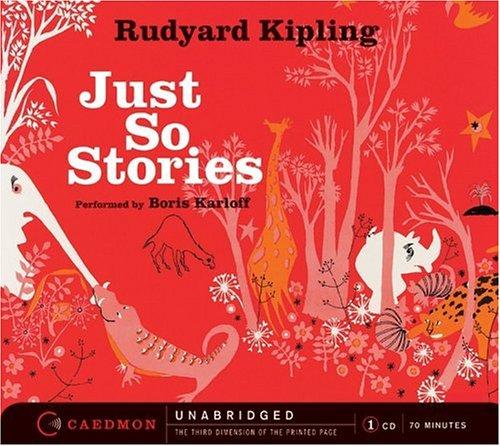
Just So Stories
Rudyard Kipling · 1865–1936 · England
Why it matters
Origin myths told with a straight face and a wink, how the leopard got its spots, how the camel got its hump, each one built for reading aloud. Kipling's purest comic invention, and the most purely delightful thing he ever wrote.
At a glance
Playful, rhythmic prose written explicitly for children.
Deep dive
Invented origin myths written to be read aloud to a child, each one arguing, with a completely straight face, for its own impossible explanation of how the world got the way it is.
Written for readers who have finished the book. No plot recap, and nothing here is safe to read first.
Themes & symbolism
Kipling wrote these twelve tales to be read aloud, not read, and it shows in the machinery: a direct address to 'O Best Beloved' repeated like a chorus, sentences built from run-on lists and alliteration timed for a speaking voice, and the same joke told at three speeds, in the prose, in the illustrations Kipling drew himself, and in the mock-scholarly captions underneath them, which sometimes contradict the story outright. 'The Elephant's Child,' the collection's best-known piece, follows a baby elephant with 'satiable curtiosity' to the 'great grey-green, greasy Limpopo River,' where a crocodile stretches his short nose into a trunk trying to eat him, and Kipling paces the whole account to the rhythm of something told over and over to the same audience until every phrase has worn a groove.
Most of the tales explain a single physical feature and stop there, the Camel's hump as punishment for refusing to work, the Rhinoceros's loose, ill-fitting skin as revenge for a stolen cake, but 'The Cat That Walked by Himself' explains an entire social arrangement instead. Wild Dog, Wild Horse, and Wild Cow each trade away their freedom to the first Woman, one by one, in exchange for fire, meat, and shelter, becoming Man's servants for good. The Cat alone negotiates a narrower deal, milk and a place by the fire, on the condition that he keeps the right to walk by himself and all places are alike to him, and Kipling lets that qualified independence stand, unresolved, as the one bargain in the book nobody fully wins or loses.
Taffy and Tegumai Invent Writing, Twice
'How the First Letter Was Written' and 'How the Alphabet Was Made' follow the same pair, a Neolithic girl named Taffimai Metallumai and her father Tegumai Bopsulai, first botching a picture-message that nearly starts a war between two tribes, then working out, sound by sound, a proper phonetic alphabet from the shapes of a carp's mouth and a stork's leg. Kipling composed several of these tales as bedtime stories for his own daughter Josephine, who died of pneumonia in 1899 before the finished book appeared in 1902, and the Taffy stories in particular, a father inventing a way to be understood by someone he loves, carry that origin without the book ever stating it outright.
Captions That Argue With Their Own Pictures
Kipling drew the book's plates himself and wrote captions that argue with the pictures rather than explain them, the note under the Elephant's Child engraving warning the reader not to be alarmed by the crocodile's teeth, which the picture has already made plenty alarming, or an aside admitting an elephant's eye has been drawn in entirely the wrong place. The captions add a third voice to stories that already run text against read-aloud rhythm, an author interrupting his own authority for a joke only a child looking closely at the page would ever catch.
Where to go next
 Rudyard Kipling · 1888Plain Tales from the HillsLvl 5Fast paced
 Rudyard Kipling · 1894The Jungle BookLvl 3Fast paced
 Rudyard Kipling · 1897Captains CourageousLvl 4Fast paced
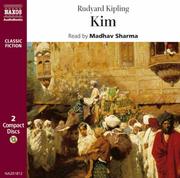 Rudyard Kipling · 1901KimLvl 5Fast paced
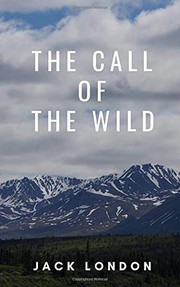 Jack London · 1903The Call of the WildLvl 2Fast paced
 Thomas Hardy · 1891Tess of the d'UrbervillesLvl 4Medium pace