

Kappa
Ryūnosuke Akutagawa · 1892–1927 · Japan
Originally Kappa (Japanese) · translated by Geoffrey Bownas
Why it matters
A psychiatric patient recounts his fall into the land of the kappa, water-goblins whose society satirizes human folly. Akutagawa's bitter late satire, written in the year of his suicide: Gulliver by way of despair.
At a glance
Dense, allegorical social satire requiring familiarity with its targets.
Deep dive
A satire of Japanese industrial capitalism disguised as a travelogue, set in a country where a factory simply eats its surplus workers and the unborn get a formal say in whether they show up at all.
Written for readers who have finished the book. No plot recap, and nothing here is safe to read first.
Themes & symbolism
Patient No. 23, narrating from inside an asylum, describes falling through a hole while mountain climbing into a society of kappa that mirrors human Japan closely enough to indict it directly. The kappa economy's defining institution is the factory that, when it has more workers than it needs, simply kills the surplus and processes them into meat, a detail Akutagawa delivers with the same flat procedural tone kappa use to discuss weather, and the calm is the point: this isn't presented as monstrous within kappa society, only as efficient, which is exactly Akutagawa's charge against the labor logic of industrializing Japan dressed in reasonable-sounding management language.
The novel's single darkest image is its treatment of birth. Before a kappa child is delivered, the father crouches at the mother's opening and asks the fetus directly whether it wishes to be born, and some, having heard enough about the world waiting for them, refuse and are simply un-conceived. Akutagawa wrote this within months of his own suicide, with a family history of mental illness he feared he had inherited and a young family of his own recently expanded, and the scene reads less like fantastical worldbuilding than like the plainest statement of despair in the whole book.
Tock, a kappa poet and the narrator's closest friend in this world, embodies art pursued with total sincerity in a society that doesn't especially value it, and his eventual suicide draws a funeral crowded with fashionable mourners who barely knew him while the friends who did are pushed to the margins. Akutagawa, a celebrated but increasingly exhausted literary figure in his own right by 1927, is plainly writing his own likely reception into Tock's, a premonition delivered with more bitterness than self-pity.
The Abattoir Logic of Kappa Factories
Akutagawa sets the factory scene up as a straightforward tour, a kappa host explaining the plant's operations to the narrator with the pride of an industrialist showing off efficient machinery, before casually mentioning what happens to redundant labor. The scene lands harder for its total lack of horror-movie staging; nobody in kappa society objects, because nobody has been given a framework in which objecting would make sense. Akutagawa aims the satire squarely at a Japan debating Marxism and capitalism in the abstract while, in his telling, both systems were equally capable of arriving at the same casual disposability of workers once efficiency became the only value left standing.
A Suicide Note Disguised as Satire
Akutagawa completed Kappa only months before taking his own life by an overdose of veronal in July 1927, and the novella's preoccupations, inherited madness, a society whose comforts feel thinner the longer you look at them, a poet destroyed by an indifferent public, track his private letters from the same period closely enough that later biographers read the book as something closer to a rehearsal than a satire. What keeps it from reading as simple confession is the comedy Akutagawa never abandons even here; the narrator's continued longing for kappa country from inside his human asylum room is played for both genuine grief and a kind of gallows joke about which world was actually the sane one.
The last seal: what actually happens, and why it lands the way it does.
The ending, explained
Expelled from kappa country and returned to human society, the narrator is diagnosed as mentally ill and institutionalized, his account of everything the reader has just read filed as delusion by the doctors around him. He continues to claim that kappa visit him in the asylum, bringing news of Tock's funeral and gossip from a world the hospital staff insist doesn't exist, and Akutagawa leaves the reality of those visits genuinely unresolved rather than debunked. What isn't ambiguous is the narrator's preference: given the choice between the grim, bureaucratic decency of human Japan and the honest cruelty of kappa country, he wants back into the hole in the ground, a verdict on the human world that reads, given when it was written, less like whimsy than like a settled account being closed.
Where to go next
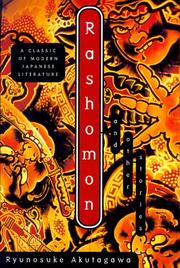 Ryūnosuke Akutagawa · 1915Rashōmon and Other StoriesLvl 5Fast paced
 Natsume Sōseki · 1914KokoroLvl 4Medium pace
 Osamu Dazai · 1948No Longer HumanLvl 4Medium pace
 Jun'ichirō Tanizaki · 1925NaomiLvl 4Fast paced
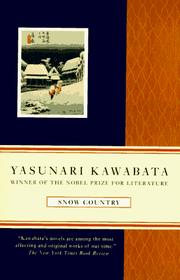 Yasunari Kawabata · 1947Snow CountryLvl 5Slow burn
 Kōbō Abe · 1962The Woman in the DunesLvl 5Medium pace