
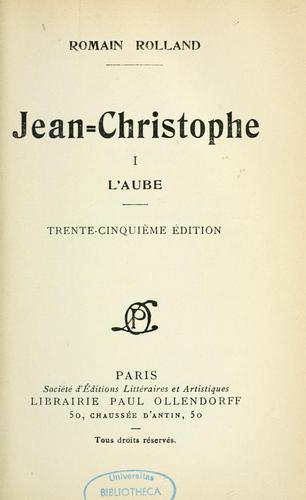
Jean-Christophe
Romain Rolland · 1866–1944 · France
Originally Jean-Christophe (French) · translated by Gilbert Cannan
Why it matters
The life of a German composer-genius, from Rhineland childhood to Parisian exile, told in ten volumes as one river of experience. The original roman-fleuve, and a monument to Franco-German brotherhood completed two years before the war that mocked it.
At a glance
Not difficult page by page, but a ten-volume river demanding a long-distance reader's stamina.
Deep dive
A German composer's whole life, from a brutal Rhineland childhood to French exile, becomes a decade-spanning argument that two rival nations might still learn to love each other's art, written by a man watching Europe drift toward war.
Written for readers who have finished the book. No plot recap, and nothing here is safe to read first.
Themes & symbolism
Rolland conceived the entire ten-volume arc as deliberate advocacy for Franco-German brotherhood at the exact moment nationalist hostility between the two countries was hardening toward war, and Christophe's personal trajectory is built to model the reconciliation Rolland hoped might still be possible: a German genius who arrives in Paris contemptuous of French frivolity, journalism, and salon taste, and who is gradually, plausibly changed by real friendships and real art there without ever renouncing his German formation. The novel's late volumes, set in a Paris rendered with an outsider's clear, unsentimental eye, are as much satire of French cultural institutions, corrupt critics, fashionable salons, a sclerotic conservatoire, as they are love letter, because Rolland's internationalism depended on each culture being able to criticize the other honestly rather than merely admire it. That the ten volumes were finished in 1912, barely two years before the two nations Rolland had spent a decade trying to reconcile in fiction went to war against each other in fact, gives the book's optimism a weight of dramatic irony Rolland himself never intended and had to live through: a Nobel Prize awarded in 1915, during the very war his novel had hoped to forestall, to a pacifist his own countrymen increasingly regarded as close to a traitor for refusing to cheer the fighting.
The roman-fleuve form Rolland essentially invents here, one continuous life followed across ten volumes rather than compressed into a single dramatic crisis, treats ordinary accumulated experience itself, childhood humiliation, professional setback, friendship, disappointment, slowly won wisdom, as material substantial enough to carry a novel's full weight, without needing a conventional plot engine to justify the scale. That structural gamble proved genuinely influential on the following generation of French novelists working in extended multi-volume form, and its underlying premise, that a whole life considered continuously reveals a truth no single crisis-driven plot can, is recognizably the same premise later put to very different, more interior use by Proust.
The last seal: what actually happens, and why it lands the way it does.
The ending, explained
The later volumes trace Christophe's hard-won movement from the fierce, uncompromising, often self-destructive idealism of his early career toward a calmer, more reconciled late style, both musically and personally: old rivalries with critics and fellow composers soften into respect, the scandal and exile that once defined his youth recede into settled memory, and his music itself matures from combative innovation into something closer to serene mastery. Rolland lets him die peacefully, reconciled to the life he fought so hard through, the earlier volumes' fury resolved not into triumph but into a hard-earned, unspectacular peace, presented as the truest form of the Franco-German reconciliation the whole novel has been arguing for, achieved in one man's interior life even as the two nations outside the page were failing to achieve it collectively.
Where to go next
 Roger Martin du Gard · 1940The ThibaultsLvl 6Slow burn
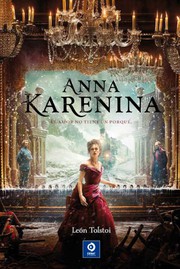 Leo Tolstoy · 1878Anna KareninaLvl 5Medium pace
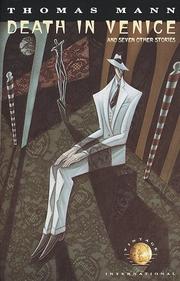 Thomas Mann · 1912Death in VeniceLvl 6Slow burn
 Maxim Gorky · 1906MotherLvl 3Medium pace
 Ricardo Güiraldes · 1926Don Segundo SombraLvl 5Medium pace
 Johannes V. Jensen · 1922The Long JourneyLvl 6Medium pace