
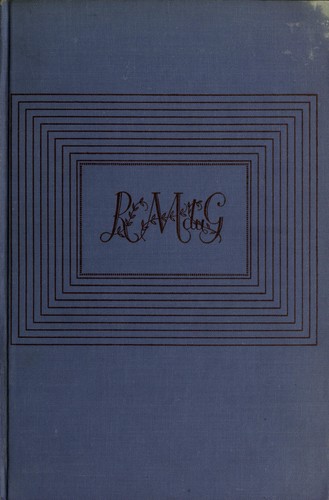
The Thibaults
Roger Martin du Gard · 1881–1958 · France
Originally Les Thibault (French) · translated by Stuart Gilbert
Why it matters
Two sons of a domineering Catholic patriarch (Antoine the doctor, Jacques the rebel) are carried with their whole generation into August 1914. France's great realist roman-fleuve, and one of fiction's most damning accounts of how a civilization sleepwalks into war.
At a glance
Documentary patience and enormous length; the Summer 1914 volumes track European politics hour by hour.
Deep dive
Two brothers raised by the same domineering father end up on opposite sides of how a rational person should respond to a civilization sleepwalking toward catastrophe, and the war settles the argument for both of them.
Written for readers who have finished the book. No plot recap, and nothing here is safe to read first.
Themes & symbolism
Antoine and Jacques Thibault grow up under Oscar Thibault, a wealthy Catholic patriarch whose authority is absolute and whose two sons metabolize it in opposite directions: Antoine becomes a rigorous, secular-minded doctor who channels his father's discipline into science and order, while Jacques becomes a writer and eventually a revolutionary socialist, rebelling against everything Oscar represents. Martin du Gard spends the novel's early volumes on the ordinary texture of that divergence, a runaway adventure with a Protestant friend, a stint in reform school, a slow drift toward opposite ends of belief, before the later volumes, most famously Summer 1914, widen the frame until the brothers' private argument is dwarfed by an entire continent's diplomatic failure to stop a war neither of them wants.
The Summer 1914 volumes track the July crisis almost hour by hour, cabinet meetings, telegrams, socialist congresses debating a general strike that never quite happens, and the effect is cumulative rather than dramatic: nobody in the novel makes one decisive villainous choice, the war simply arrives because enough separate, locally reasonable decisions add up to catastrophe. Jacques's own antiwar activism, culminating in a doomed attempt to distribute pacifist leaflets by air over the front lines, reads as the novel's most direct statement that individual conviction, however sincere, is no match for a mechanism this large once it's already moving.
Antoine's Diary as the Novel's Real Epilogue
After being gassed near the front, Antoine spends the novel's final volume dying slowly and keeping a diary that Martin du Gard lets run for pages at a time, a document less about self-pity than about a rationalist trying to make some final accounting of what his life and his century have amounted to. That diary becomes his address to the future in the most literal sense: he directs part of it toward Jean-Paul, Jacques's infant son by Jenny de Fontanin, a nephew Antoine comes to love with an intensity that surprises him, as if watching his dead brother's features resurface in the child were the only kind of continuity the war has left him capable of believing in.
The last seal: what actually happens, and why it lands the way it does.
The ending, explained
Jacques dies first: flying over the front to drop leaflets urging French and German soldiers to lay down their arms, his plane crashes near French lines, and wounded and unrecognized, he's shot by his own countrymen's orderlies as a suspected spy while being carried away on a stretcher, killed by exactly the side he'd risked everything trying to reach with a message of peace. Antoine survives him by only a few years, worn down by mustard gas exposure until the pain becomes unmanageable, and chooses to end his life with a deliberate morphine overdose rather than continue a slow decline, his last diary entries a kind of testament addressed as much to Jean-Paul's future as to his own vanishing present. Martin du Gard closes an entire generation's story with both sons dead and only an infant left to carry whatever the family, and the century, still owes the future.
Where to go next
 Romain Rolland · 1912Jean-ChristopheLvl 6Slow burn
 Leo Tolstoy · 1878Anna KareninaLvl 5Medium pace
 André Malraux · 1933Man's FateLvl 6Medium pace
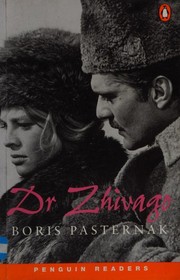 Boris Pasternak · 1957Doctor ZhivagoLvl 6Slow burn
 Claude Simon · 1960The Flanders RoadLvl 9Slow burn
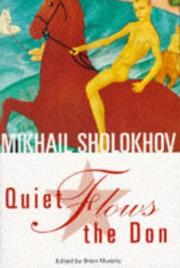 Mikhail Sholokhov · 1928And Quiet Flows the DonLvl 5Medium pace