
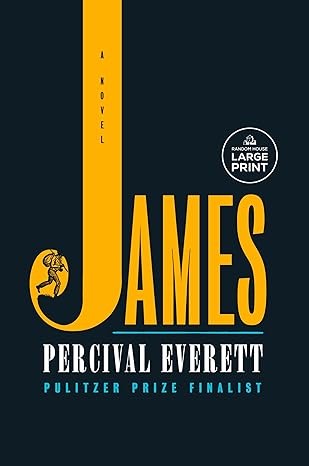
James
Percival Everett · b. 1956 · United States
Why it matters
Huckleberry Finn's journey down the Mississippi is retold entirely from the enslaved Jim's perspective, revealing the intelligence and code-switching survival his 'voice' in Twain's original had concealed. A National Book Award winner that reframes an American classic.
At a glance
Retells Huck Finn in code-switching prose that reads deceptively easily.
Deep dive
The stolen pencil Jim guards with his life, and what it means that his real voice only comes out when no white person is listening.
Written for readers who have finished the book. No plot recap, and nothing here is safe to read first.
Themes & symbolism
Everett's whole structural gambit is the gap between two Jims: the dialect-speaking, subservient performer white characters see and the precise, ironic, classically literate man who exists the moment no white person is in earshot. Code-switching here isn't a device, it's the novel's argument — every 'correct' slave dialect in Twain's original is reframed as a survival performance, a mask calibrated moment to moment to whatever a white listener needs to hear, taught to enslaved children as explicitly as any other trade.
James teaches himself to read in secret, works through Locke, Voltaire, and Rousseau lifted from a judge's library, and imagines arguing philosophy with them directly — literacy as forbidden weapon rather than accomplishment. A stolen pencil stub becomes the novel's most guarded object, hoarded and re-sharpened, because it's the one thing that lets him convert his interior voice into something durable. Renaming himself James rather than answering to Jim is the same act completed: not a new name so much as a demand that his full personhood, previously legible only to himself, be recognized on the page and in the world.
Everett stages James's imagined dialogues with dead European philosophers not as comic anachronism but as a direct claim on the Enlightenment tradition that had been used to rationalize his own bondage — he reads Locke on property and liberty while himself classified as property, and the irony is his to wield, not the novel's alone. Violence throughout is calibrated with the same precision as his speech: what a white man can do to him without consequence, and what the smallest miscalculation of tone or eye contact might cost him, is tracked scene by scene as a matter of life and death, not atmosphere.
Twain Talking Back
Everett runs James alongside the events of Adventures of Huckleberry Finn, restaging its famous set pieces — the raft, the feuding families, the con men — from inside Jim's calculating interior rather than Huck's naive one. Scenes that read as comic minstrelsy in the original are exposed here as strategic theater, performed by a man doing constant, exhausting risk calculus about what a given white witness needs him to be in order to survive the encounter.
A Buried Paternity
Midway through, the novel reveals that Huck is James's biological son — a hidden Black paternity underneath one of American literature's founding boy's-adventure myths. It reframes the entire river journey: the tenderness Jim shows Huck throughout Twain's novel wasn't just decency toward a white boy, it was a father protecting a son he could never publicly claim, and the reveal indicts the canonical text for building an American origin story on an erasure it never had to acknowledge.
The last seal: what actually happens, and why it lands the way it does.
The ending, explained
James leads an escape that becomes something closer to an uprising, reuniting with his own family along the way and meeting the enslavers who pursue them with real, unflinching violence rather than the evasive cunning that got him through the rest of the book. The novel closes on his assertion of full authorship — over his name, his story, and his freedom — refusing the narrator's role Twain's original assigned him. Where Huck Finn ends in a boy's restless plan to 'light out for the territory,' James ends with a man claiming the territory of his own account, a direct answer to the book it grew out of.
Where to go next
 Percival Everett · 2001ErasureLvl 6Fast paced
 Charles Johnson · 1990Middle PassageLvl 5Fast paced
 Joshua Cohen · 2021The Netanyahus: An Account of a Minor and Ultimately Even Negligible Episode in the History of a Very Famous FamilyLvl 6Medium pace
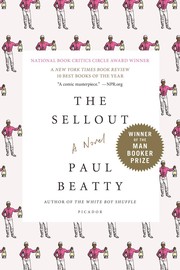 Paul Beatty · 2015The SelloutLvl 6Fast paced
 Vladimir Sorokin · 2006Day of the OprichnikLvl 5Fast paced
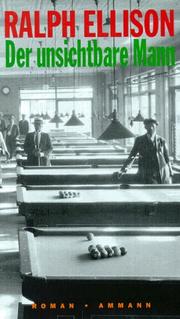 Ralph Ellison · 1952Invisible ManLvl 7Medium pace