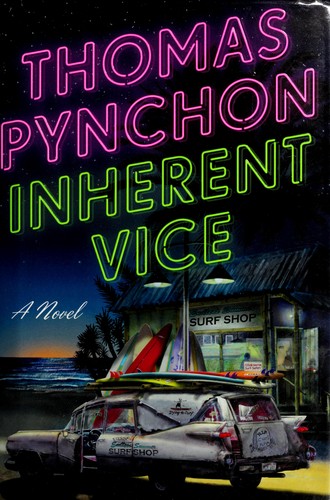
Inherent Vice
Thomas Pynchon · b. 1937 · USA
Why it matters
Stoner private eye Doc Sportello stumbles through a Los Angeles land-development conspiracy just as the sixties curdle into the Manson-shadowed seventies. Late Pynchon in a lighter key: still paranoid, now genuinely funny and almost easy to follow.
At a glance
A conventional noir plot and breezier prose make this Pynchon's most approachable novel.
Deep dive
What the Golden Fang actually is depending on which paranoid theory you believe, and why Doc keeps ending up back at the same beach he started from no matter how far the case takes him inland.
Written for readers who have finished the book. No plot recap, and nothing here is safe to read first.
Themes & symbolism
Doc Sportello's investigation into the disappearance of real estate developer Mickey Wolfmann, hired by his ex-girlfriend Shasta Fay Hepworth just before she herself vanishes, keeps snagging on the same recurring name, the Golden Fang, which different characters insist is a heroin-smuggling schooner, a shadowy dental-insurance cartel, a tax shelter for reformed drug traffickers, or all three functioning as one entity depending on who Doc asks. Pynchon isn't interested in letting any single version turn out to be the real one. The multiplying, mutually contradictory Golden Fangs are the novel's actual argument, that late-sixties countercultural paranoia and the era's real, well-documented corporate and law-enforcement overreach had become genuinely indistinguishable by 1970.
Coy Harlingen, a surf-rock saxophonist Doc discovers faked his own heroin overdose death to become a government informant, gives the novel its clearest human cost underneath all the shaggy-dog conspiracy plotting, a man who sold out his own former life and his own daughter's belief that he was dead in exchange for a paycheck from the same law-enforcement apparatus supposedly hunting the drug trade he used to be part of. Pynchon threads Coy's quiet grief through Doc's stonier comic momentum, using him to keep the novel's late-hippie nostalgia honest about what the era's actual institutions were doing to the people caught underneath its more visible cultural story.
Manson's Shadow Over Every Scene
Pynchon sets the novel in the months just after the Tate-LaBianca murders, never staged directly but audible in every character's low-grade dread that the Manson trial has ended the sixties' remaining innocence for good, a mood that turns Doc's stoned amiability into something closer to elegy than comedy. The paranoia driving the Golden Fang plot and the paranoia the whole city is feeling about hippie communes after Manson are treated as the same substance, so that even Doc's silliest misadventures carry an undertow of a culture that has just watched its own worst fears about itself get spectacularly confirmed, right as real estate money starts quietly buying up what's left of it.
The last seal: what actually happens, and why it lands the way it does.
The ending, explained
Mickey Wolfmann turns out to have vanished by choice rather than by force, attempting, in a spasm of guilty conscience, to give away his real estate fortune to house the poor before being forcibly deprogrammed back into respectable capitalism by the same Golden Fang interests Doc has been chasing all novel, a fate the book treats as more damning than any kidnapping would have been. Shasta Fay returns to Doc briefly, restoring at least a fragment of what the case cost him, and Coy is quietly reunited with his family once his cover is no longer needed. Pynchon's last image is Doc driving alone through a sudden, near-total freeway fog, unsure whether to trust the taillights ahead of him, a closing uncertainty the whole novel has been building toward rather than resolving.