

Brief Interviews with Hideous Men
David Foster Wallace · 1962–2008 · United States
Why it matters
Interlocking stories and transcribed 'interviews' expose male self-justification, cruelty, and loneliness from the inside. Wallace's finest story collection, as formally daring and morally serious as his novels.
At a glance
Wallace's dense, digressive, footnote-laden style at its most demanding.
Deep dive
What a scattered sequence of numbered interviews does to a reader once every question the men are answering has been cut out.
Written for readers who have finished the book. No plot recap, and nothing here is safe to read first.
Themes & symbolism
Wallace builds the book's title sequence out of transcripts, B.I. #20, B.I. #40, B.I. #59, scattered out of numerical order through the rest of the collection, in which an unnamed woman interviews men about their romantic and sexual failures. Her questions never appear on the page. Only the letter Q. marks where she spoke, so a reader has to reconstruct what was asked from the shape of each answer, which puts onto the page exactly the labor these men refuse: listening past a monologue to find the actual question underneath it.
The Depressed Person performs the same refusal from the opposite chair: a woman in therapy narrates her own suffering in language borrowed from support groups and self-help, calling her friends her support system and apologizing for sharing her pain even as she monopolizes every call with it, while a thicket of footnotes, some longer than the paragraphs they annotate, tracks every qualification she adds to keep from being heard too clearly. Adult World, split into a conventional narrative and then a numbered outline of the same events, makes the point a third way: give Wallace's people a story and they will find some formal apparatus, jargon, a survey, a footnote, to hide behind instead of saying the thing straight.
The Missing Q: Confession With No Confessor
Cutting the interviewer's actual words does more than a formal trick: it makes the men's self-justification the entire visible surface of the page, unbroken by any pushback, so the reader has nowhere to stand except inside a logic each subject has already rigged in his own favor. By B.I. #46 or #59, the shape of Q. has become legible on its own terms, curious, patient, occasionally worn down, a whole second character built out of absence.
Footnotes as the Depressed Person's Defense
The footnotes in The Depressed Person are not asides, they are where she actually lives, adding disclaimer after disclaimer to protect a version of herself above reproach even as she exhausts everyone who loves her. Wallace lets them crowd out the main text by the story's close, formal proof that her self-awareness has become one more way of avoiding the thing she is aware of.
Where to go next
 David Foster Wallace · 1996Infinite JestLvl 10Slow burn
 Don DeLillo · 1985White NoiseLvl 6Medium pace
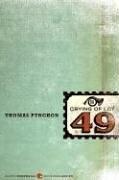 Thomas Pynchon · 1966The Crying of Lot 49Lvl 8Medium pace
 William T. Vollmann · 2005Europe CentralLvl 9Slow burn
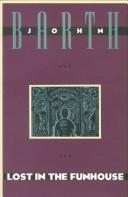 John Barth · 1968Lost in the FunhouseLvl 7Slow burn
 Jorge Luis Borges · 1944FiccionesLvl 7Slow burn