
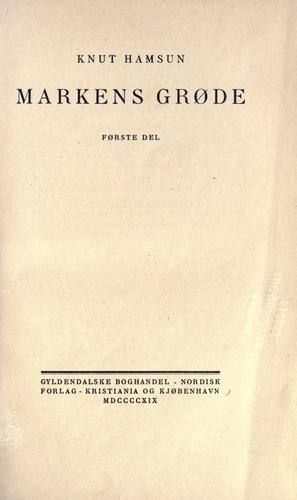
Growth of the Soil
Knut Hamsun · 1859–1952 · Norway
Originally Markens Grøde (Norwegian)
Why it matters
A homesteader clears Norwegian wilderness by hand, building a farm and a family across decades of patient labor. The novel that won Hamsun the Nobel Prize, celebrating agrarian self-reliance in prose of epic simplicity.
At a glance
Plain, steady, unhurried prose matching its slow agrarian timescale.
Deep dive
Why Hamsun lets a mining boom, a courtroom, and a whole modern economy pass through his hero's land without ever once managing to actually change him.
Written for readers who have finished the book. No plot recap, and nothing here is safe to read first.
Themes & symbolism
Isak walks alone into the Norwegian highlands and starts building a farm, Sellanraa, entirely from nothing, and Hamsun writes his labor in the same patient, unhurried prose no matter how many years or seasons pass, refusing the novel any of the urgency a more conventional pioneer story would supply. Isak's near-total silence and his indifference to anything beyond the next practical task make him less a conventional protagonist than a fixed point the rest of the book's modern disruptions arrive at and eventually recede from without leaving much mark.
Inger, who joins Isak with a harelip that has shaped every social interaction of her life, bears him children, and when their second daughter is born with the same disfigurement, kills the infant out of a shame and fear for the child's future that the isolated farm has given her no one to talk her out of. Her arrest and imprisonment in Trondheim, where she has corrective surgery and encounters an urban modern world entirely unlike Sellanraa's silence, complicate her on her return in ways Isak's own steadiness never has to reckon with directly.
Geissler and the Mine That Passes Through
Geissler, an itinerant former district official who keeps reappearing at exactly the moments Isak's growing farm brushes against the outside economy, a mineral prospect on the land, tangled legal paperwork, opportunists eager to exploit a smallholder's ignorance, functions as Hamsun's proof that modernity can touch Sellanraa, briefly enrich it, and withdraw again without altering its underlying rhythm. That is sharpened by the contrast between Isak's two sons: Eleseus drifts to the city and fails at every position he tries there, while Sivert stays and simply continues the work, Hamsun's clearest verdict on which choice the novel actually endorses.
The Nobel Laureate Who Later Praised Hitler
The same vision of rooted, self-sufficient agrarian life that won Hamsun the 1920 Nobel Prize curdled, two decades later, into open enthusiasm for Nazi Germany's occupation of Norway. He met Goebbels, publicly supported Quisling's regime, and mailed his Nobel medal to Goebbels as a gift, a fact that sits uneasily but inescapably beside Growth of the Soil's celebration of blood-deep attachment to the land, since the same soil-worship the novel renders as heroic endurance is recognizably the same instinct fascism would later weaponize as ideology.
The last seal: what actually happens, and why it lands the way it does.
The ending, explained
Inger returns from prison altered by the wider world she briefly saw, restless in ways Sellanraa's isolation used to fully satisfy, but the marriage and the farm absorb even this disruption over time, the way they absorb the mining boom's brief wealth and eventual bust, without changing the underlying pattern Isak established from the very first furrow. By the novel's close, Sellanraa has grown into something close to a small settlement, other families, a school, a road, all growing outward from Isak's original, wordless labor, and Hamsun ends not on any single resolved drama but on that accumulated growth itself, generations continuing a task that never needed a plot to justify it, only patience measured in decades rather than chapters.
Where to go next
 Knut Hamsun · 1890HungerLvl 5Medium pace
 Frans Eemil Sillanpää · 1931The Maid SiljaLvl 4Medium pace
 Fyodor Dostoevsky · 1866Crime and PunishmentLvl 6Fast paced
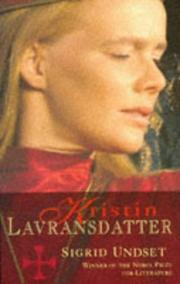 Sigrid Undset · 1920Kristin LavransdatterLvl 6Slow burn
 Bjørnstjerne Bjørnson · 1857Synnøve SolbakkenLvl 3Medium pace
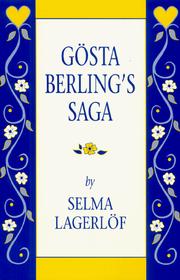 Selma Lagerlöf · 1891Gösta Berling's SagaLvl 6Medium pace