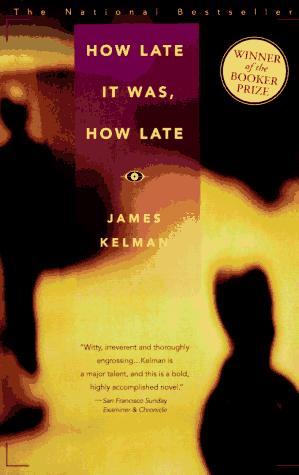
How Late It Was, How Late
James Kelman · b. 1946 · Scotland
Why it matters
Sammy wakes up blind in a police cell after a weekend bender and a beating, and must negotiate the benefits system without sight. The most controversial Booker winner ever: an unbroken Glaswegian voice that put a working-class Scot at literature's center.
At a glance
One unbroken Glaswegian interior voice, no chapters, no narrator standing above the dialect.
Deep dive
Why the most argued-over Booker winner ever refuses to let a single word of 'proper' English into a novel about a man the state has stopped seeing.
Written for readers who have finished the book. No plot recap, and nothing here is safe to read first.
Themes & symbolism
Kelman's central formal move is to eliminate the usual class hierarchy embedded in the English novel — a 'neutral,' educated narrating voice reporting on characters who speak in dialect — by narrating the entire book in Sammy's unbroken Glaswegian, swearing and all, with free indirect thought bleeding into direct address and back again without typographic warning. That isn't a stylistic flourish; it's the book's argument made structural: there is no more legitimate, standard-English vantage point from which Sammy's life gets explained or judged, only Sammy's own voice, which the literary establishment had rarely if ever been asked to sit inside for three hundred pages. Sammy's blindness, arriving off-page after a beating he can't fully reconstruct, works the same way twice over — a literal disability he has to navigate through a benefits bureaucracy built for the sighted, and a ready-made metaphor for a state, and a culture, that has simply stopped looking at men like him.
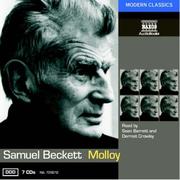
The men who may or may not be following Sammy — plainclothes, unnamed, never confirmed as either real threat or fear-induced hallucination — turn the second half into something closer to paranoid thriller than social realism, and Kelman never resolves which register is operating, because for Sammy the distinction barely matters: state power that can vanish someone into unaccountable process doesn't need to be literally watching to feel like it is. The novel's nearest ancestor is less the social-realist tradition it's usually filed under than Beckett — the same circular, self-interrogating monologue, the same bureaucratic absurdity, relocated from a stage to a Glasgow benefits office, dignity rebuilt one stubborn sentence at a time out of a situation designed to strip it away.
The Most Divisive Booker Win in the Prize's History
Kelman's 1994 win split the judging panel so badly that one judge, Rabbi Julia Neuberger, was reported to have called the book 'crap' and came close to walking off the panel in protest, with the decision ultimately going through on the chair's casting vote. The backlash continued in the press, where critics fixated on a rough count of the novel's expletives as though profanity density were a legitimate literary metric, largely ignoring the formal argument the swearing was serving. Kelman's own acceptance speech pushed back hard, rejecting the implication that working-class Scots dialect was inherently 'parochial' or artistically lesser than standard literary English — a claim the novel itself had already spent three hundred pages disproving.
Sammy as Everyman, Not Victim
Kelman resists making Sammy pitiable: he's cagey, self-mythologizing, not always likable, prone to picking fights even before he loses his sight, which keeps the novel from curdling into miserabilist tragedy about disability or poverty. That refusal is its own political statement — Sammy gets to be a full, contradictory person rather than a case study, entitled to the same interiority and moral messiness the novel form has always granted its middle-class protagonists without a second thought.