

Shuggie Bain
Douglas Stuart · b. 1976 · Scotland
Why it matters
Shuggie, too gentle for his scheme, spends the 1980s tending his glamorous, alcoholic mother Agnes through Glasgow's post-industrial collapse. The 2020 Booker winner: addiction written from a loving child's eye level, tenderness refusing to look away.
At a glance
Glasgow dialect and unrelenting subject matter; the prose itself is clear and close.
Deep dive
Why Shuggie's effeminacy gets him bullied on exactly the same street where his mother's drinking gets her pitied, and how Stuart makes those two stigmas rhyme.
Written for readers who have finished the book. No plot recap, and nothing here is safe to read first.
Themes & symbolism
Stuart tells the entire novel through Shuggie's loving, uncomprehending child's-eye view of his mother Agnes's alcoholism, which lets the book hold two truths at once without resolving the contradiction between them: Agnes is genuinely, catastrophically destructive to everyone around her, and she is also, in Shuggie's eyes and often in fact, glamorous, funny, and fiercely loved — the novel refuses the reader the easy exit of simply condemning her. Agnes's meticulous makeup and dress, maintained even as the family's circumstances collapse around her, function as a last, stubborn assertion of dignity against a post-industrial Glasgow that has already written her and her housing scheme off; looking immaculate is the one form of control left to a woman losing everything else.
Shuggie's own effeminacy runs as a quiet second stigma-plot alongside his mother's addiction, marking him early as different in a hypermasculine, economically devastated community that has little tolerance for softness in boys — his difference is never named outright as a coming-of-age revelation so much as simply lived, day to day, as one more thing that makes him a target. Stuart draws the parallel without belaboring it: both mother and son are punished by their community for failing to perform what that community demands of them, she as a properly restrained woman, he as a properly hard boy, and their devotion to each other becomes the one relationship where neither has to perform anything at all.
Effeminacy as the Novel's Second Addiction Plot
Shuggie's difference — a walk, a interest in dolls and hair, a voice other boys clock instantly — is treated by Stuart with the same unsentimental specificity he brings to Agnes's drinking: both are chronic conditions the surrounding community responds to with cruelty dressed as concern. The parallel structure argues, without stating it as thesis, that addiction and queerness are both made unbearable less by the conditions themselves than by a working-class Glasgow culture with no vocabulary for tolerating either.
Thatcherism's Afterlife in a Single Kitchen
The novel is precise about economic history: the pit and shipyard closures of the Thatcher years hollow out the men's employment first, and the resulting unemployment, boredom, and shame radiate outward into the domestic violence and addiction that structure Shuggie's childhood. Stuart never delivers this as explicit political argument — it arrives entirely through kitchen-table detail, benefit-office waits, and the particular exhaustion of Agnes's world — which is exactly why the novel's social critique lands as lived experience rather than op-ed.
The last seal: what actually happens, and why it lands the way it does.
The ending, explained
After a period that looks, briefly, like genuine recovery, Agnes relapses and is found dead, and Shuggie — already functioning as her caretaker in miniature for years — is left to navigate the aftermath essentially alone, failed by every institution that should have protected them both. The novel's final scene has Shuggie dancing with Leanne, another neglected child shaped by her own parent's addiction, in a moment that offers no redemption or repair but does offer continuity: two children who understand exactly what the other has survived, finding a small, ordinary joy together anyway. Stuart ends on that modest note rather than tragedy or uplift — survival itself, unglamorous and unresolved, is the closest thing to hope the novel is willing to claim.
Where to go next
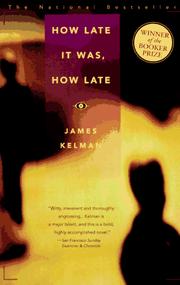 James Kelman · 1994How Late It Was, How LateLvl 7Slow burn
 David Storey · 1976SavilleLvl 5Medium pace
 Carmen Laforet · 1945NadaLvl 5Medium pace
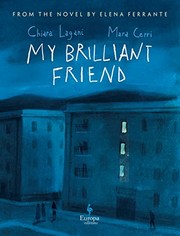 Elena Ferrante · 2011My Brilliant FriendLvl 3Fast paced
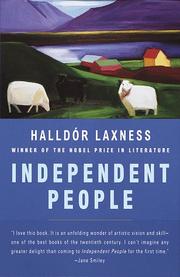 Halldór Laxness · 1934Independent PeopleLvl 6Medium pace
 Louisa May Alcott · 1868Little WomenLvl 3Medium pace