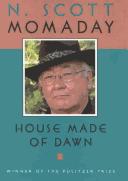
House Made of Dawn
N. Scott Momaday · 1934–2024 · United States
Why it matters
A young Pueblo veteran returns from World War II torn between reservation ceremony and the alienation of urban Los Angeles. Momaday's Pulitzer win announced Native American fiction to a mainstream readership.
At a glance
Fragmented, nonlinear structure moving across time and ritual.
Deep dive
Why Momaday builds a war veteran's return home out of fractured time, competing narrators, and a sermon on the difference between the Word and words.
Written for readers who have finished the book. No plot recap, and nothing here is safe to read first.
Themes & symbolism
Momaday builds Abel's fractured consciousness directly into the novel's form: four sections narrated through shifting, overlapping perspectives — Abel's own broken interiority, the peyote-church leader Tosamah's sermons, the old blind grandfather Francisco's memories, Abel's friend Ben Benally's account of their life in relocation-era Los Angeles — that refuse to resolve into a single chronological account of what happened to him. Abel himself is largely wordless throughout: he can't testify at his own murder trial in any way that satisfies the court, can't explain to Ben why he drinks himself toward death in Los Angeles, can't pray with words that feel adequate. That silence isn't a character flaw so much as the novel's central subject — what happens to a man's relationship to language after the war and the reservation and the city have each, in different registers, told him his native tongue doesn't count.
The albino man Abel kills early in the novel, and the corrupt policeman Martinez who later beats him nearly to death in Los Angeles, rhyme with each other as figures of an unreadable, invasive threat — Momaday leaves Abel's motive for the first killing genuinely ambiguous, closer to something ritual or compelled than to ordinary motive, which unsettles any tidy reading of the novel as a simple redemption arc. Earlier, as a boy, Abel had also killed an eagle he'd trapped for ceremony, moved by pity at its suffering to strangle it rather than complete the intended rite — a small, private violation of Pueblo protocol that the novel quietly links to his later, larger ones: Abel keeps encountering the sacred and answering it with force instead of the patience it requires.
Tosamah's Sermon on the Word
Tosamah, preaching in Los Angeles, delivers an extended riff on the Gospel of John's 'In the beginning was the Word' against his own grandmother's Kiowa storytelling, arguing that white Christianity has inflated language into abstraction, a Word cut loose from any specific tongue speaking to any specific listener, while oral tradition keeps words tethered to breath, memory, and an audience actually present. It's the novel's clearest statement of what Abel has lost access to: not language itself, but words that still mean something because someone is there to receive them.
The Race Abel Couldn't Finish
As a boy, Abel ran in Walatowa's traditional dawn race and fell behind, unable to keep pace the way his grandfather Francisco once famously could; the failure is recalled throughout the novel as an early, formative shame. Francisco's own death, arriving in a fever of memory that folds together the race he won decades earlier and a ritual bear hunt from his youth, is staged less as an ending than as a transmission — the old man's dying mind hands the pattern of the race back to Abel at the exact moment Abel needs somewhere to put his grief.
The last seal: what actually happens, and why it lands the way it does.
The ending, explained
After Francisco dies, Abel washes and prepares his grandfather's body according to Pueblo custom, then, at first light, joins the men running the traditional dawn race outside Walatowa — the same race he failed to finish as a boy. His body is battered from the beating he took in Los Angeles and he's in pain from the first stride, but he keeps running, and as he runs he begins silently chanting words from the Navajo Night Chant that Ben taught him in California: 'House made of dawn... House made of pollen, house made of dark cloud...' The ending offers no institutional or narrative resolution — no trial, no cure, no explanation — only a body rejoining a communal ritual it once fell out of step with, language and land and motion converging in a single act that reads as Abel choosing, at last, to run toward his grandfather's world instead of away from it.