
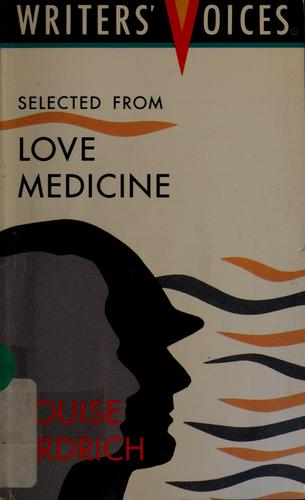
Love Medicine
Louise Erdrich · b. 1954 · United States
Why it matters
Two Ojibwe families braid across generations of the reservation in interlocking voices, comic, tragic, and mythic. Erdrich's debut opened a community the American novel had left unwritten.
At a glance
Interlocking voices and a nonlinear generational structure require tracking a large cast.
Deep dive
Fourteen interlinked stories move across five decades and two Chippewa families near a North Dakota reservation, and Erdrich lets contradicting narrators tell the same events before anyone explains how they're all related.
Written for readers who have finished the book. No plot recap, and nothing here is safe to read first.
Themes & symbolism
June Kashpaw walks out into an Easter snowstorm in the opening pages, and her disappearance radiates outward through the Kashpaws, the Lamartines, and Nanapush's descendants for the rest of the book, each family member carrying a different, partial understanding of who she actually was to them. Erdrich never lets any single account of June become the authoritative one. She functions less as a character who gets explained than as an absence the whole community keeps organizing its grief, resentment, and storytelling around, decades after the fact, which is the book's real subject: not what happened to June, but how many incompatible versions of one woman a family can hold onto at once.
Traditional Chippewa belief and imported Catholicism run through the book tangled together rather than opposed, love medicine itself, folk magic meant to bind a wandering spouse's affection, sitting comfortably alongside rosaries and communion wafers with neither canceling the other out. Lipsha Morrissey's untrained, half-understood healing touch is treated as a real inherited gift, diminished but not destroyed by generations of boarding schools, poverty, and alcohol, and Erdrich is careful never to present that erosion as total: what's left of the old power is smaller and more dangerous to handle carelessly, not gone.
A Family Told in Fourteen Voices
Erdrich builds the novel as a linked story cycle rather than a single continuous narrative, each chapter narrated by a different family member, sometimes in first person, sometimes in close third, spanning 1934 to 1984 out of strict order. Several chapters worked as complete stories on their own before Erdrich assembled them into a novel, and that seams-showing structure is deliberate: the same incident gets recounted from radically different vantage points across separate chapters, one narrator's confident version quietly contradicted or complicated by another's decades later. The effect mimics how a reservation community actually tells its own history, passed hand to hand, argued over, never settling into one official account, rather than how a conventional novel usually organizes a family's story around a single controlling perspective.
Turkey Hearts and the Limits of Love Medicine
Lipsha's attempt at an actual love medicine, meant to win back his grandfather Nector Kashpaw's fidelity for his grandmother Marie after decades of Nector's affair with Lulu Lamartine, calls for goose hearts, since geese mate for life in Chippewa belief. Unable to find real geese, Lipsha substitutes frozen turkey hearts bought at the supermarket, a shortcut that turns out to matter. The scene plays as both comic and genuinely frightening: the medicine still carries power, tradition surviving its own dilution, but power that has been handled carelessly by someone who only half understands what he's doing, and the consequences land on exactly the person the spell was meant to help.
The last seal: what actually happens, and why it lands the way it does.
The ending, explained
Late in the book, Lulu Lamartine tells Lipsha the truth his whole extended family had let him grow up without: his actual parents are June Kashpaw and Gerry Nanapush, an escaped convict, not the aunt and uncle he'd believed had simply taken him in. The final chapter follows Lipsha helping Gerry, his father, make a run for the Canadian border in a stolen car, picking up King, June's other son and Lipsha's half brother, along the way. Driving back across the reservation afterward, Lipsha crosses the river toward home, and Erdrich lets that crossing carry the whole novel's scattered, contradictory family history toward something like convergence, not resolution exactly, but the moment the separate, half-known bloodlines the book has been tracing all along finally recognize each other as one family.
Where to go next
 Louise Erdrich · 2012The Round HouseLvl 4Fast paced
 Louise Erdrich · 2020The Night WatchmanLvl 5Medium pace
 Toni Morrison · 1987BelovedLvl 8Slow burn
 William Faulkner · 1930As I Lay DyingLvl 9Medium pace
 Eudora Welty · 1972The Optimist's DaughterLvl 4Medium pace
 Jesmyn Ward · 2017Sing, Unburied, SingLvl 5Medium pace