
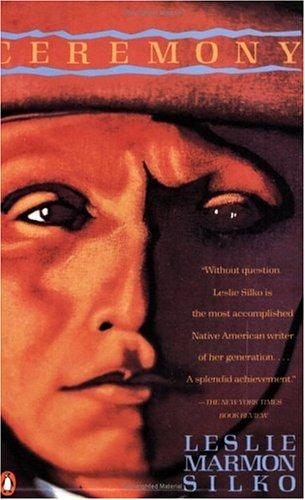
Ceremony
Leslie Marmon Silko · b. 1948 · United States
Why it matters
A mixed-race Laguna Pueblo veteran's war trauma can only be healed by returning to tribal ritual and story. Ancient narrative forms enlisted directly against the wounds of modern warfare.
At a glance
Nonlinear structure interweaves myth, verse, and trauma-fractured memory.
Deep dive
Why Tayo's cure is a story, not a diagnosis, and why the old Laguna ceremonies have to be rebuilt mid-use to work on a wound this new.
Written for readers who have finished the book. No plot recap, and nothing here is safe to read first.
Themes & symbolism
Tayo's breakdown isn't just grief for Rocky and Josiah — it's the collapse of a racial logic he was never able to believe in. Delirious in the jungle, he mistakes a dying Japanese soldier's face for his uncle's, and the novel treats that hallucination as more truthful than the war's official categories: a mixed-race Laguna man fighting for a country that treats him as barely white and not at all Indian, killing men who look, in his fever, exactly like his own family. Western psychiatry can name this as shock but can't touch it, because the wound isn't only personal — it's the whole colonial machinery of borders, races, and enemies that made the war legible in the first place. Silko locates the actual antagonist one level above any nation: witchery, a force she stages in an origin story where witches invent white people, invent the idea of separateness, as a kind of curse-competition. Colonization, the uranium pulled from Laguna land, the bomb built from it, the war itself — all of it is witchery's handiwork wearing different faces in different centuries.
Story is accordingly not commentary on the healing in Ceremony, it is the healing. The novel's verse interludes, recounting older Laguna narratives, aren't decoration bracketing a realist plot; they run alongside Tayo's ordeal because the novel's whole argument is that narrative is load-bearing technology, as real and as necessary as any medicine. Betonie, the medicine man who finally reaches Tayo, embodies this directly: he keeps out-of-date Santa Fe phone books and Coke calendars in his hogan alongside sacred bundles, insisting that ceremonies fixed in amber will fail against harms that didn't exist when they were composed. His willingness to improvise — sending Tayo after stolen cattle and into a confrontation with witchery's living agents rather than performing a closed ritual — is the novel's clearest statement that tradition survives only by staying unfinished.
Emo and the shape of the trap
Emo is what happens when a veteran metabolizes the same trauma Tayo carries and comes out the other side in love with violence rather than healed of it. He fetishizes human teeth pulled from a corpse, romanticizes the wartime moment when a uniform briefly bought Indian men equality, and channels his fury at its disappearance into random cruelty rather than insight. Silko makes him witchery's most successful local recruit, and the novel's real suspense in its final third isn't whether Tayo will physically survive Emo but whether he'll be baited into becoming him. Every taunt Emo throws is an invitation to close the loop the witches designed: meet violence with violence, and the destruction reproduces itself indefinitely.
The last seal: what actually happens, and why it lands the way it does.
The ending, explained
Tayo's ceremonial quest culminates in a night at an abandoned uranium mine, where Emo tortures a fellow veteran to draw Tayo out of hiding. Tayo has a knife and every reason and opportunity to kill Emo — and doesn't. He forces himself to watch instead of act, recognizing that killing Emo would complete the pattern witchery has been steering toward since the war: another death folded into the same endless design. That restraint, framed by the novel as the hardest and most active part of the ceremony rather than passivity, is what finally breaks the cycle. Tayo returns to the reservation and tells his story to the elders, who receive it as a completed ceremony — proof that the old forms, adapted by Betonie's heterodoxy, can still out-narrate a harm as modern as the atomic age.
Where to go next
 N. Scott Momaday · 1968House Made of DawnLvl 7Slow burn
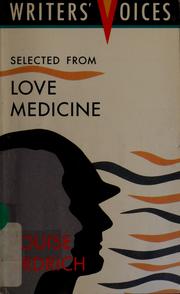 Louise Erdrich · 1984Love MedicineLvl 6Medium pace
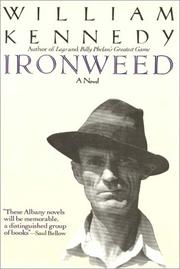 William Kennedy · 1983IronweedLvl 6Medium pace
 Carson McCullers · 1940The Heart Is a Lonely HunterLvl 5Medium pace
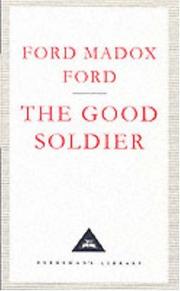 Ford Madox Ford · 1915The Good SoldierLvl 7Slow burn
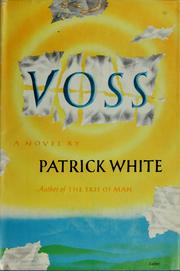 Patrick White · 1957VossLvl 8Slow burn