
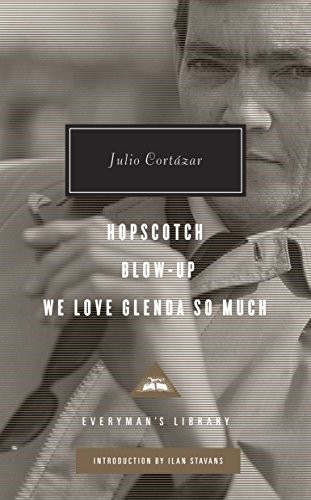
Hopscotch
Julio Cortázar · 1914–1984 · Argentina / France
Originally Rayuela (Spanish) · translated by Gregory Rabassa
Why it matters
Read it straight through, or follow the author's hopscotch table through 155 chapters, jazz-soaked Paris and Buenos Aires either way. The Boom's great playable novel: structure as invitation, not obstacle.
At a glance
A non-linear, reader-chosen chapter order compounds already dense, digressive prose.
Deep dive
The same 155 chapters build a different novel depending on which order you read them in — and the 'wrong' order is the one that finally traps you.
Written for readers who have finished the book. No plot recap, and nothing here is safe to read first.
Themes & symbolism
Cortázar builds the novel's real subject out of a geographic and temperamental divide: Paris is where Horacio Oliveira thinks, argues, and destroys himself through analysis; Buenos Aires is where he's forced back into a body and a life he can't out-reason. La Maga is never his intellectual equal by the Club's snobbish standard, and that's the point — she arrives at feeling and meaning by a route Horacio's whole education has trained him to distrust, and he loves her for it while never quite forgiving her for it. Rocamadour's death, tended alone in the next room while the Club debates jazz and metaphysics past his fever, is the novel's cruelest joke on its own characters: all that erudition, and not one of them notices a child dying ten feet away.
Buenos Aires supplies the doubling that the Paris section only theorizes about. Traveler is who Horacio might have been if he'd stayed home and made peace with ordinary life; Talita's resemblance to La Maga is so exact that Horacio uses her, half-consciously, to restage the relationship he destroyed, planks-over-the-street scene and all. The hopscotch board itself — a child's game of single-footed hops toward an unreachable 'Heaven' square — is the book's central image for a self always short of the wholeness it's aiming at. Morelli, the unread experimental novelist whose theory chapters Horacio pores over, is Cortázar's least disguised authorial stand-in: his demand for a 'reader as accomplice' rather than a passive consumer is exactly the demand Hopscotch's own structure makes of you.
The Reader as Accomplice
Morelli's scattered theoretical fragments amount to a manifesto smuggled inside the novel that enacts it: he wants a lector-cómplice, an accomplice-reader who assembles meaning actively, against the lector-hembra (his contemptuous term for the passive consumer of conventional plot) who wants a story handed over pre-digested. Cortázar's Table of Instructions is that manifesto made structural rather than merely argued — you can read chapters 1 through 56 straight through and get a complete, linear, conventionally sad novel, or follow the hopscotch order and get the same events interleaved with Morelli's own theorizing, digressions, quotations, and jokes, so that the book's ideas about reading arrive exactly when they're needed to reframe the scene you just read. The two versions aren't equally 'authentic': the numbered order is the one Cortázar actually wants read.
Rocamadour's Vigil
Chapter 28, the death vigil, is deliberately the novel's longest and most sustained piece of writing in either reading order, a violation of the book's usual jump-cut restlessness — Cortázar slows down exactly where his characters can't. The scene indicts the whole Club at once: intellectuals fluent in jazz criticism and existentialist argument, unable to parse a child's silence in the next room until it's fatal. It's the hinge the entire novel turns on — La Maga's disappearance afterward and Horacio's slow unraveling in Buenos Aires both trace back to this single unwatched night.
The last seal: what actually happens, and why it lands the way it does.
The ending, explained
Followed straight through, the 'linear' version ends at chapter 56 with Horacio on a windowsill above the hopscotch court he's chalked in the courtyard below, Traveler and Talita and a crowd of asylum inmates watching from below, and the narrative simply stops — no jump confirmed, no rescue confirmed, just Horacio's consciousness caught mid-vertigo between the board's promised 'Heaven' and the concrete underneath. Follow Cortázar's numbered hopscotch order instead and you never actually arrive at a stopping point at all: the table's instructions send you back and forth between chapters 58 and 131 forever, an explicit infinite loop built into the numbering itself. That's not an oversight — it's Cortázar refusing the 'wholeness' his own hopscotch-board image dangles, insisting that a novel about a man who can't complete his own hopscotch game shouldn't complete its own.
Where to go next
 Julio Cortázar · 1959Blow-Up and Other StoriesLvl 6Medium pace
 Jorge Luis Borges · 1944FiccionesLvl 7Slow burn
 Roberto Bolaño · 1998The Savage DetectivesLvl 7Medium pace
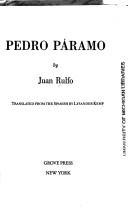 Juan Rulfo · 1955Pedro PáramoLvl 7Slow burn
 César Aira · 1990GhostsLvl 5Slow burn
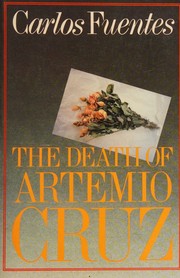 Carlos Fuentes · 1962The Death of Artemio CruzLvl 8Slow burn