

Here's to You, Jesusa!
Elena Poniatowska · b. 1932 · Mexico
Originally Hasta no verte Jesús mío (Spanish) · translated by Deanna Heikkinen
Why it matters
A washerwoman and Mexican Revolution veteran tells her own hard, itinerant life story to a young journalist over years of interviews. Poniatowska's foundational testimonio novel gives a poor woman's voice the weight and shape of epic.
At a glance
Transcribed oral testimony in vernacular Spanish resists conventional novelistic pacing.
Deep dive
A woman who fought in the Mexican Revolution, buried several husbands and beliefs, and spent decades scraping by in Mexico City tells her own life story to a writer who can't always keep up with her.
Written for readers who have finished the book. No plot recap, and nothing here is safe to read first.
Themes & symbolism
Poniatowska built the novel from years of recorded interviews with Josefina Bórquez, a washerwoman she met while reporting in Mexico City, and reshaped that testimony into the voice of Jesusa Palancares, a fictionalized but closely faithful stand-in whose life runs from an itinerant, abusive childhood in Oaxaca through service as a soldadera in the Mexican Revolution, an abusive marriage, widowhood, decades of unskilled labor across half a dozen trades, and eventual devotion to Spiritism. The novel's refusal of chronological order, episodes arranged more by association and mood than by sequence, mirrors how testimony actually works, less a tidy narrative than a life recalled in the order it insists on being recalled, and Poniatowska keeps her own presence as interviewer almost entirely out of the prose, letting Jesusa's voice, blunt, sardonic, unsentimental about her own suffering, carry the book without visible mediation.
Jesusa's years riding with her soldier husband during the Revolution give the novel its sharpest revision of that conflict's usual mythology. She describes the soldaderas' actual labor, cooking, nursing, scavenging, burying the dead, fighting when required, with none of the romantic nationalism later official accounts would drape over the same history, and her husband's cruelty toward her during and after the war refuses any easy alignment between revolutionary politics and personal decency. The Revolution, in Jesusa's telling, changed the government without particularly improving the life of a woman like her, a claim considerably more damning than anything a conventional history of the period tends to admit.
Testimonio and the Question of Whose Voice This Is
The novel became a foundational text of testimonio, the Latin American genre built on the collaboration between a marginalized speaker and an educated writer who transcribes and shapes that speaker's account, and it has generated decades of critical argument about how much of the book's voice belongs to Josefina Bórquez and how much belongs to Poniatowska's own literary choices in selecting, arranging, and polishing years of taped conversation into a novel. Poniatowska herself never fully resolved the question, acknowledging real authorial intervention while insisting the book's anger, humor, and refusal of self-pity are Bórquez's own. That tension, over who owns a testimony once a writer has shaped it into literature, is inseparable from the book's power rather than a flaw in it.
No Rest, Not Even in the Next Life
The book's final chapters find Jesusa old and alone, keeping herself alive on odd jobs and small kindnesses from neighbors, having outlived nearly everyone from her earlier chapters and grown steadily more hostile toward organized religion, sentimentality, and anyone who expects gratitude from her for having survived so much. She tells Poniatowska she doesn't want to come back as a person in her next life, having concluded human existence offers little worth repeating, a wish for an animal's simpler unaccountability instead. Poniatowska ends the book on that flat, unresigned refusal rather than any softening reconciliation. Jesusa's last recorded words carry exactly the same defiance that's driven her account from its opening pages, undiminished by age, poverty, or decades of a country that never once made good on what the Revolution promised her.
Where to go next
 Elena Poniatowska · 1971Massacre in MexicoLvl 5Medium pace
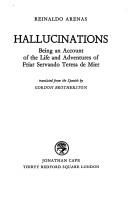 Reinaldo Arenas · 1969HallucinationsLvl 7Fast paced
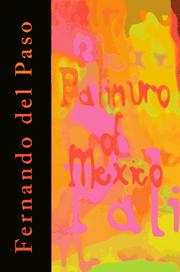 Fernando del Paso · 1977Palinuro of MexicoLvl 9Slow burn
 Jorge Ibargüengoitia · 1977The Dead GirlsLvl 4Fast paced
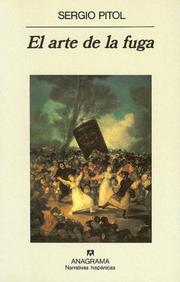 Sergio Pitol · 1996The Art of FlightLvl 7Slow burn
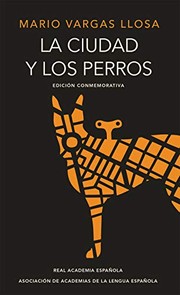 Mario Vargas Llosa · 1963The Time of the HeroLvl 6Medium pace