
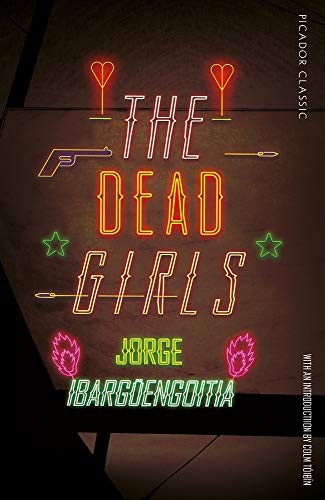
The Dead Girls
Jorge Ibargüengoitia · 1928–1983 · Mexico
Originally Las muertas (Spanish) · translated by Asa Zatz
Why it matters
A real serial-murder brothel scandal is fictionalized with cool, deadpan comic wit that indicts an entire corrupt system in passing. Mexican satire at its driest and sharpest.
At a glance
Deadpan, documentary-style prose narrates atrocity with cool comic restraint.
Deep dive
How a comic, deadpan bureaucratic voice ends up telling one of Mexico's ugliest true crimes, and why Ibargüengoitia refuses to let the horror silence the jokes.
Written for readers who have finished the book. No plot recap, and nothing here is safe to read first.
Themes & symbolism
Ibargüengoitia fictionalizes the real case of the Poquianchis, sisters who ran a network of brothels across small Mexican towns through coercion and, eventually, killing, discovered in 1964 when a survivor's escape led police to mass graves. He renames them the Baladro sisters and tells their story in a flat, bureaucratic register, court testimony, official memos, small-town gossip reported with the same weight as forensic detail, that refuses every convention of gothic horror the material would seem to invite. The effect isn't distancing so much as indicting: Ibargüengoitia's deadpan comic timing keeps surfacing in the middle of genuinely monstrous material, and the reader's own reflexive laughter becomes evidence of exactly how normalized this kind of institutional cruelty had become in the towns that hosted it for years without intervening.
The novel's real target is less the sisters themselves than the surrounding apparatus that let them operate for so long, local police paid to look away, clients who never asked questions, officials more interested in scandal management than in the missing women once the case finally breaks. Ibargüengoitia stages the eventual investigation with the same comic bureaucratic fussiness he gives everything else, forms filled out incorrectly, jurisdictional squabbles, a press corps more entertained than horrified, and that consistency of tone across genuinely different registers of consequence is the book's sharpest argument: provincial Mexican institutions, in his telling, process atrocity with exactly the same shrugging incompetence they bring to everything smaller.
The Poquianchis Case Behind the Baladro Sisters
The real sisters, operating out of Guanajuato and neighboring states through the 1950s and into 1964, ran brothels that functioned as forced labor and eventually as sites of killing, taking the lives of women who became sick, resistant, or simply unprofitable and burying them on their properties. Their arrest, after a surviving worker escaped and led police to the graves, became a national sensation, less for the deaths alone than for how long local authorities had evidently tolerated the operation. Ibargüengoitia keeps his fictional Baladro sisters close enough to the documented case that the novel functions almost as a companion piece to the trial record, filtered through a satirist's instinct for exactly which official absurdities to preserve.
Irony as the Instrument, Not the Relief
Ibargüengoitia made his name as a playwright and columnist before turning to fiction, and his dry, ironic register here isn't comic relief layered over a serious subject, it's the actual mechanism of the critique: a gothic or somber treatment would let readers feel appropriately horrified and then move on, while the deadpan bureaucratic voice keeps implicating the ordinary, unremarkable systems, small-town corruption, casual misogyny, official incuriosity, that made the killings possible in the first place. He died in 1983 in the Avianca Flight 011 crash that also killed several other prominent Latin American writers, cutting short a career built almost entirely on refusing to treat Mexican institutions with more solemnity than he judged they'd earned.
The last seal: what actually happens, and why it lands the way it does.
The ending, explained
The investigation that finally exposes the Baladro sisters' operation arrives almost by accident, prompted by a single worker's escape rather than any sustained official suspicion, and Ibargüengoitia stages the resulting arrest and trial with the same procedural comedy he's used throughout: contradictory testimony, officials more concerned with their own exposure than with the dead, a public more entertained than outraged. The sisters face justice, but the novel declines to grant the ending any real catharsis, since the same institutional carelessness that let the killings continue for years simply reasserts itself once the scandal has run its course, filed away and half-forgotten rather than genuinely reckoned with.
Where to go next
 Jorge Ibargüengoitia · 1964The Lightning of AugustLvl 4Fast paced
 Fernando del Paso · 1977Palinuro of MexicoLvl 9Slow burn
 Elena Poniatowska · 1971Massacre in MexicoLvl 5Medium pace
 Reinaldo Arenas · 1969HallucinationsLvl 7Fast paced
 Manuel Puig · 1976Kiss of the Spider WomanLvl 6Fast paced
 Guillermo Cabrera Infante · 1967Three Trapped TigersLvl 9Slow burn