
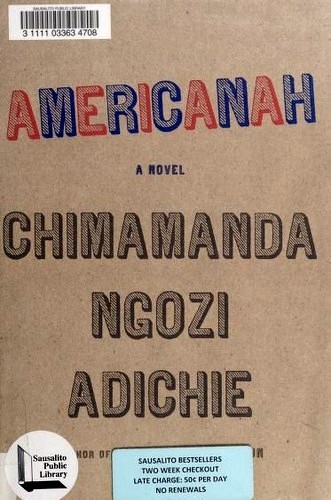
Americanah
Chimamanda Ngozi Adichie · b. 1977 · Nigeria
Why it matters
Ifemelu leaves Lagos for America, discovers she has become 'Black,' and blogs the discovery; Obinze takes the undocumented London route. Race, hair, and homesickness with bestselling wit: the migration novel of its decade.
At a glance
Brisk, conversational prose with blog interludes makes for an easy, propulsive read.
Deep dive
Ifemelu leaves Lagos for an American university and discovers, for the first time in her life, that she has become Black, a realization that ends up reshaping everything about how she understands the man she left behind.
Written for readers who have finished the book. No plot recap, and nothing here is safe to read first.
Themes & symbolism
Ifemelu's culture shock in America is not the poverty or the cold, it is race itself: in Nigeria she had never needed to think of herself in racial terms at all, and Adichie stages her gradual, often very funny, often painful education, hair, speech, the precise etiquette of American racial conversation, as a whole second coming-of-age layered on top of the one she thought she had already finished. Her blog, Raceteenth or Various Observations About American Blacks by a Non-American Black, becomes both the novel's funniest device and its most direct essay-form argument, letting Adichie say plainly, in Ifemelu's satirical voice, things the surrounding fiction only dramatizes.
Ifemelu's hair, straightened for years with relaxers that burn her scalp before she finally goes natural, tracks the novel's whole argument about race and self-presentation with a precision no single conversation about racism manages alone; the hair salon scenes, hours spent among other Black women getting braided, function as some of the book's most sustained and least didactic writing, communities of unglamorous, ordinary talk the novel's louder set pieces about American liberal hypocrisy never quite match for intimacy.
Obinze's own experience of race and displacement runs on an entirely different track: overstaying a visa in London, working under a stolen identity, and eventually being detained and deported back to Nigeria just as he is about to enter a marriage of convenience for papers, a humiliation Adichie treats with as much weight as anything Ifemelu experiences in America, and one that leaves him, back in Lagos, newly wealthy through real estate but visibly altered by what being illegal and disposable in someone else's country actually cost him.
A Blog Doing the Novel's Arguing For It
Adichie interleaves entire blog posts into the novel's body, unfiltered opinion pieces on everything from the exhausting listening white liberals expect from Black friends to the precise taxonomy of American hair politics, a structural choice that lets Ifemelu be funnier and more directly polemical than a conventional close-third narration would allow. The device drew criticism from some reviewers as an authorial shortcut, argument standing in for scene, but it also does something the plot alone cannot: it gives Ifemelu, for the first time in the novel, unmediated authority over how her own observations get to sound, rather than filtering them through anyone else's reaction.
The last seal: what actually happens, and why it lands the way it does.
The ending, explained
After thirteen years away, Ifemelu grows disillusioned with the compromises of her American life, including a serious relationship with Blaine, a Black American academic whose politics feel to her performed rather than lived, and moves back to Lagos, restarting her blog for a Nigerian audience instead. Obinze, married to Kosi and father to a young daughter by this point, cannot stop thinking about her, and the two reconnect and begin an affair that forces him to choose between the comfortable, dutiful marriage he built after his deportation and the relationship that shaped who he became in the first place. Adichie ends the novel on Obinze choosing Ifemelu and leaving his marriage, a resolution the book earns less through romance-plot momentum than through the years of parallel displacement it has spent proving these two people were formed by the same specific loss.
Where to go next
 Chimamanda Ngozi Adichie · 2006Half of a Yellow SunLvl 4Fast paced
 Chinua Achebe · 1958Things Fall ApartLvl 4Medium pace
 Tsitsi Dangarembga · 1988Nervous ConditionsLvl 4Medium pace
 Buchi Emecheta · 1979The Joys of MotherhoodLvl 4Medium pace
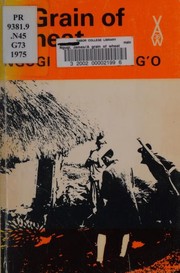 Ngũgĩ wa Thiong'o · 1967A Grain of WheatLvl 6Slow burn
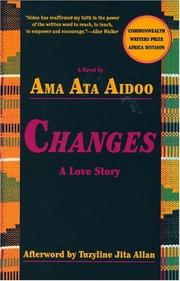 Ama Ata Aidoo · 1991ChangesLvl 3Medium pace