
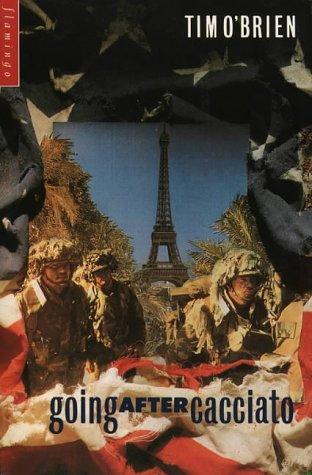
Going After Cacciato
Tim O'Brien · b. 1946 · United States
Why it matters
A hallucinatory desertion, one soldier walking from Vietnam to Paris, is imagined by the platoon left behind to chase him. O'Brien's National Book Award winner turns a war story into a fable about escape and its impossibility.
At a glance
A soldier's fantastical desertion narrative blurs memory, dream, and combat.
Deep dive
A soldier walks off the war toward Paris, and O'Brien keeps you genuinely unsure, chapter to chapter, whether you're reading memory, fantasy, or the one very long night actually happening at the guard post.
Written for readers who have finished the book. No plot recap, and nothing here is safe to read first.
Themes & symbolism
The novel's three interwoven strands — the fantastical cross-continental pursuit of the deserter Cacciato, the brutal 'observation post' present in which Paul Berlin stands a single night's guard duty, and flashback chapters recounting the platoon's actual combat experience — reveal by the end that the Cacciato-chase chapters are Berlin's own extended, sustained fantasy, imagined in real time during that one guard shift, which reframes the entire 'plot' not as magical realism happening to the characters but as a specific, traceable act of a traumatized mind trying to invent an exit that doesn't exist.
O'Brien uses the fantasy's escalating implausibility — Berlin's platoon literally tunnels through the earth to escape Laotian captors, a diplomatic love story develops with the refugee Sarkin Aung Wan, the group strolls into Paris cafés discussing the ethics of the very desertion Berlin is fantasizing — not as whimsy but as an index of how badly Berlin needs the fantasy to keep expanding: real trauma (the deaths of Billy Boy Watkins, killed by pure fright rather than enemy fire, and Frenchie Tucker, shot searching a tunnel) keeps intruding into the daydream precisely because imagination, however elaborate, can't actually outrun what it's built to escape.
Sarkin Aung Wan's late argument that Berlin should simply choose to let the fantasy become real — to actually desert, in imagination if nowhere else — and Berlin's internal debate against her, invoking obligation, fear, and something closer to shame than courage, turns the novel's climax into a genuinely open referendum on what courage even means in an unjust war: staying is neither glorified nor condemned outright, and O'Brien's real interest is in showing that the imagination itself, the capacity to walk all the way to Paris in your head, is Berlin's only actual freedom in a situation that offers him none in fact.
A War Novel Structured Like a Daydream
O'Brien alternates the novel's three timelines in short, deliberately disorienting chapters rather than nesting the fantasy inside a clearly marked frame, which means readers spend much of the book genuinely uncertain which register — memory, imagination, or the literal present of the guard post — they're in at any given moment, a formal choice that mirrors combat's own disorientation of time and causality more precisely than a conventional linear war narrative could. The structure won the 1979 National Book Award specifically for how thoroughly its form embodies its subject: a soldier's mind fracturing under sustained fear doesn't produce tidy chronological storytelling, and O'Brien refuses to give the reader the clarity Berlin himself doesn't have.
The last seal: what actually happens, and why it lands the way it does.
The ending, explained
As dawn approaches and Berlin's guard shift nears its end, the imagined trek reaches its own crisis point in Paris, with Berlin's fantasy-self forced to actually decide, facing Sarkin Aung Wan's plea and the pursuing pack of his own fellow soldiers sent to bring Cacciato back, whether to cross into desertion himself or turn back to the war. He chooses, within the fantasy, to turn back — not out of patriotism, but because he recognizes, even inside his own daydream, that he lacks the specific, harder kind of courage desertion would actually require. The novel then resolves back into the literal observation post at dawn: Cacciato is still missing in reality, unresolved, the platoon's situation unchanged. O'Brien's point in ending here is that the value of the elaborate fantasy was never about escape succeeding — imagining the walk to Paris, turn by turn, was itself the only act of self-authored courage available to a nineteen-year-old with a rifle and no real choices left.
Where to go next
 Tim O'Brien · 1990The Things They CarriedLvl 4Medium pace
 Phil Klay · 2014RedeploymentLvl 4Fast paced
 Robert Olen Butler · 1992A Good Scent from a Strange MountainLvl 4Medium pace
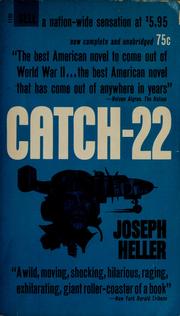 Joseph Heller · 1961Catch-22Lvl 6Medium pace
 Ernest Hemingway · 1926The Sun Also RisesLvl 4Fast paced
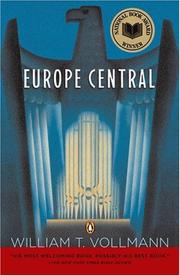 William T. Vollmann · 2005Europe CentralLvl 9Slow burn