
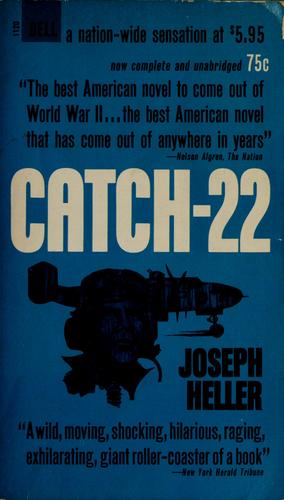
Catch-22
Joseph Heller · 1923–1999 · USA
Why it matters
You'd have to be crazy to fly more missions, but asking to stop proves you're sane: the loop that named institutional madness everywhere. War satire so total it added a phrase to the language.
At a glance
Deliberately circular chronology and repeated scenes enact its own logic of madness.
Deep dive
What Catch-22's famous loop actually costs: a look at the profiteer who bombs his own squadron for a fee, and the one memory the novel keeps circling without ever quite landing on it.
Written for readers who have finished the book. No plot recap, and nothing here is safe to read first.
Themes & symbolism
Catch-22 the regulation is the novel's engine and its cruelest joke: a flier grounded for insanity must ask to be grounded, but asking proves he's rational enough to fear death, which means he's sane enough to keep flying. It's a closed loop with no exit built into the language of the rule itself, and Heller's satire lands because it's recognizable everywhere bureaucracies operate — any system that punishes the sane response and rewards only compliance. Colonel Cathcart keeps raising the mission count for no reason but his own promotion, and no single person in the chain is a villain exactly; the horror is that the system runs itself, indifferent to the men inside it, converting their survival instinct into further proof they should keep dying. Yossarian's long refusal to accept that logic, rather than his combat record, is what makes him the novel's only sane man.
Milo Minderbinder pushes the same logic into commerce: his black-market syndicate eventually contracts with the Nazis and bombs his own airfield for a fee, and defends it in the perfectly reasonable language of shared profit — everyone, he insists, has a share in the syndicate, so everyone benefits. It's capitalism's amorality taken to its consistent conclusion, and it's telling that Milo is never punished, only ever mildly scolded, because within the system's terms he hasn't done anything wrong. The novel's looping, out-of-order structure works the same way at the level of form: the same scenes, especially Snowden's death, are approached again and again, each pass adding one more disturbing detail Yossarian has been withholding, so the reader experiences the same entrapment the missions inflict — no way to move forward except through the thing you're most trying to avoid.
What Snowden Knew
The novel spends its whole length circling the death of the gunner Snowden without saying exactly what Yossarian saw, until it finally does: cradling the dying boy, Yossarian treats a wound in his thigh only to have Snowden's insides slide out from a hidden second wound in his coat, and what spills out is only organs — offal, nothing transcendent, no soul visible in the wreckage. Yossarian's private gloss on the scene, that the secret is simply "man is garbage" once the spirit's gone, reframes the entire novel's comedy retroactively: every joke about missions and paperwork has been a way of not looking directly at this one fact about bodies. Snowden is why Yossarian starts refusing to wear his uniform, why the missions stop being survivable as abstractions, and why, by the end, staying compliant has become impossible.
The last seal: what actually happens, and why it lands the way it does.
The ending, explained
Offered a corrupt bargain — public honors and a promotion in exchange for endorsing the missions and going home a compliant hero — Yossarian is ready to take it until he learns what happened to Orr, the pilot he'd always dismissed as a hapless crash-prone fool. Orr's repeated crash-landings, it turns out, were deliberate rehearsals, and he has used them to escape safely to neutral Sweden. The revelation reframes incompetence as the era's best available disguise for sanity, and it's what finally pushes Yossarian to refuse the deal and desert, rowing away to try to reach Sweden himself. Desertion, ordinarily the war novel's ultimate cowardice, becomes here the only rational, moral act available inside a system that has made obedience indistinguishable from madness — Heller ends not on victory or defeat but on flight as the last sane option left.
Where to go next
 Kurt Vonnegut · 1969Slaughterhouse-FiveLvl 5Fast paced
 William Gaddis · 1975J RLvl 10Slow burn
 Tim O'Brien · 1990The Things They CarriedLvl 4Medium pace
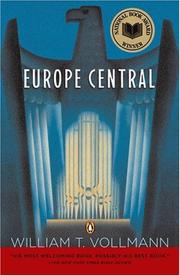 William T. Vollmann · 2005Europe CentralLvl 9Slow burn
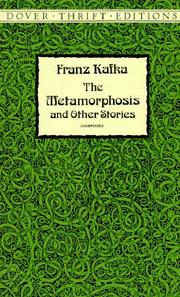 Franz Kafka · 1915The MetamorphosisLvl 4Medium pace
 Haruki Murakami · 1987Norwegian WoodLvl 3Fast paced