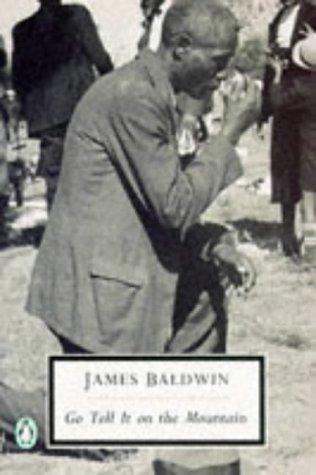
Go Tell It on the Mountain
James Baldwin · 1924–1987 · USA / France
Why it matters
One Saturday in a Harlem storefront church, three generations' worth of sin and flight pressing on a boy at the altar. Baldwin's autobiographical first novel: Pentecostal fire disciplined into classic form.
At a glance
Interwoven flashback sermons and shifting points of view require close tracking.
Deep dive
Whether John's collapse on the church floor is grace, breakdown, or inherited trauma finally catching up with him is a question Baldwin refuses to settle — this dive sits with why he keeps it open.
Written for readers who have finished the book. No plot recap, and nothing here is safe to read first.
Themes & symbolism
The novel's central tension is the gap between Gabriel's public righteousness and his private cruelty — a preacher whose pulpit authority conceals a history of violence toward his family, an abandoned illegitimate son, Royal, born of an affair with Esther he never atones for, and a marriage to Elizabeth built more on control than love. The storefront church itself carries that same doubleness: a genuine refuge from a hostile, poverty-bound Harlem, and simultaneously a mechanism that disciplines Black bodies and desires (John's included) into narrow, surveilled forms of acceptable feeling. Baldwin doesn't resolve the church into either pure sanctuary or pure trap — it's both, sustaining a community that white America has shut out of everywhere else while also demanding that John perform a conversion the novel never fully confirms is freely chosen.
John's dawning awareness of his own homoerotic feelings, drawn closely from Baldwin's own adolescence, sits underneath the religious plot as the desire the Pentecostal frame is least equipped to accommodate, which is part of why his eventual "salvation" reads as ambiguous rather than triumphant — it may be less a resolution of that tension than a form it gets folded into and hidden inside. Elizabeth's own suppressed history, a love affair with John's biological father Richard, who died by suicide after being brutalized and wrongly jailed by police, means John is living under a family mythology (Gabriel as his father, his birth as blessed rather than the product of his mother's first, unsanctioned love) that the reader is given and John is not — a gap in knowledge that makes his innocence at the altar look, from outside, considerably more precarious than it feels to him.
The Prayers of the Saints
The novel's structural gamble is to interrupt John's single Saturday with three long flashbacks — "The Prayers of the Saints" — giving Florence, Gabriel, and Elizabeth each their own extended history before returning to the church floor. That architecture does something no scene of John's could: it lets the reader assemble a case against Gabriel's righteousness (his violence, his hypocrisy, his abandoned son, his manipulation of Elizabeth's shame over Richard) that the congregation praising him that night has no access to. The reader ends the night knowing more than everyone in the room, John included, which is exactly what makes the final embrace of him as "saved" so unsettling rather than redemptive — the novel has spent its middle third proving that this family's blessings arrive soaked in things nobody present is willing to say aloud.
The last seal: what actually happens, and why it lands the way it does.
The ending, explained
During an overnight "tarry service," John falls to the church floor in a harrowing, hallucinatory episode that mixes visions of threat and judgment with moments that read as genuine ecstatic communion — Baldwin deliberately declines to adjudicate whether this is authentic spiritual transformation, a psychological breakdown under the accumulated weight of shame and fear, or simply the family's religious and disciplinary cycle closing around him the way it closed around Gabriel and Florence before him. John rises at dawn pronounced "saved," embraced by the congregation and, notably, by Gabriel. But the closing image — John walking home in the morning light still under Gabriel's looming, unresolved authority — refuses to say whether this salvation offers him any actual freedom from the family's inherited patterns of shame, or has simply given him a new, sanctified language for submitting to them.