

Freedom or Death
Nikos Kazantzakis · 1883–1957 · Greece
Originally Ho Kapetan Michales (Greek)
Why it matters
Captain Michales leads a doomed Cretan revolt against Ottoman rule, his appetite for battle and women as outsized as the island's centuries-long hunger for independence. Kazantzakis's most epic novel of his native Crete, violence and freedom fused into a single, blood-soaked ideal.
At a glance
A large cast and dense historical backdrop of the Cretan revolts require sustained attention.
Deep dive
Nineteenth-century Crete's uprisings against Ottoman rule get one uncompromising warrior at their center, a man who loves the wife of the enemy he's sworn to drive from the island.
Written for readers who have finished the book. No plot recap, and nothing here is safe to read first.
Themes & symbolism
Captain Michalis leads his band through Kazantzakis's fictionalized version of Crete's real nineteenth-century revolts against Ottoman rule, centered on Megalokastro, the old name for Heraklion, and Kazantzakis modeled him directly on his own father, a fact that gives the character's uncompromising, almost inhuman devotion to Cretan freedom a weight beyond invented fiction. Michalis experiences the cause less as ideology than as physical hunger, a compulsion that costs him friendships, comfort, and eventually his own restraint, and Kazantzakis writes him as something closer to a force of nature than a political actor, which is precisely how the men who follow him experience him too.
His obsession with Emine, the Circassian wife of the Turkish official Nuri Bey, cuts directly against everything his role as Cretan resistance leader is supposed to represent, and Kazantzakis refuses to resolve the contradiction gently. Michalis cannot reconcile wanting Emine with hating everything her husband's rule stands for, and the affair humanizes him precisely by destabilizing him, a warrior whose famous will can master Ottoman soldiers but not his own desire for a woman on the wrong side of the war he's fighting.
The 1889 Revolt Behind the Fiction
Crete rose against Ottoman rule repeatedly across the nineteenth century, and the 1889 uprising Kazantzakis draws on here was one of several failed attempts before the island finally achieved union with Greece in 1913, a resolution the novel's characters can't yet know is coming. Kazantzakis grew up in Ottoman-ruled Crete himself, and the siege scenes carry the specificity of stories he would have heard directly from men who lived through revolts like this one, Megalokastro's streets and the surrounding hills rendered with a local's precision rather than a historian's distance.
Kosmas as the Counterweight
Michalis's nephew Kosmas returns from years of study in Europe carrying a more modern, humane, and conflicted relationship to Cretan nationalism than his uncle's, unable to fully share Michalis's appetite for violence even as he recognizes its historical necessity. Kazantzakis uses the two men's contrast to ask whether Crete's freedom actually requires men like Michalis, uncompromising to the point of self-destruction, or whether Kosmas's more modern conscience represents where the island's fight should be heading, a question the novel raises without fully settling in either man's favor.
The last seal: what actually happens, and why it lands the way it does.
The ending, explained
Before the final battle, Michalis kills Emine himself, unable to carry both his desire for her and his commitment to the uprising into the fight he knows is coming, an act Kazantzakis stages as horrifying and, in Michalis's own logic, purifying, a man clearing himself of the one attachment strong enough to compete with his devotion to Crete. He then leads his remaining men to a hilltop stand against overwhelming Ottoman forces, refusing every offer of surrender, and the band is wiped out to the last man beneath the motto that gives the novel its English title, freedom or death, the same phrase that would later become independent Greece's national motto. Kazantzakis stages the massacre as neither triumph nor waste but as the literal cost of the uncompromising will he's spent the whole novel describing.
Where to go next
 Nikos Kazantzakis · 1946Zorba the GreekLvl 5Medium pace
 Nikos Kazantzakis · 1955The Last Temptation of ChristLvl 6Medium pace
 Nikos Kazantzakis · 1961Report to GrecoLvl 6Slow burn
 Miguel de Unamuno · 1914MistLvl 6Medium pace
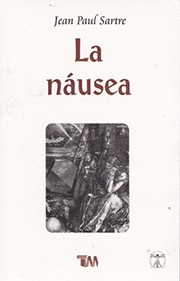 Jean-Paul Sartre · 1938NauseaLvl 6Slow burn
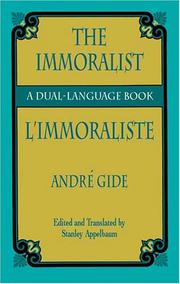 André Gide · 1902The ImmoralistLvl 5Medium pace