

Durgesh Nandini
Bankim Chandra Chattopadhyay · 1838–1894 · India (Bengal)
Originally Durgesh Nandini (Bengali)
Why it matters
A Rajput princess is caught between two suitors amid a Mughal-era siege in Bengal's first modern novel, published when Chattopadhyay was twenty-seven. It launched Bengali fiction as a serious literary form almost overnight.
At a glance
A straightforward historical romance plot, though ornate nineteenth-century Bengali diction can slow English readers.
Deep dive
A Mughal general captured in a Bengal fort during Akbar's Pathan wars becomes the prize two women each have a claim on, and which claim the plot is finally willing to honor tells you exactly what kind of novel Bengali fiction was inventing in 1865.
Written for readers who have finished the book. No plot recap, and nothing here is safe to read first.
Themes & symbolism
Durgesh Nandini sets Jagat Singh, a general under his father Raja Man Singh, against Katlu Khan, a Pathan chieftain holding the fort of Mandaran against Akbar's Mughal expansion into Bengal, and lets a war of empire narrow almost immediately into a domestic one: Jagat Singh falls for Tilottama, daughter of the local Hindu lord Birendra Singha, in the same opening chapters where the fort's fall kills her father and delivers her, her mother Bimala, and Jagat Singh himself into Katlu Khan's custody. Bankim Chandra is working in the mode Walter Scott had made fashionable, the historical romance that drapes an invented love plot over a real dynastic conflict, and the novel's 1865 publication makes it the founding document of that mode in Bengali, the book most historians point to as the start of the Bengali novel as a form at all.
Ayesha, Katlu Khan's own daughter, complicates the captivity plot rather than resolving it: she saves Tilottama from her father's advances, then falls for Jagat Singh herself, which sets up the triangle the whole second half turns on. Bankim Chandra draws the contrast in religious terms he never states outright, a Hindu captive and a Muslim captor's daughter competing for the same Rajput general, and lets the novel's sympathies declare themselves less through argument than through which woman it eventually lets keep him.
Bimala gets the novel's one unambiguous act of agency: when Katlu Khan kills her husband, she stabs him herself rather than waiting for Jagat Singh or Man Singh's armies to avenge Birendra Singha on her behalf. It's a single scene, but it's the one moment where a woman's violence settles a plot point that the men around her spend chapters failing to settle by diplomacy or war.
Importing Scott, Inventing a Form
Bankim Chandra had already tried the historical romance once in English before turning to Bengali for Durgesh Nandini, and the shift mattered more than the plot borrowings from Scott's Waverley novels: writing in Bengali let him fold Mughal-era Bengal's actual textures, garrison politics, the geography of Hooghly district forts, into a form built for exactly that kind of local historical density. The novel's outsized influence on everything from Rabindranath Tagore's early fiction to the whole genre of Bengali historical romance rests less on its plot than on this proof that the novel as Europe had built it could carry Bengali material without translation.
Ayesha's Renunciation as the Ending's Price
Ayesha's arc resolves the love triangle by asking her, not Tilottama, to give up her claim: once Jagat Singh defeats her former suitor Osman in single combat, Ayesha reads the outcome correctly, that a Rajput general was never going to marry a Pathan chieftain's daughter, and chooses to help engineer Tilottama's union rather than contest it further. It's a resolution that costs the Muslim woman her happiness to secure the Hindu woman's, a pattern Bengali and Hindi romance would keep recycling for a century after Bankim Chandra wrote it first.
The last seal: what actually happens, and why it lands the way it does.
The ending, explained
Man Singh negotiates a peace with the Pathans that frees Jagat Singh from captivity, and the last obstacle to the union he and Tilottama declared in the novel's opening chapters is Osman, Ayesha's own former suitor, who challenges Jagat Singh to a duel over the very claim Ayesha has by then all but abandoned. Jagat Singh wins the fight. Ayesha, watching a man she loves defeat one who once loved her, over a marriage that was never going to include her either way, gives up any further claim and instead works to see Tilottama and Jagat Singh joined, the happy ending built, deliberately, on the ungrudging sacrifice of the one woman the novel was never going to reward.
Where to go next
 Bankim Chandra Chattopadhyay · 1882AnandamathLvl 5Medium pace
 Rabindranath Tagore · 1916The Home and the WorldLvl 6Medium pace
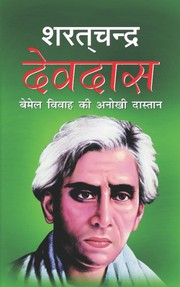 Sarat Chandra Chattopadhyay · 1917DevdasLvl 2Fast paced
 Anthony Trollope · 1857Barchester TowersLvl 4Medium pace
 William Makepeace Thackeray · 1848Vanity FairLvl 5Medium pace
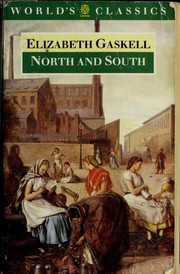 Elizabeth Gaskell · 1855North and SouthLvl 4Medium pace