
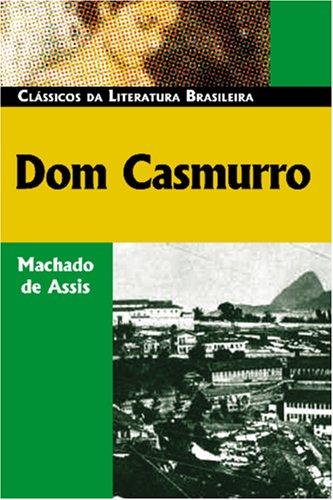
Dom Casmurro
Machado de Assis · 1839–1908 · Brazil
Originally Dom Casmurro (Portuguese)
Why it matters
An old man retells his marriage, consumed by a jealousy the reader can never confirm or dispel. Machado's masterpiece of the unreliable narrator (is Capitu guilty, or is he?), a century before the term existed.
At a glance
Deliberately unreliable narration leaves the central accusation permanently undecidable.
Deep dive
An old man spends his memoirs reconstructing, chapter by chapter, the case against his own wife's fidelity — and the real subject isn't whether she was guilty, but how completely he controls the only evidence the reader is ever allowed to see.
Written for readers who have finished the book. No plot recap, and nothing here is safe to read first.
Themes & symbolism
Bento Santiago writes decades after the events he's describing, which makes him not a neutral witness to his marriage but its judge, prosecutor, and sole surviving source of testimony, shaping every remembered detail to fit a conclusion he arrived at long before he started writing. The novel's central motif — Capitu's 'olhos de ressaca,' her undertow or riptide eyes — is introduced admiringly, in youth, as something magnetic and alive, and only decades later, retroactively, reinterpreted by the narrating Bento as evidence of a capacity for concealment and deceit. It's the same fact doing opposite work depending entirely on what the narrator needs it to prove, and Machado never lets the reader forget that the interpretation, not the eyes themselves, is the only thing that's actually changed.
Capitu has no independent voice in the book; she exists only through Bento's framing of her, which is itself part of the novel's argument — jealousy doesn't just distort a story, it narrates the accused right out of any chance to defend themselves. Machado compounds the effect with constant structural games: Bento addresses the reader directly, names his own chapters with leading, editorializing titles, withholds and then reveals details out of order, all so the 'memoir' form itself becomes visibly unstable — a text that can be scrupulously, obsessively detailed and completely untrustworthy at the very same time.
Machado's Long Road to English-Language Recognition
Brazilians have long considered Machado de Assis their greatest writer, but Anglophone criticism was slow to catch up, largely ignoring him for most of the twentieth century despite his having written this kind of unreliable, self-undermining narration decades before European modernism made it fashionable. Susan Sontag's essay 'Afterlives: The Case of Machado de Assis' did more than almost anything else to correct the record, arguing forcefully that he belonged in the company of Sterne and Flaubert and had been unjustly overlooked outside Brazil and Portugal.
Harold Bloom championed Dom Casmurro in similar terms, and critics now routinely compare Bento to the unreliable narrators of Ford Madox Ford's The Good Soldier or Nabokov's Pale Fire — both of which arrived decades later. That Machado built this machinery of retrospective, self-serving narration in provincial nineteenth-century Rio de Janeiro, without the modernist scaffolding those later writers had to draw on, is exactly what critics now treat as the most startling thing about him: he didn't anticipate a technique so much as invent it cold.
The last seal: what actually happens, and why it lands the way it does.
The ending, explained
Convinced of Capitu's affair with his closest friend, Escobar, and that Escobar's son Ezequiel is not his own, Bento exiles Capitu and Ezequiel to Europe, where both eventually die separately, apart from each other and from him, without Bento ever obtaining anything beyond the circumstantial 'evidence' he'd already convinced himself of. He lives out the rest of his life alone, still turning that evidence over in his memoirs, still narrating his own certainty to a reader who has no way to check it against anyone else's account. Machado never resolves the question the whole novel has been built around, and that refusal is the point: the book's lasting unease comes from realizing that its narrator's total command of the story is itself the most damning thing about him, whether or not Capitu did what he believes she did.
Where to go next
 Machado de Assis · 1881The Posthumous Memoirs of Brás CubasLvl 6Medium pace
 Laurence Sterne · 1759The Life and Opinions of Tristram Shandy, GentlemanLvl 9Slow burn
 Denis Diderot · 1796Jacques the FatalistLvl 6Slow burn
 Graciliano Ramos · 1938Barren LivesLvl 6Slow burn
 Johann Wolfgang von Goethe · 1774The Sorrows of Young WertherLvl 3Medium pace
 John Barth · 1968Lost in the FunhouseLvl 7Slow burn