
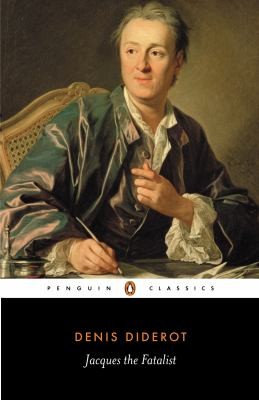
Jacques the Fatalist
Denis Diderot · 1713–1784 · France
Originally Jacques le fataliste et son maître (French)
Why it matters
A servant and his master bicker down a road, endlessly interrupting the story of Jacques's loves with digressions, arguments, and authorial intrusions. A novel about the impossibility of finishing anything, and a direct answer to Sterne's Tristram Shandy.
At a glance
Constant narrative interruption and metafictional games demand active tracking.
Deep dive
A servant insists that everything that happens to him was written in advance, while the novel keeps proving — one interruption, digression, and argument with the reader at a time — that no story, including his own, can be written down straight.
Written for readers who have finished the book. No plot recap, and nothing here is safe to read first.
Themes & symbolism
Jacques's fatalism — "everything that happens to us on this earth, good or bad, was written up above" — is both his stated philosophy and a running joke the novel never stops undercutting: he complains, argues, schemes, and gets visibly furious at his own misfortunes, behaving at every turn like a man who believes he has choices. Diderot isn't mocking fatalism so much as showing that no one, however committed to a doctrine of predestination, can actually live inside it; the gap between what Jacques claims to believe and how he behaves is the comedy and the argument at once. The Master's dependence on Jacques for stories, direction, and basically every decision inverts the expected servant-master hierarchy in a way typical of Diderot's interest (see also Rameau's Nephew) in who really holds authority once you look past the label.
The narrator interrupts constantly — arguing with an implied critical reader, refusing to resolve the innkeeper's tale of Madame de la Pommeraye's revenge cleanly, endlessly deferring the story of how Jacques got his wounded knee and who he loved first. This isn't a failure of control; it's the novel's whole method, using narrative interruption to dramatize its philosophical claim that causes and effects are tangled far beyond anyone's ability to trace them straight — divine, authorial, or otherwise. Where Sterne's Tristram Shandy digresses out of a mind wandering through its own consciousness, Diderot digresses to make a metaphysical point: a universe that is entirely written in advance turns out, from the inside, to be indistinguishable from one that is total chaos.
The Deliberate Non-Ending
Diderot closes the novel by openly refusing to close it: he offers several possible endings to Jacques's story, notes that the manuscript itself is incomplete or contradictory at this point, and mocks the reader directly for wanting a tidy resolution after four hundred pages of interruption. This isn't a shrug — it's the argument's final proof. A fatalist philosophy that claims everything is already written should, in theory, produce the most predictable of stories; instead Diderot gives his reader a menu of contradictory outcomes and lets the joke land on anyone still expecting a single one, insisting that both fate and fiction resist being pinned down to one authoritative version.
Where to go next
 Denis Diderot · 1796The NunLvl 4Medium pace
 Laurence Sterne · 1759The Life and Opinions of Tristram Shandy, GentlemanLvl 9Slow burn
 Voltaire · 1759CandideLvl 3Fast paced
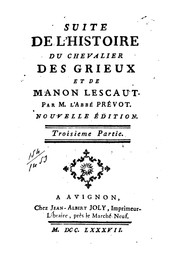 Abbé Prévost · 1731Manon LescautLvl 4Fast paced
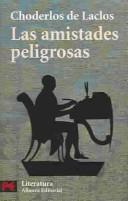 Pierre Choderlos de Laclos · 1782Les Liaisons DangereusesLvl 5Medium pace
 Jonathan Swift · 1726Gulliver's TravelsLvl 5Medium pace