
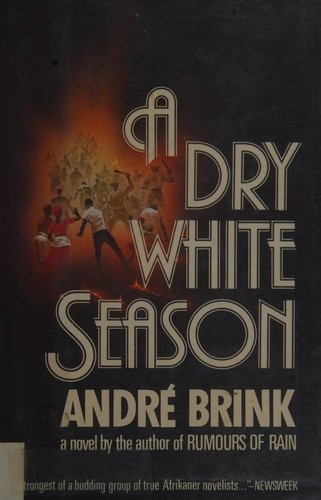
A Dry White Season
André Brink · 1935–2015 · South Africa
Originally 'n Droë Wit Seisoen (Afrikaans) · translated by André Brink
Why it matters
A politically naive white teacher is radicalized by a Black colleague's death in police custody. Written by the first Afrikaans novelist banned by his own government, indicting apartheid with no escape hatch for complicity.
At a glance
A layered documentary framing device around a straightforward investigative plot.
Deep dive
A mild-mannered Afrikaner schoolteacher starts asking one careful question about his gardener's death in police custody, and finds out how much of his own life was built on not asking it sooner.
Written for readers who have finished the book. No plot recap, and nothing here is safe to read first.
Themes & symbolism
Brink frames the entire novel as reconstruction: an unnamed writer, a friend of Ben du Toit's, receives a box of documents after Ben's death and pieces together, from notebooks and testimony, how an ordinary, apolitical Afrikaner schoolteacher ended up destroyed by asking one question the state did not want asked. That structure matters as much as the plot itself, because it tells the reader from page one that Ben's investigation will not end in vindication. The novel isn't suspense about whether Ben survives his own curiosity; it's an inquest into how a comfortable, uninvolved man's life could be taken apart piece by piece simply for refusing to stop believing an official story once he had reason to doubt it.
Ben's investigation begins narrowly, with the in-custody death of Gordon Ngubene, his school's gardener and a man he has known for years without ever really knowing, after Gordon's own inquiry into his son Jonathan's death during the 1976 Soweto uprising gets him arrested in turn. Brink builds the state's response as a machine rather than a conspiracy of individual villains: inquest findings that exonerate the police as a matter of routine, colleagues and church elders who counsel Ben to let it go for the good of his own family, a legal system that treats each new death in custody as an isolated accident precisely because treating them as a pattern would require admitting what the pattern actually is.
What makes Ben's transformation costly rather than triumphant is how completely ordinary his prior complicity was; he isn't reformed from active racism but from passive unconcern, and the novel is unsparing about how little that kind of decency was worth for decades before he decided to act on it. His wife, his daughter, his church, and eventually his own sense of safety all withdraw from him in stages, and Brink refuses to frame that isolation as the noble price of conscience so much as evidence of how efficiently a functioning apartheid society could excommunicate anyone who threatened its account of itself.
A Story Assembled After the Fact
The framing narrator's presence, visible in occasional first-person interjections about the difficulty of the material he's arranging, keeps reminding the reader that everything in front of them has already been lost once: Ben is dead before the book begins, his evidence scattered and partial, his own motives reconstructed rather than directly narrated. Brink uses that formal distance to argue something about how these stories actually survive under an authoritarian state, secondhand, incomplete, and only because someone risked keeping the paper trail after the person who compiled it was no longer able to protect it himself.
The last seal: what actually happens, and why it lands the way it does.
The ending, explained
Ben's inquiry eventually implicates senior security police directly in Gordon and Jonathan Ngubene's deaths, and as he gets closer to evidence the state cannot afford to have surface, the harassment around him escalates from social ostracism into direct threats. He is killed in what the official report calls a hit-and-run accident, his death filed away with exactly the same bureaucratic indifference that swallowed Gordon's and Jonathan's. The friend who narrates the novel receives Ben's collected notes only because Ben, anticipating what was coming, had already arranged for them to be smuggled out, and the book we are reading is presented as that surviving record, published in defiance of the same silence that the deaths inside it were designed to produce.
Where to go next
 André Brink · 1973Looking on DarknessLvl 6Medium pace
 Alan Paton · 1948Cry, the Beloved CountryLvl 4Medium pace
 Mahasweta Devi · 1974Mother of 1084Lvl 5Medium pace
 Ngũgĩ wa Thiong'o · 1967A Grain of WheatLvl 6Slow burn
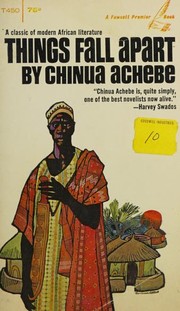 Chinua Achebe · 1958Things Fall ApartLvl 4Medium pace
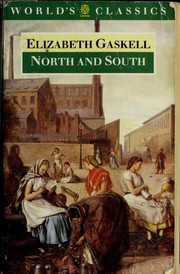 Elizabeth Gaskell · 1855North and SouthLvl 4Medium pace