
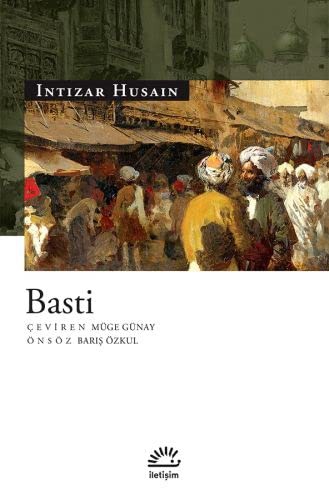
Basti
Intizar Husain · 1925–2016 · Pakistan
Originally Basti (Urdu) · translated by Frances W. Pritchett
Why it matters
A schoolteacher's memories of a vanished pre-Partition hometown unfold against a new nation's wars. Pakistani Urdu fiction's essential novel of nostalgia as a form of mourning.
At a glance
Meditative, non-linear drift between myth, memory, and present-tense war reportage.
Deep dive
A historian who can't finish a sentence about the present without reaching for a myth, and what that habit is quietly protecting him from having to say.
Written for readers who have finished the book. No plot recap, and nothing here is safe to read first.
Themes & symbolism
Zakir, a history lecturer who crossed from his hometown of Rupnagar in India to Lahore during the 1947 Partition, narrates Basti mostly from Pakistan in 1971, as the country he resettled in comes apart around the war that will end in Bangladesh's independence, and Husain structures the novel so this second national rupture keeps triggering memories of the first, Zakir's flight from Rupnagar, the friends and the fiancee, Sabirah, left behind across a border that hardened into permanence almost overnight. The 1971 war isn't background to Zakir's personal story. Husain treats it as Partition recurring, proof the original wound never actually closed, just went quiet for two decades.
Husain, himself a Partition migrant and a writer steeped in classical Urdu, Persian, and Sanskrit narrative traditions, interrupts Zakir's contemporary sections with fragments of the Ramayana's exile, the Mahabharata's family war, and the martyrdom at Karbala, myths of displacement and fratricidal violence that Zakir reaches for instinctively when the present becomes too raw to narrate directly. That layering isn't ornamental. It's Husain's argument that Partition and 1971 aren't new kinds of catastrophe at all, but the latest instance of a much older, recurring pattern the subcontinent's own foundational stories already understood.
Zakir's chronic passivity, an intellectual who analyzes crisis fluently but never quite acts inside one, extends from his politics to his private life: his relationship with Sabirah stays permanently unresolved, a correspondence and a memory rather than a marriage, because crossing back to claim her would mean confronting a border, and a version of himself, he'd rather keep mythologized than actually revisit.
Myth as a Second, Older Chronology
The novel's mythic interludes run on their own timeline, entirely separate from Zakir's dated 1971 diary entries, and Husain lets the two chronologies argue with each other rather than align neatly: where the myths offer exile and war a kind of narrative shape and eventual meaning, Zakir's actual present just accumulates, radio bulletins, curfews, arguments in tea shops, refusing him the closure his beloved old stories promise.
1971 as Partition's Second Verse
Unlike accounts that treat 1947 as the singular catastrophe, Basti insists on making a second national rupture, the war that splits Pakistan itself and produces Bangladesh, sit directly alongside the first, and that doubling is the novel's real innovation: Husain isn't elegizing one lost homeland but diagnosing a country, and a man, caught in a repeating structure of division that refuses to stay in the past tense no matter how many decades pass.
The last seal: what actually happens, and why it lands the way it does.
The ending, explained
As Pakistan's military defeat becomes undeniable and Lahore fills with the noise of a nation absorbing a second, unimaginable rupture, Zakir spends the novel's final pages unable to act any more decisively than he has at any earlier crisis, drifting between the news, his memories of Rupnagar, and his unfinished correspondence with Sabirah rather than resolving any of it. Husain refuses him, and the reader, a clean political or personal ending: no reconciliation with Sabirah, no clarity about Pakistan's future, only Zakir's habitual retreat into myth as the one register large enough to hold what's happening. The novel closes on that irresolution deliberately, arguing that some ruptures don't get endings, only more history piling on top of the last unhealed one.
Where to go next
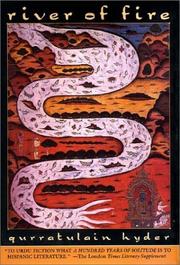 Qurratulain Hyder · 1959River of FireLvl 8Slow burn
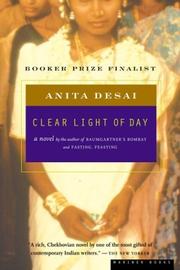 Anita Desai · 1980Clear Light of DayLvl 5Slow burn
 Peter Carey · 1988Oscar and LucindaLvl 6Medium pace
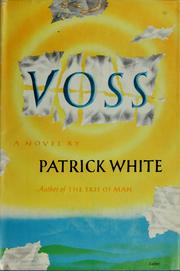 Patrick White · 1957VossLvl 8Slow burn
 Ismat Chughtai · 1942The Quilt and Other StoriesLvl 4Fast paced