
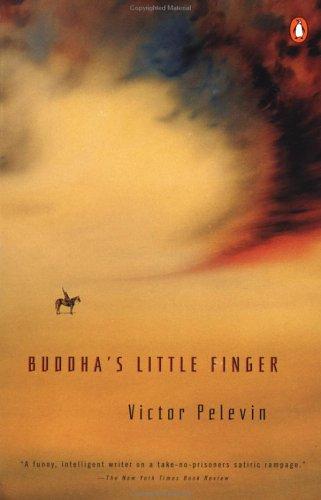
Buddha's Little Finger
Viktor Pelevin · b. 1962 · Russia
Originally Чапаев и Пустота (Russian)
Why it matters
A poet mistaken for a Red Army commander in 1919 debates Buddhist emptiness with his own hallucinations, while a 1990s mental patient dreams he's living in 1919. Pelevin's genre-scrambling masterwork of post-Soviet unreality.
At a glance
Two braided timelines and dense philosophical digression on consciousness and illusion.
Deep dive
A poet mistaken for a real Civil War commander in 1919 and a patient locked in a 1990s psychiatric ward each insist their own timeline is the genuine one, and Pelevin builds the whole novel so that neither claim ever quite wins.
Written for readers who have finished the book. No plot recap, and nothing here is safe to read first.
Themes & symbolism
Pyotr Voyd, a minor Petrograd poet in 1918, is swept up into serving as commissar to Vasily Chapayev, the real Red Army commander, entering a Civil War plot rendered with full sensory and causal solidity. The identical consciousness also exists, with equal solidity, as a patient in a 1990s Moscow psychiatric clinic undergoing group therapy for a split identity, each timeline dreaming or generating the other, and Pelevin refuses throughout to grade either one as the frame and the other as delusion; both come furnished with enough specific, load-bearing detail to survive on their own.
Chapayev himself gets rescued from two competing Soviet mythologies at once, the earnest socialist-realist hero of official film and biography, and the folk buffoon of decades of oral anecdotes, and refitted as something closer to a Buddhist teacher, expounding on shunyata, emptiness, through clay-modeling exercises and card games that function as koans. His lesson to Pyotr, that personal identity, historical era, and ideological conviction are equally provisional constructs the mind clings to out of habit rather than necessity, applies just as cleanly to a Civil War commissar as it does to a post-Soviet man convinced he's losing his mind.
Chapayev, Rescued from the Soviet Joke Cycle
Decades of Soviet anecdotes had already flattened Chapayev into a genial punchline, a bumbling folk hero forever getting outwitted alongside his aide Petka and the machine-gunner Anka, a joke cycle so pervasive that any Russian reader opens the novel already carrying that cartoon version in mind. Pelevin's real subversion isn't just giving Chapayev mystical authority instead of comic ineptitude, it's counting on the reader's inherited contempt for the character to make his sudden credibility as a teacher land as a genuine reversal rather than an arbitrary choice.
A Surname That Means Emptiness
The Russian title, Chapaev i Pustota, names Pyotr by his actual surname, Pustota, which simply means void or emptiness, a pun so load-bearing that the novel's whole metaphysics is announced before the plot starts. English-language editions, retitled Buddha's Little Finger for a Western audience unlikely to catch the wordplay, lose that announcement entirely, turning a title that states the book's thesis outright into one that merely promises something exotic.
The last seal: what actually happens, and why it lands the way it does.
The ending, explained
Chapayev's armored division drives into a river that turns out to lead beyond either timeline altogether, into a placeless realm the novel calls Inner Mongolia, offered as the literal, geographic correlate of the emptiness Chapayev has been teaching all along. Pyotr's consciousness settles there rather than snapping back into whichever timeline a reader might have preferred to call real. Back inside the psychiatric-hospital frame, the doctors pronounce his treatment a success and discharge him, unable to say, and uninterested in asking, which reality he actually settled into, a final refusal to let either the Civil War or the 1990s claim the last word.
Where to go next
 Viktor Pelevin · 1992Omon RaLvl 5Fast paced
 Vladimir Sorokin · 2006Day of the OprichnikLvl 5Fast paced
 Georgi Gospodinov · 2020Time ShelterLvl 6Medium pace
 Ludmila Ulitskaya · 2010The Big Green TentLvl 5Medium pace
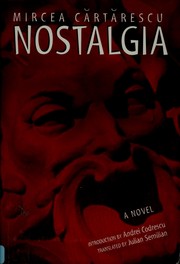 Mircea Cărtărescu · 1989NostalgiaLvl 8Slow burn
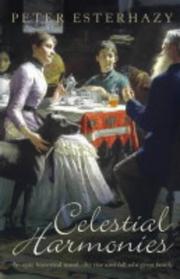 Péter Esterházy · 2000Celestial HarmoniesLvl 8Slow burn