
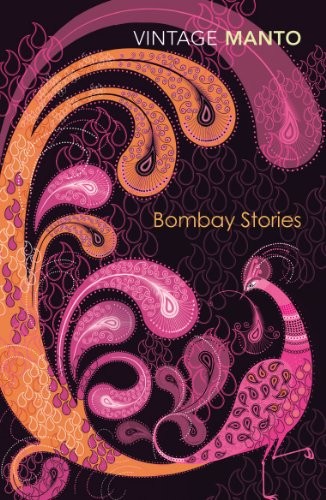
Bombay Stories
Saadat Hasan Manto · 1912–1955 · Pakistan / India
Originally Bombay Stories (Urdu) · translated by Matt Reeck and Aftab Ahmad
Why it matters
Pimps, courtesans, and small-time hustlers move through Bombay's chawls and film studios in stories Manto wrote while himself scripting movies to survive. The city he loved and would be forced to leave, caught here at its most disreputable and most alive.
At a glance
Vivid but accessible prose; local Bombay slang and film-world argot add light friction.
Deep dive
Pimps, prostitutes, and Bombay's film-world hangers-on get the same unsentimental attention Manto gave Partition's dead, written while he scripted movies himself to pay rent.
Written for readers who have finished the book. No plot recap, and nothing here is safe to read first.
Themes & symbolism
"Ten Rupees" follows Sarita, a teenage girl her mother pimps out to men touring in cars, and Manto builds the story almost entirely around what the arrangement does not damage: Sarita loves the ride itself, the wind, the speed, the novelty of a car, more than she registers what the ride is actually for, and her three clients that day end up paying her, tipping her, charmed rather than predatory, for company she would have given for free. The story refuses the reader easy horror. It makes Sarita's pleasure real without ever pretending the arrangement is not exploitation.
"Mozelle" moves the same unsentimental eye onto a Bombay riot: Mozelle, a Jewish woman in the city's Parsi Colony, spends her early scenes as comic relief, promiscuous, loud, indifferent to her former lover Tirlochan's Sikh orthodoxy, before she is the one who walks into a Hindu-Muslim mob to get Tirlochan's new, sheltered fiancee out alive, at a cost the story does not soften. In "The Insult," the prostitute Saugandhi finds her own dignity only after a client rejects her outright, on sight, without even naming a reason, and Manto lets that single rejection do more to wake her up than years in the trade ever managed.
Scripting Films by Day, Writing Kamathipura by Night
Manto worked through the 1930s and early 1940s as a screenwriter for Bombay studios, turning out commercial scripts to survive while writing these stories about the same city's brothels and back lots after hours, and the double life shows: Bombay Stories keeps circling actors, extras, and studio hangers-on alongside sex workers, two economies of appearance and transaction Manto clearly read as versions of each other.
A City That Never Apologizes for Itself
Where Malgudi's fiction runs on a small town's shared memory, Manto's Bombay is anonymous by design, a city where Sarita's mother, Saugandhi's madam, and a dozen unnamed clients can operate without any neighbor keeping score, and Manto treats that anonymity as the city's honesty rather than its corruption. Bombay never pretends its economy of bodies is anything other than what it is, which is exactly why Manto, exiled to Lahore after 1947, kept insisting these were the stories he actually missed.
Where to go next
 Saadat Hasan Manto · 1948Black MarginsLvl 5Fast paced
 Ismat Chughtai · 1942The Quilt and Other StoriesLvl 4Fast paced
 Premchand · 1936GodanLvl 3Medium pace
 Qurratulain Hyder · 1959River of FireLvl 8Slow burn
 Intizar Husain · 1979BastiLvl 6Slow burn